
Shopping for a new door? Read how to choose a new garage door in Minnesota (style, color, windows, insulation).
Short answer: gauge is the thickness of a garage door’s steel skin, and a lower number means thicker steel. But gauge is only one part of how strong and warm a door is. Construction (single layer, vinyl-backed or steel sandwich) and insulation matter just as much in Minnesota.
Gauge in plain words
- 24-gauge: the thickest common residential skin. Best dent resistance.
- 25 and 26-gauge: middle of the road, common on mid-range doors.
- 27-gauge and up: thinner, lighter and cheaper; dents more easily.
The door industry association DASMA notes that gauge numbers can be confusing, because the same number can mean slightly different thicknesses for different products, so it publishes an official chart that converts gauge to minimum thickness. Source: DASMA Technical Data Sheet #154 (metal gauge chart) and the DASMA magazine article “What is 24 Gauge, Anyway?”.
Construction matters more than the number
| Door type | What it is | Best for |
|---|---|---|
| Single-layer steel | One steel skin, no insulation | Detached, unheated garages |
| Vinyl-backed insulated | Steel skin + insulation + vinyl back | Attached garages, good value (from ~$2,000 installed) |
| 2-inch steel sandwich | Insulation between two steel skins | Warmest and strongest; rooms above the garage (from ~$2,800 installed) |
For the insulation side, read our garage door insulation and R-value guide for Minnesota.
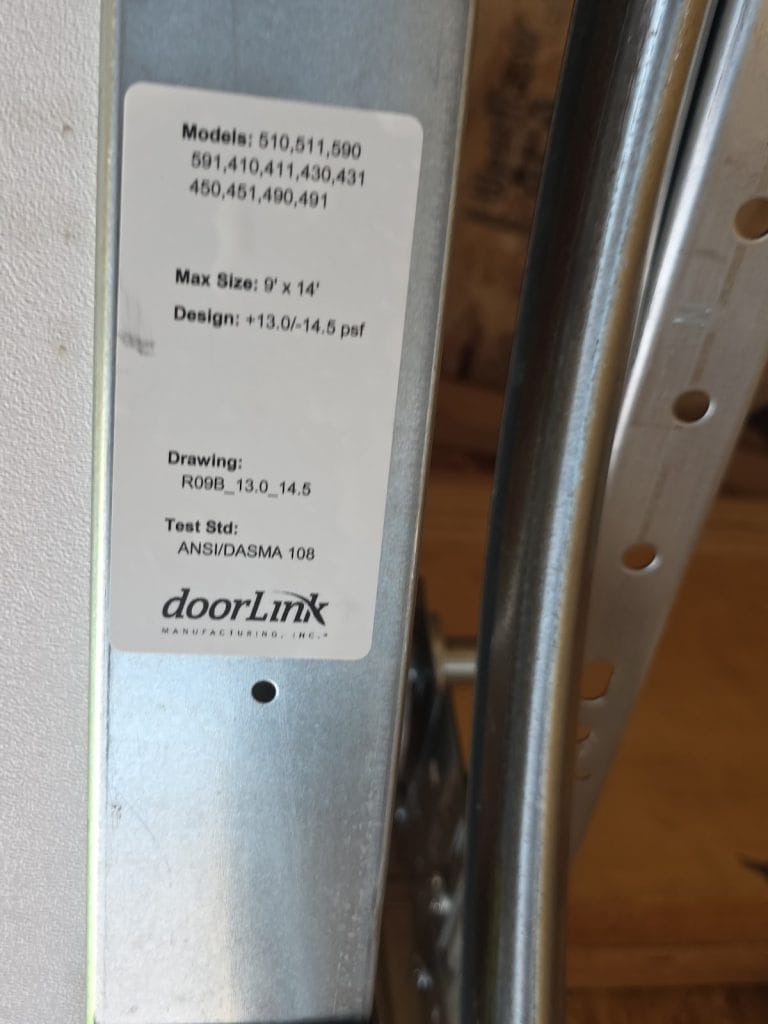
The label on the door
Quality doors carry a label with the model number and the door’s rating, like the DoorLink label in the photo below. Keep it: it tells a technician exactly which parts and springs fit your door. David installs mostly DoorLink doors, plus Haas and C.H.I.
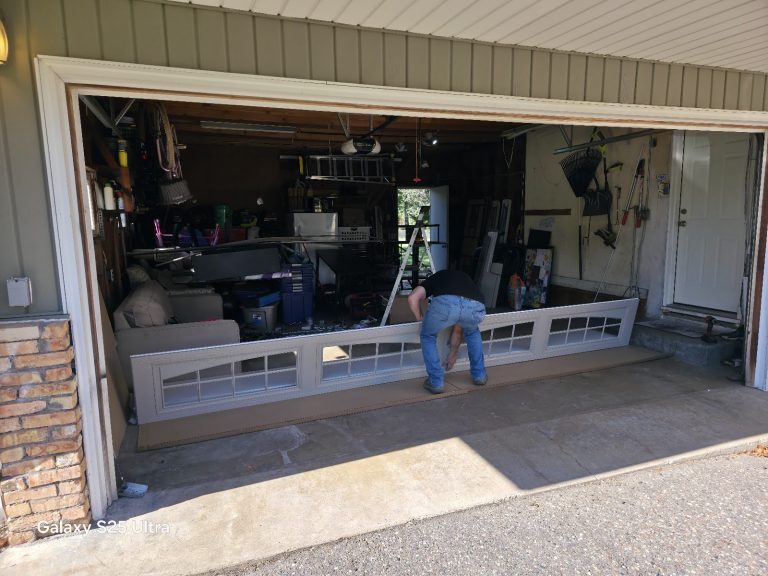
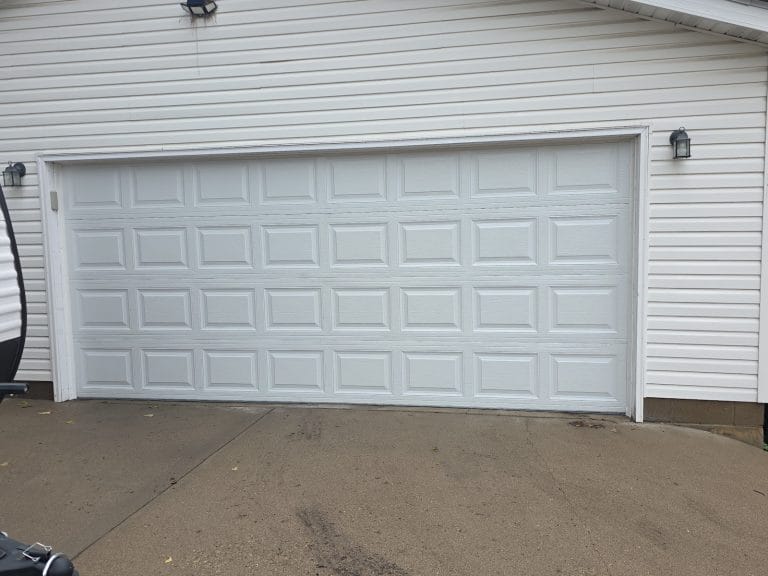
Real install work by David (not stock photos)
Common questions
What does garage door steel gauge mean?
Gauge is a number for the thickness of the steel skin. The lower the number, the thicker the steel: 24-gauge is thicker than 25, 26 or 27-gauge. Thicker skins resist dents from bikes, balls and car bumpers better.
Is 24-gauge steel worth it for a garage door?
For a door that takes knocks (kids, a busy driveway) a thicker 24 or 25-gauge skin and a door with insulation or a steel back hold up better. For a detached garage that is rarely used, a lighter door can be fine. Ask to see the actual door section, not just a number on a brochure.
Is a thicker door the same as an insulated door?
No. Gauge is the thickness of the outside steel. Insulation is what is inside: a vinyl-backed door has insulation with a vinyl back, and a 2-inch steel sandwich door has insulation between two steel skins. The sandwich door is stronger and warmer, which matters in a Minnesota winter.
How much does a new insulated garage door cost in the Twin Cities?
David’s ballpark: a new vinyl-backed insulated door starts around $2,000 installed, and a 2-inch insulated steel sandwich door starts around $2,800, both including removal of the old door. Every home gets an exact quote, and a door plus a LiftMaster opener together costs less than doing them separately.
Written by David Tuito, owner and technician of David’s Urgent Garage Door, St. Louis Park, MN (family-owned since 2019, MN State Contractor Registration #IR790255). 1-year labor warranty on repairs.