
The garage door is the biggest moving part of your house. The industry and the U.S. government publish solid safety guidance for homeowners, but it is spread across technical PDFs. Below, David (owner and technician of David’s Urgent Garage Door, St. Louis Park) sums up the parts that matter for a Minnesota homeowner, with links to the original sources.
1. The 15-minute monthly safety check (from DASMA and CPSC)
DASMA, the Door & Access Systems Manufacturers Association, publishes a 10-point checklist for home inspectors and homeowners. The CPSC (U.S. Consumer Product Safety Commission) recommends checking the door and opener every 30 days. Here is the short version:
- Find the red emergency release. It should hang from the opener and be reachable (under about 6 feet).
- Look at the warning labels. Spring, bottom-bracket and wall-control warnings should be on the door. If yours are missing, the door may have been installed by someone who skipped steps.
- Check the panels for cracks or separating layers.
- Test it by hand (opener disconnected): the door should move smoothly and stay put when you let go halfway. If it drops or shoots up, the springs are out of balance. Do not adjust them yourself.
- Wall button mounted at least 5 feet high, out of kids’ reach.
- Photo-eye sensors no more than about 6 inches above the floor, facing each other.
- Photo-eye test: wave something through the beam while the door closes. It must reverse.
- Contact test: lay a 2×4 flat in the door’s path. The door must reverse when it touches it. The CPSC says if it fails, stop using the opener until it is repaired or replaced.
- Hardware: look for loose hinges, brackets and track bolts.
- Spring containment: extension springs need a safety cable through them; torsion springs sit on a shaft.
Sources: DASMA Technical Data Sheet #167 (checklist for home inspectors and consumers) and CPSC: Non-reversing automatic garage door openers are a hazard.
Real jobs by David (not stock photos)
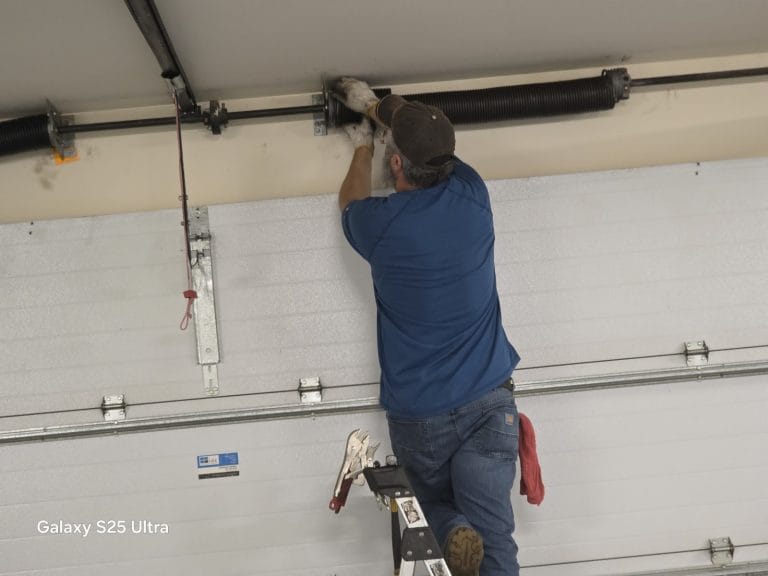
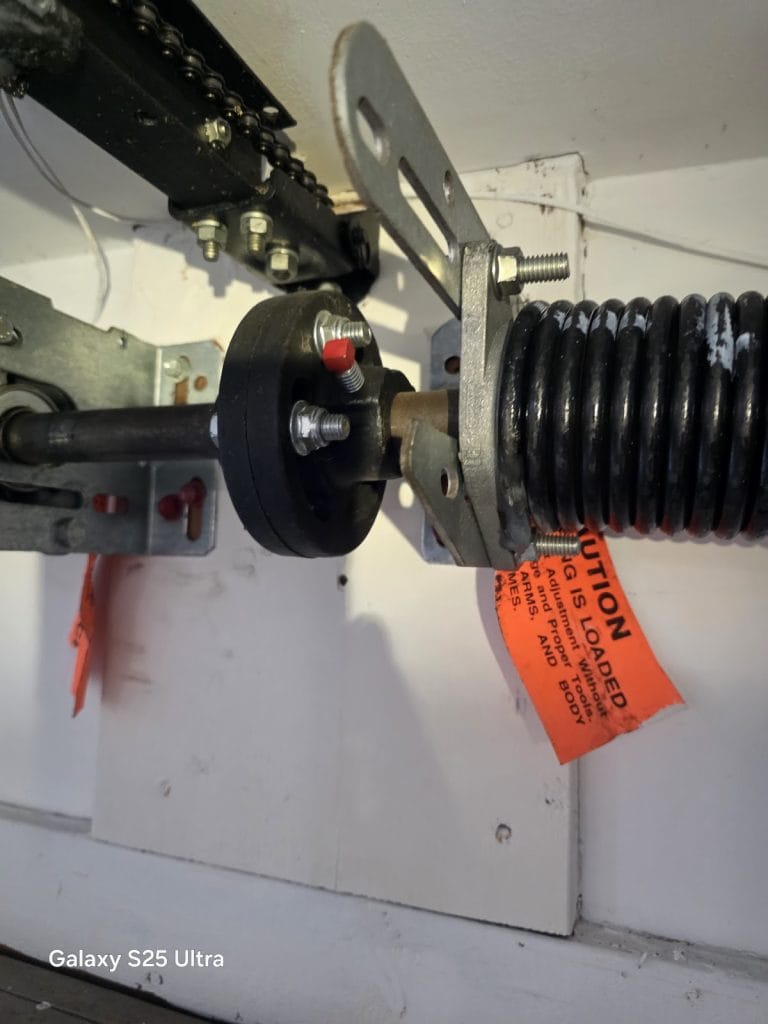
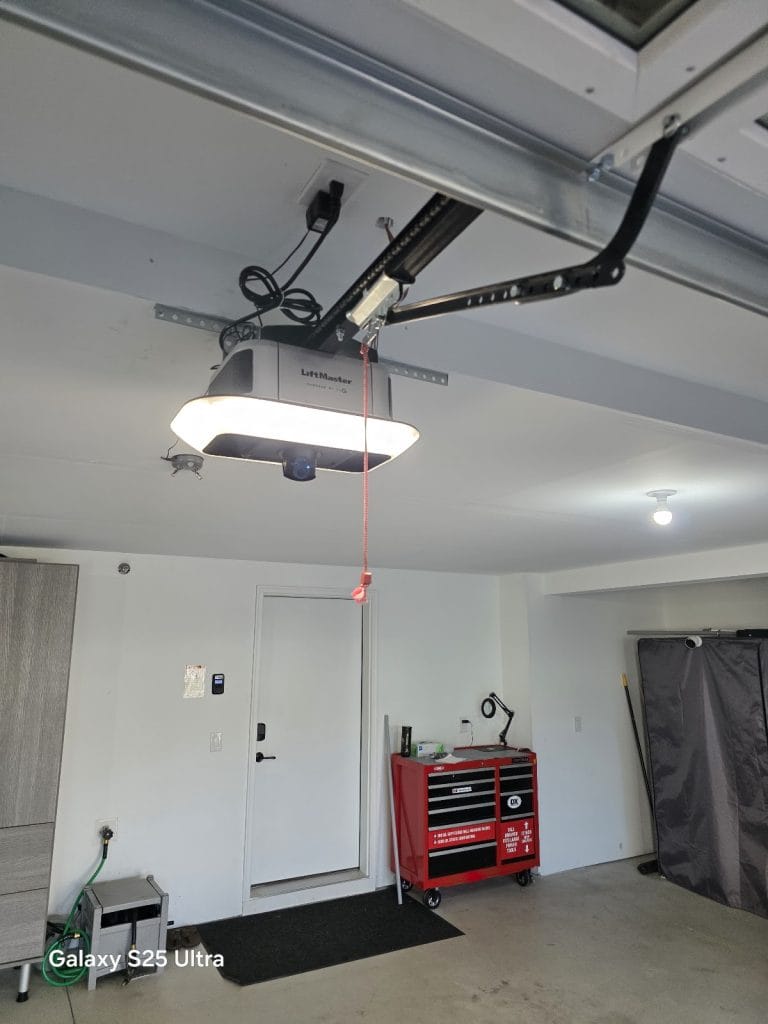
2. Springs and cables: why the industry says “don’t touch”
DASMA’s code-inspection guidelines tell homeowners never to handle parts under tension (springs, cables, bottom brackets) and to call a trained door technician if anything looks loose. DASMA’s own magazine, Door + Access Systems, has covered this for years. Its article “Torsion Spring Terrorism?” makes the point that spring dangers are well documented across the industry and not a sales scare.
What David sees in Minnesota: road salt is the enemy. Salty slush drips off the car onto the bottom of the door, so the bottom of the cables, the bottom brackets and the rollers rust first. Rusted cables snap, and rusted rollers stop turning. That is why so many doors come off track in January. When David replaces springs, he checks the cables too, because a cable that snaps in winter is the main reason doors come off track. Learn more: garage door spring repair.
Sources: DASMA Technical Data Sheet #151 (code inspection guidelines for sectional doors) and Door + Access Systems: “Torsion Spring Terrorism?”.
3. Openers made before 1993: time to replace
Federal rules require automatic openers to reverse on contact and to have an extra safety system such as photo-eyes (the CPSC rules took full effect for units made in the early 1990s). If your opener has no photo-eyes, or fails the 2×4 test, it should be replaced, not patched. David installs LiftMaster myQ openers with battery backup options and lifetime motor warranties: see LiftMaster openers. If your door stops and reverses for no reason, read why a garage door won’t close (safety sensors).
4. Where to read more
- DASMA (Door & Access Systems Manufacturers Association): technical data sheets and safety materials for homeowners.
- U.S. Consumer Product Safety Commission: recalls and opener safety rules.
- LiftMaster: opener manuals and myQ app help.
- DoorLink Manufacturing: the door brand David installs most.
- Our own guides: garage door FAQ, 24/7 emergency repair, maintenance and tune-ups.
Common questions
How often should I test my garage door opener’s safety reverse?
The U.S. Consumer Product Safety Commission recommends inspecting the door and opener every 30 days. Lay a 2×4 flat on the floor in the door’s path and close the door: it should reverse as soon as it touches the board. Also wave an object through the photo-eye beam while the door closes; it should reverse right away. If either test fails, stop using the opener and call a technician.
Can I replace a garage door torsion spring myself?
No. The door industry association DASMA and every major manufacturer warn homeowners not to touch springs, cables or bottom brackets, because they are under high tension. Call a trained garage door technician. In the Twin Cities, David’s Urgent Garage Door handles spring replacement 24/7 at (763) 265-7671.
Why do garage door cables and rollers fail so often in Minnesota?
Road salt. Snow and salt water drip off cars onto the bottom of the door, so the bottom of the cables, the bottom brackets, the rollers and the lower vertical tracks rust first. Rusted cables snap and rusted rollers stop turning, which is a common reason doors come off track in winter. A fall tune-up catches this early.
This page summarizes public safety guidance in our own words. DASMA, CPSC, LiftMaster and DoorLink are named for reference only; they do not endorse David’s Urgent Garage Door. Family-owned since 2019 · St. Louis Park, MN · MN State Contractor Registration #IR790255.