
Key facts in 20 seconds
- In Minnesota, garage door lift cables, bottom brackets and bottom rollers fail from the bottom up – road-salt slush drips off the car and sits on the lowest 12-24 inches of hardware.
- A cable that looks fine at eye level can be rusted to half its thickness at the bottom bracket. That is the strand that snaps.
- A snapped cable is the #1 reason a door drops crooked or comes off its track – usually in January, when the door is cycled the most.
- Cables are cheap and take under an hour to replace in pairs. Replace them before winter, or any time the spring is replaced.
- Rusted vertical tracks and seized bottom rollers are the same problem one step later.
Ask any garage door technician in the Twin Cities what he replaces most in January and the answer is not springs. It is the parts that live at the bottom of the door: the lift cables, the bottom brackets they hook into, and the bottom rollers. This page explains why those parts rust here faster than almost anywhere else in the country, how to spot the damage before it drops your door, and what a proper repair looks like. It is written by David Tuito, the owner-technician at David’s Urgent Garage Door in St. Louis Park, from the doors he actually works on.
What the cables, drums and bottom brackets actually do
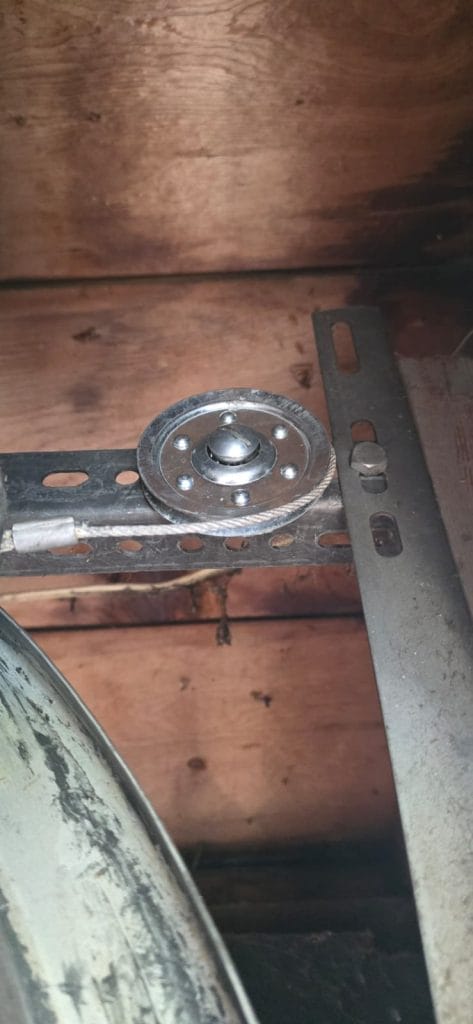
A sectional garage door weighs anywhere from 130 lb (a bare single door) to well over 300 lb (an insulated double). The torsion spring above the door stores the energy to lift that weight, but the spring never touches the door. It turns a shaft; the shaft turns a cable drum at each end; each drum winds a steel lift cable; and each cable runs down the side of the door to a bottom bracket bolted to the lowest section. When the spring turns the shaft, the cables pull the door up. The bottom bracket is therefore the single point where the entire lifting force meets the door – and it sits two inches off a wet, salty garage floor all winter.
Why Minnesota eats the bottom of your garage door
Minnesota roads are treated with rock salt and liquid brine from November into April. Every time you pull into the garage, that brine drips off the wheel wells, the rocker panels and the bumper and pools on the floor along the sides of the door – exactly where the cables, bottom brackets and bottom rollers are. During the day the garage warms just enough to melt it; overnight it refreezes. The result is a salt-water bath and a freeze-thaw cycle, repeated a hundred times a winter, on plain galvanized steel.
Here is what that does, in the order we see it on service calls:
- The bottom 12-24 inches of each lift cable turn orange. The cable is a bundle of thin steel strands; once the galvanizing is gone the strands rust, swell and start breaking one at a time. From eye level the cable looks fine, because the damage is down at the bracket.
- The bottom bracket rusts where the cable hooks in. The pin or the slot that holds the cable loop wears thin. On older doors we find brackets you can bend by hand.
- The bottom rollers seize. The roller stem and bearing sit in the same slush. A seized roller stops rolling and starts dragging, which loads the cable on that side even more.
- The vertical tracks pit and flake along the bottom two feet. A pitted track chews the remaining rollers and can let a roller pop out.
- One cable finally lets go – almost always on a cold morning, under full load, with the door on the way up. That side drops, the other cable jumps its drum, and the door jams crooked in the opening. This is the call we get at 6:30 AM in January.
Doors on the side of the garage that the car parks on fail first. Detached garages with a dirt or gravel apron and doors on homes built in the 1940s-1960s across St. Louis Park, Richfield, Edina and south Minneapolis – where the original hardware is often still on the door – are the most common cases we see.
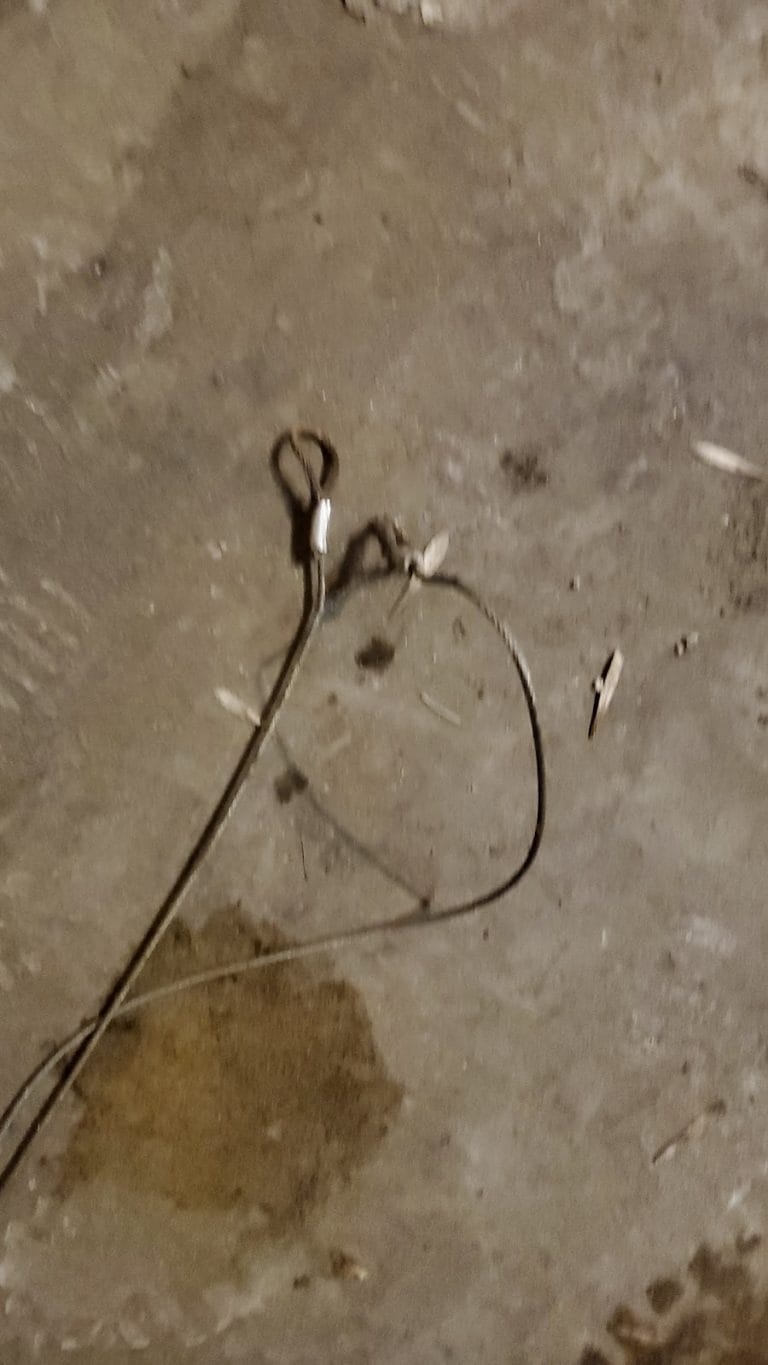
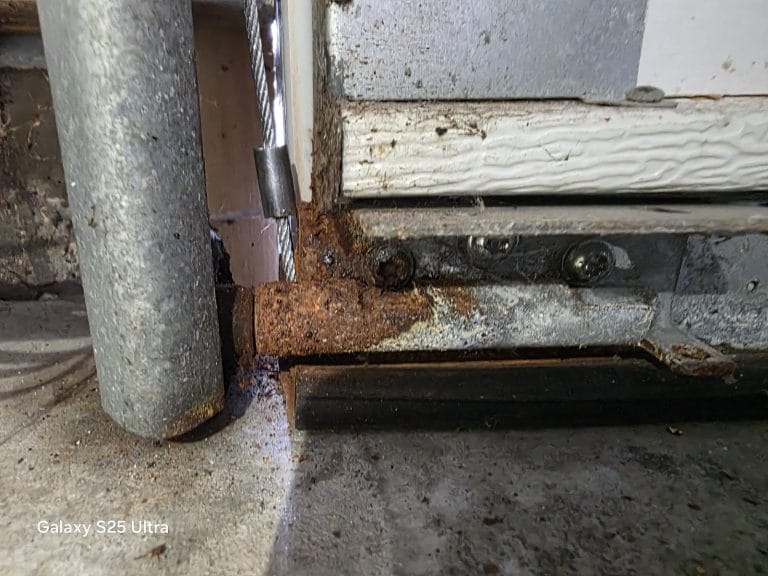
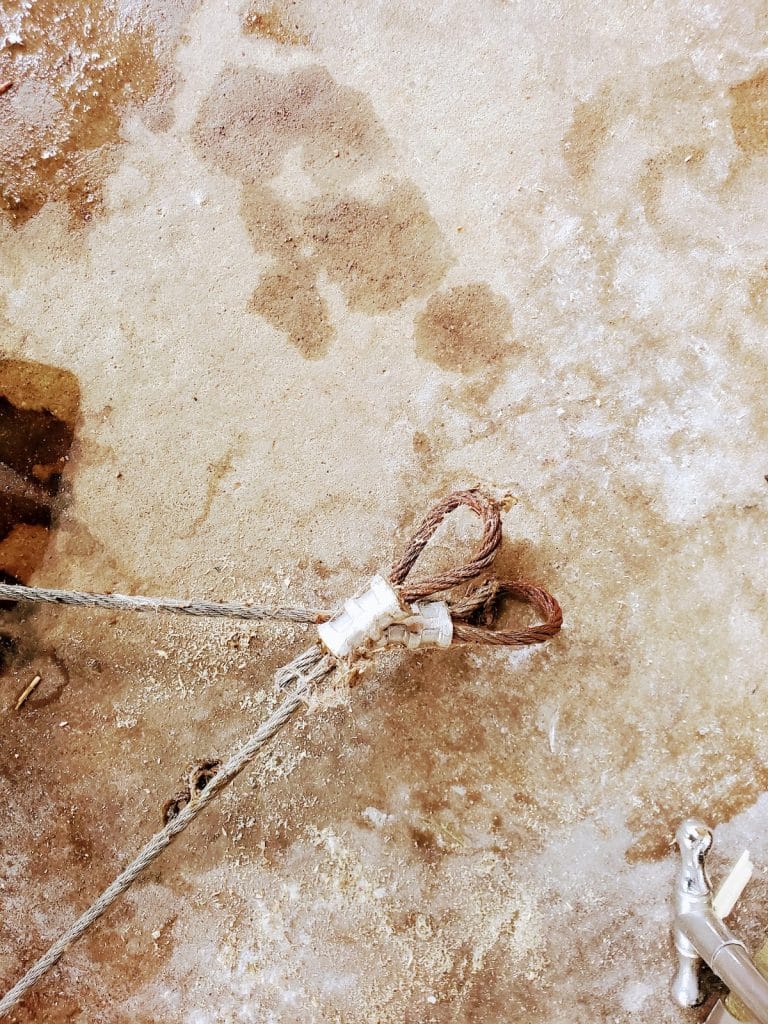
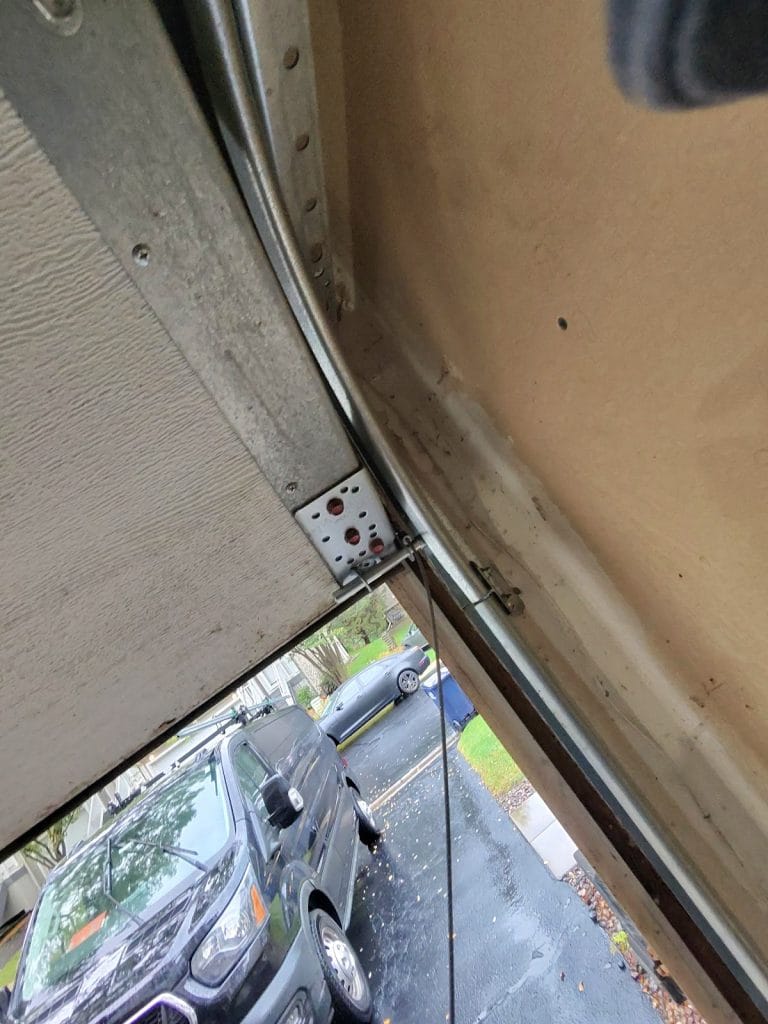
How to check your own cables in two minutes (door closed, opener off)
- With the door fully closed, look at the cable where it hooks into the bottom bracket on each side. Orange color, fuzzy broken strands or a cable that is visibly thinner at the bottom than at the top means it is on borrowed time.
- Look at the bottom bracket itself. Flaking rust, a bent tab or a cable loop that has worn a groove into the bracket are all replace-now signs.
- Watch the bottom rollers as the door starts up. A roller that slides instead of turning is seized.
- Run your hand along the inside of the vertical track (door closed). Rough, pitted steel in the bottom two feet means the track is rusting from the inside.
- Do not touch, loosen or unhook anything. The cables and the bottom brackets are under the full tension of the spring even when the door is down. Bottom brackets carry a warning tag for exactly this reason.
What a proper repair includes (and why we do it in pairs)
A cable repair done right is never one cable. Both cables were installed the same day and have lived in the same slush, so the second one is a few weeks behind the first. On a cable call we:
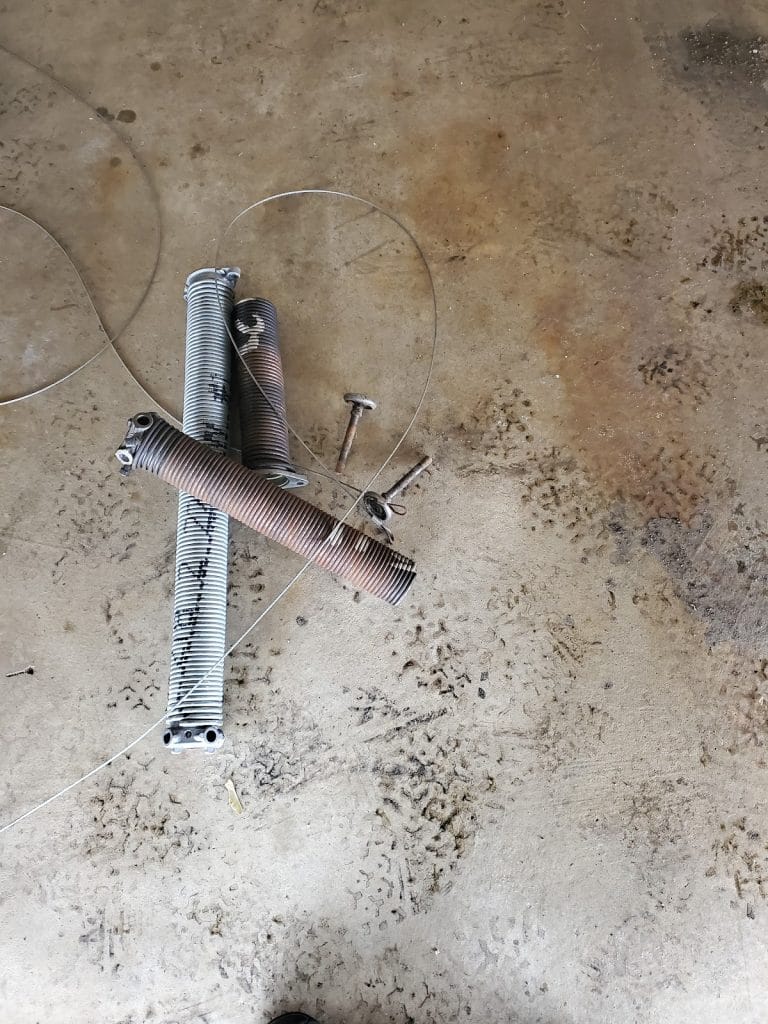
- unwind the spring safely and replace both lift cables with the correct length and gauge for the door height and drum size;
- replace rusted bottom brackets (they are cheap, and a new cable on a worn bracket fails at the bracket);
- replace seized or rusted bottom rollers – usually with sealed nylon rollers, which do not rust and run quieter;
- check the cable drums for a worn groove and re-seat the cable on both drums, then re-level the door;
- clean and, where the track is only surface-rusted, treat the bottom of the vertical tracks; badly pitted track sections are replaced;
- re-tension the spring and run the door through a full balance test before we leave.
Because the cables and the spring wear together, we currently replace the cables free with any spring replacement (offer code SPRINGS). It is the single cheapest way to avoid a January off-track call.
How to slow the rust down
- Hose or squeegee the slush off the floor along the sides of the door a few times a winter – it is the brine sitting there, not the cold, that does the damage.
- A once-a-year light coat of garage door lubricant (silicone or lithium spray, not WD-40) on the bottom rollers, the hinges and the bottom of the cables where they meet the bracket. Never lubricate the track itself.
- Ask for nylon rollers and galvanized or stainless bottom brackets when hardware is replaced.
- Keep the bottom weather seal in good shape – a torn seal lets more meltwater under the door and onto the hardware.
- Have the cables looked at every fall. Our tune-up visit checks all of the above.
Related: how springs are sized (IPPT & cycle life) · cable replacement service · off-track door repair · spring replacement · 24/7 emergency repair
Cables, drums and brackets – FAQ
Why did my garage door cable snap in winter?
Road-salt brine drips off the car and sits on the bottom of the cable and the bottom bracket all winter. The strands rust and break one by one, and the cable lets go under load – usually on a cold morning when the door is heaviest and used most.
Can I replace just the one broken cable?
You can, but the other cable is the same age and has sat in the same slush, so it usually fails within weeks. We replace cables in pairs and check the bottom brackets and rollers at the same time.
Is a frayed garage door cable dangerous?
Yes. The cable and bottom bracket carry the full spring tension even when the door is closed. Never unhook, loosen or unbolt a bottom bracket yourself. If a cable is dangling or the door is crooked, stop using the opener and call.
How long does a cable and bracket replacement take?
Usually under an hour for both cables, bottom brackets and bottom rollers, including re-leveling the door and a balance test. Parts are stocked on the truck.
Should I lubricate the cables?
A light coat of garage-door lubricant on the bottom rollers, hinges and the bottom of the cables once a year helps. Do not use WD-40 (it strips grease) and never lubricate the track – rollers are meant to roll on dry steel.
Do rusted tracks need to be replaced?
Surface rust on the bottom of the vertical track can be cleaned and treated. If the steel is pitted or flaking so the rollers catch, the bottom track sections are replaced – it is far cheaper than a new door.