
Key facts in 20 seconds
- Headroom is the clear space between the top of the door opening and the ceiling (or the lowest pipe, duct or beam). It decides which track and spring setup your door can use.
- Standard 15-inch radius track needs roughly 12 to 15 inches of headroom; 12-inch radius track gets by with about 10 to 12 inches; a true low-headroom kit works in as little as 4.5 to 6.5 inches. Charts differ by an inch or two between manufacturers, so we measure on site.
- A ceiling-mounted opener needs about 2 to 3 more inches above the door; a wall-mount (jackshaft) opener needs none.
- The bigger the radius, the gentler the curve: 15-inch track runs quieter and wears rollers, hinges and top brackets less than 12-inch track.
- Most “the door bangs the header” and “top section pops out at the curve” calls in older Twin Cities garages are a track-radius or headroom mismatch, not a bad door.
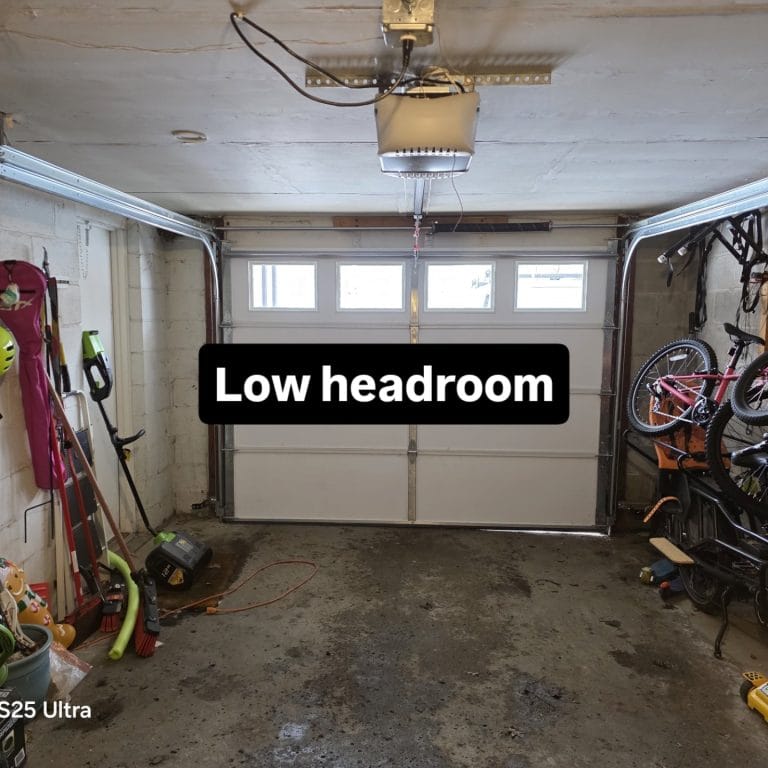
A low-headroom garage door is one installed where there is not enough space above the opening for a standard track curve and spring, so it uses a tighter track radius, a special double-track kit, or a spring mounted at the back of the garage instead. Low headroom is common in Minneapolis-St. Paul: thousands of garages built from the 1940s to the 1970s in St. Louis Park, Richfield, south Minneapolis and the older parts of St. Paul have ceilings, attic trusses, ductwork or a furnace flue sitting just above the door. This guide explains what track radius means, how much headroom each setup really needs, which low-headroom options exist, and what goes wrong when someone installs the wrong one. Written by David Tuito, owner-technician at David’s Urgent Garage Door, St. Louis Park.
What “headroom” and “track radius” actually mean
Headroom is measured from the top of the finished door opening straight up to the lowest obstruction: the ceiling, a beam, a heating duct, a pipe or the bottom of an attic truss. It is not the ceiling height. A garage with a 9-foot ceiling and a 7-foot door has 24 inches of headroom on paper, but if a furnace duct runs across the front wall 8 inches above the opening, the headroom is 8 inches.
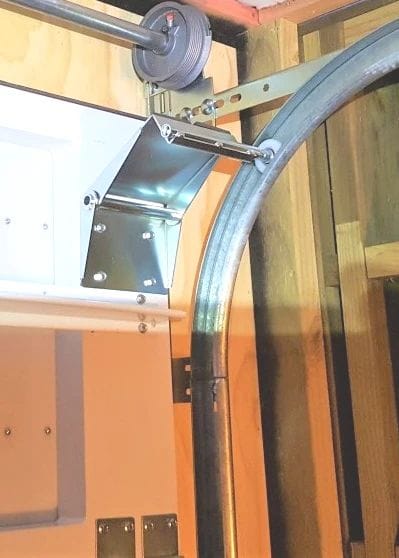
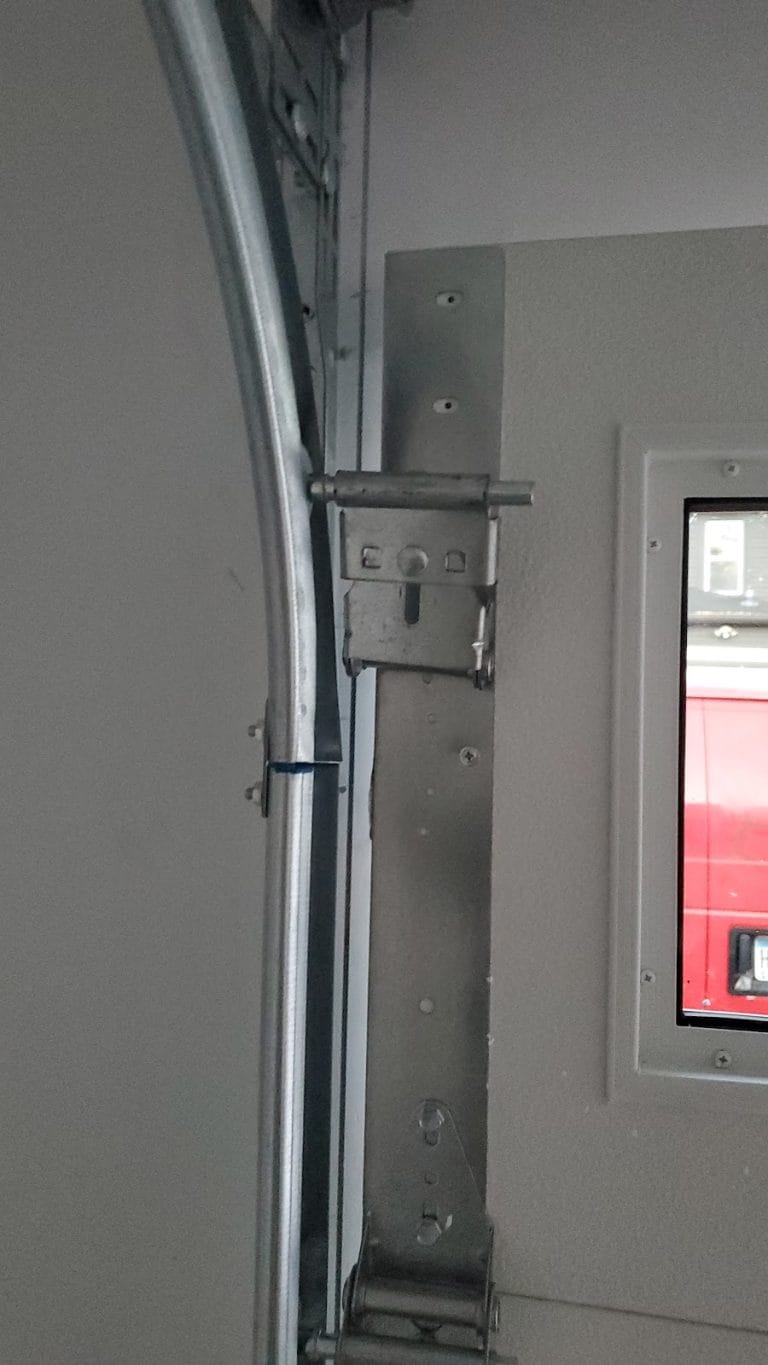
Track radius is the size of the curve where the vertical track (up the side of the opening) bends into the horizontal track (back along the ceiling). The two standard sizes are 15 inch and 12 inch, named for the radius of that bend. The rollers on the top section have to follow the curve, and the door has to swing through it, so the curve, the spring and the opener rail all compete for the same few inches above the opening. That is why the radius and the headroom are always discussed together.
How much headroom each setup needs
| Setup | Approximate headroom needed | Notes |
|---|---|---|
| 15″ radius, torsion spring (standard) | 12-15″ | Smoothest, quietest, longest-lasting. Our default on any garage that has the room. |
| 12″ radius, torsion spring | 10-12″ | Tighter curve. Fine when it is the only way to keep a front-mounted torsion spring. |
| 15″ or 12″ radius, extension springs | About the same as torsion, plus room for the springs along the horizontal track | Needs more sideroom (about 5.5″) and the springs run above the tracks. |
| Low-headroom double-track (quick-turn) kit | 4.5-6.5″ | Second short track above the horizontal track carries the top rollers; often paired with a rear-mounted torsion spring. |
| Rear-mount torsion spring | About 6″ | Spring assembly sits at the back end of the horizontal tracks instead of over the opening. |
| Add a ceiling-mounted opener | +2-3″ | The rail has to clear the top of the door in the curve. A wall-mount (jackshaft) opener adds nothing. |
Every manufacturer publishes its own chart and the numbers move an inch or two between brands, door thickness (a 2-inch insulated door needs slightly more than a 1-3/8-inch door) and hardware series. Treat the table as the range, not a promise: on every estimate we measure headroom, sideroom and backroom on site before ordering track.
15-inch vs 12-inch radius: why the bigger curve is better when it fits
The top section of the door is the one that has to turn the corner, and it turns it with the top roller riding the curve while the section below is still in the vertical track. A 15-inch radius lets that happen gradually. A 12-inch radius makes the top section pitch back harder and sooner, so the top roller bracket, the top hinges and the roller stems take more side load on every single cycle. Over a few thousand cycles that shows up as a louder door, rollers that wear flat on one side, hinges that crack at the knuckle, and eventually a top roller that walks out of the track at the curve. In Minnesota that wear is faster still, because the rollers and hinges are also fighting cold, dry bearings and road-salt rust. If a garage has the room for 15-inch track, there is no good reason to install 12-inch.
The four ways to fit a door under a low ceiling
1. Drop to 12-inch radius track
The simplest fix when you are only an inch or two short. Same door, same torsion spring over the opening, a tighter curve. Accept slightly more noise and roller wear; keep a set of good nylon ball-bearing rollers on it and it will run for years.
2. Low-headroom double-track (quick-turn) kit
A short second track is mounted a few inches above the regular horizontal track. The top rollers of the door are moved onto special quick-turn brackets that ride in that upper track, so the top section can swing into the horizontal position almost immediately instead of needing a full curve. This is the standard answer for 5 to 7 inches of headroom and it is what most 1950s garages around the west metro end up with. It adds hardware and a little noise, and it needs a technician who has set one up before, because the roller positions and the spring setup are different from a standard door.
3. Rear-mount torsion spring
Instead of sitting on the header above the opening, the torsion shaft and spring are mounted at the back end of the horizontal tracks, and the cables run the length of the track to the bottom brackets. It frees the space directly over the door and is usually combined with the double-track kit. The trade-off is longer cables (more to inspect for rust and fraying) and a spring that is harder to reach for adjustment.
4. Wall-mount (jackshaft) opener
Headroom problems are often really opener problems: the door would fit, but the opener rail will not. A wall-mount opener such as the LiftMaster 98022 (the successor to the 8500W) bolts to the wall beside the door and turns the torsion shaft directly, so there is no rail, no ceiling motor and no extra headroom needed. It also gets the motor out of the way of a car lift, kayak storage or a second-floor conversion. We install and service them across Minneapolis-St. Paul.
Sideroom and backroom: the other two numbers
Headroom gets all the attention, but two more measurements decide whether a door and opener fit. Sideroom is the wall space beside each side of the opening: about 3.75 inches per side for a torsion-spring door and about 5.5 inches for extension springs, because the vertical track, jamb brackets and (for extension) the spring pulleys live there. Backroom is the distance from the opening straight back into the garage: the door itself needs its own height plus about 18 inches of horizontal track, and a ceiling-mounted opener needs roughly the door height plus 4 to 4.5 feet in total. Old single-stall garages that are barely longer than a modern SUV often fail on backroom, not headroom, which is one more reason a wall-mount opener is the right call there.
What goes wrong when the radius or headroom is wrong
- The top section hits the header or the opener rail on the way up. The door stops at the same spot every time and the opener strains or reverses.
- The top rollers pop out at the curve. The door hangs crooked and jams. This is one of the most common causes of an off-track door on older doors that were “made to fit”.
- Cracked top hinges and bent top brackets from a curve that is too tight for the door’s thickness.
- A loud bang at the top of travel where the top section slams into the horizontal position instead of easing into it.
- Opener burnout. A door that binds in the curve makes the opener do the work the track should be doing; gears strip and the motor hums without moving the door.
If any of those sound familiar, do not keep running the door. A binding door bends track and cracks sections a little more every cycle. Leave it where it is and have it looked at; retrofitting the right track radius or a low-headroom kit is far cheaper than a new top section.
Minnesota-specific notes
Three things come up again and again in Twin Cities garages. First, insulated doors: a 2-inch polyurethane door is the right choice for a Minnesota winter, but it is thicker and heavier than the 1-3/8-inch door it replaces, so a garage that was fine with 12-inch track on the old door may need a low-headroom kit for the new one. Second, attic trusses and furnace flues in detached garages that were converted to heated workshops: the obstruction is often not the ceiling but a flue or a duct that was added later. Third, cold and salt: the tighter the curve, the more the rollers and hinges suffer, and Minnesota already punishes both, so on low-headroom doors we always use nylon ball-bearing rollers and check the hardware at every spring replacement.
David measures headroom, sideroom and backroom on site and quotes the right track and opener before any work starts. Same-day service across Minneapolis-St. Paul from St. Louis Park.
Call (763) 265-7671
Related: new garage door installation – LiftMaster and wall-mount openers – off-track repair
Frequently asked questions
What is a low-headroom garage door?
A garage door installed with special hardware because there is less than about 10 to 12 inches of clear space above the door opening. It uses a tighter track radius, a double-track (quick-turn) kit, a rear-mounted torsion spring, or a combination, so the door can turn into the horizontal position without a full-size curve.
How much headroom do I need for a garage door?
About 12 to 15 inches for standard 15-inch radius track with a torsion spring, 10 to 12 inches for 12-inch radius track, and as little as 4.5 to 6.5 inches with a low-headroom kit. Add 2 to 3 inches for a ceiling-mounted opener, or none for a wall-mount opener. Measure to the lowest obstruction, not the ceiling.
What is the difference between 12-inch and 15-inch radius track?
The size of the curve where the vertical track turns horizontal. 15-inch radius is the gentler curve: quieter, easier on rollers and hinges, and the standard choice when there is room. 12-inch radius saves about 2 to 3 inches of headroom at the cost of a harder turn for the top section.
Can I install a garage door opener with low headroom?
Yes. If a ceiling-mounted opener will not clear the door in the curve, a wall-mount (jackshaft) opener such as the LiftMaster 98022 (the successor to the 8500W) mounts beside the door on the torsion shaft and needs no headroom at all. It requires a torsion-spring door with enough sideroom on one side.
Why does my garage door bang at the top or hit the ceiling?
Usually because the track radius is too tight for the door, the horizontal tracks are pitched wrong, or the opener rail is too low over the curve. The top section slams into position or strikes the header. It should be corrected before it cracks the top hinges or throws a roller out of the track.
Does an insulated door need more headroom?
Slightly. A 2-inch insulated door is thicker than a 1-3/8-inch door, so it needs a little more room in the curve and, being heavier, a correctly sized torsion spring. In a tight garage that can be the difference between 12-inch radius track and a low-headroom kit, which is why we measure before ordering the door.