
Quick answer: A door that opens six inches and quits, or stops partway up and reverses, is usually the opener protecting itself from a door that has become too heavy or is binding. In order: a broken torsion spring (the “six-inch rule”), rusted rollers or tracks that bind – the Minnesota road-salt special – a bent track or obstruction, and finally opener travel and force settings. Spring replacement runs $150-$350 (single door; double or heavy doors up to $200 more), rollers and track work less, opener adjustment is minor. Call (763) 265-7671, 24/7.
This one confuses people because the door clearly works – it moves – it just will not finish the job. It lifts a few inches and stops, or gets halfway and heads back down, or stalls at the same spot every time. In David’s experience the door is almost always telling the truth: something is making it heavier or stiffer than the opener will tolerate, and the opener is doing exactly what it should by giving up. Here is how to read where it stops.
Stops after about six inches: broken spring
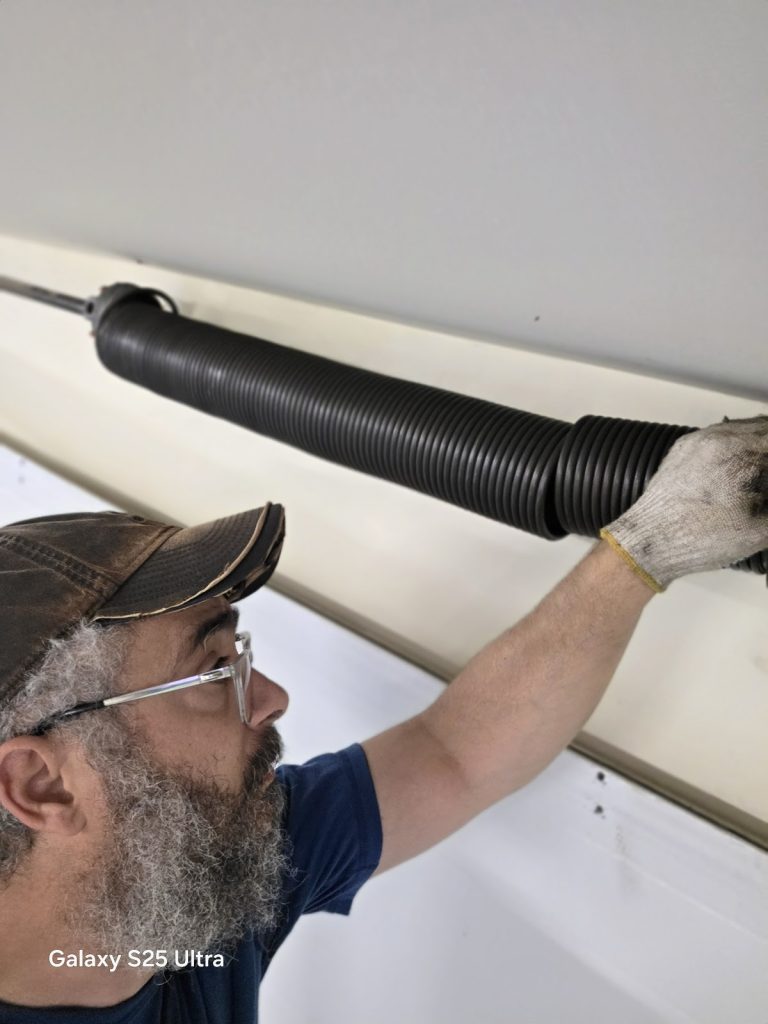
Modern openers measure how hard they are working. When a torsion spring breaks, the opener suddenly has the door’s full weight – 150 to 400 pounds – and its force limit trips within the first few inches of travel. The door lifts a hand’s width, stops, and often drops back. Look at the spring shaft above the door for a gap in the coil, and think back to whether you heard a bang from the garage. This is the single most common cause of “opens a little and stops” and it is a spring replacement, $150-$350 (single door; double or heavy doors up to $200 more) in the Twin Cities, same day. Stop running the opener; each attempt chews the drive gear. If the opener is older and just hums instead of stopping, read opener hums but the door will not move.
Stops or shudders partway up: rusted rollers and tracks
This is the Minnesota cause. Road salt drips off the car, pools at the bottom of the door, and rusts the bottom rollers, the bottom brackets and the lower section of the vertical tracks. Rusted rollers stop rolling and start skidding; the door drags, shakes, and the opener’s force limit stops it partway. You can usually see it: orange rollers at the bottom, a rusty stripe on the inside of the track, maybe a roller with a flat spot. A full set of sealed nylon rollers makes the door quieter and lighter to move, and if the track is pitted David will tell you honestly whether it can be cleaned and lubricated or needs a section replaced. This is also the number-one reason a door that “used to be fine” starts stopping in its second or third winter.
Stops at the same spot every time: bent track, loose hardware or an obstruction
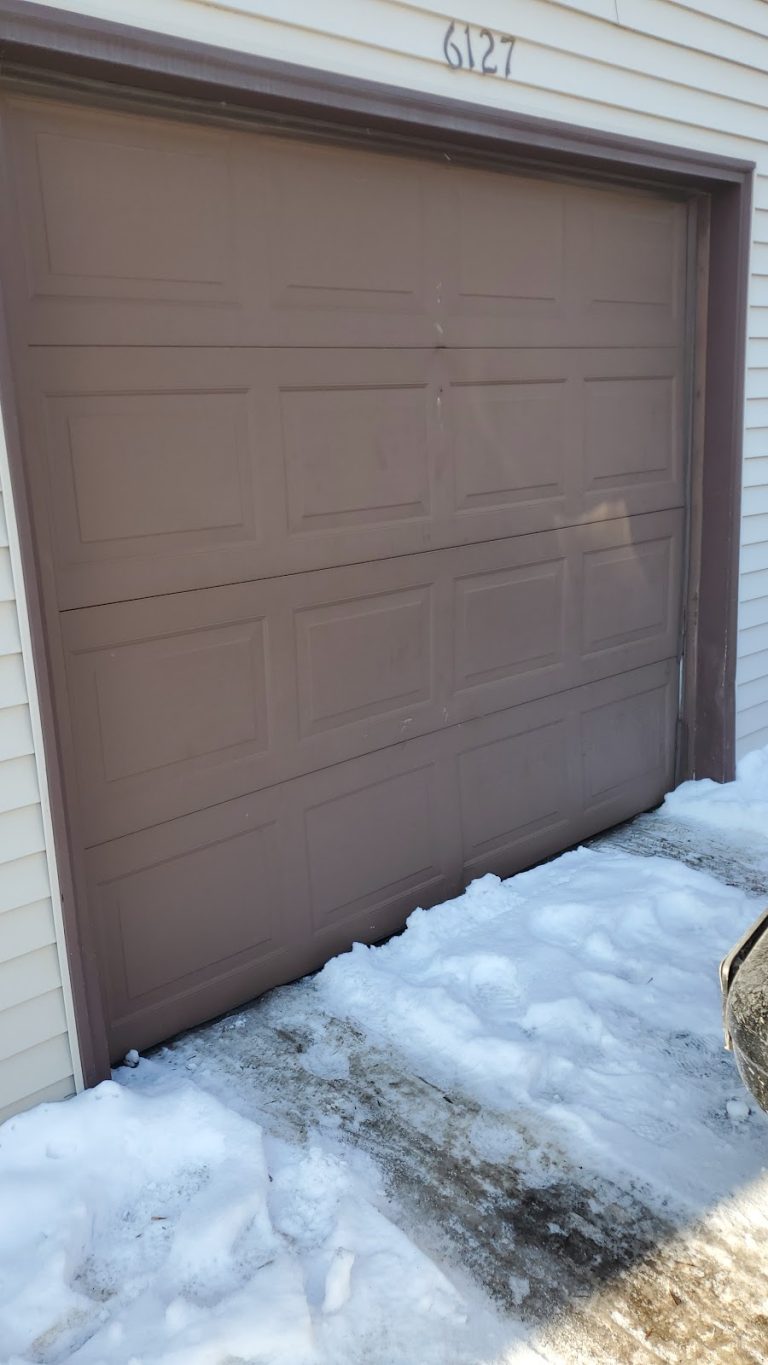
A door that always stops at exactly the same height has something in its way. A track dented by a car mirror or a bike, a hinge with a loose bolt letting a roller catch, a piece of the weather seal folded into the track, a shelf or ladder leaning too close, or a track bracket that has pulled away from the wall are all common. Watch the door from inside with the opener running and you will usually see the roller hit the problem. Straightening track and tightening hardware is part of an off-track and track repair visit; if a roller has actually jumped out, do not keep cycling the door – the next cycle can fold the section.
Stops in cold weather only: frozen seal or stiff lubricant
If the door stalls only on the coldest mornings and works fine by afternoon, the bottom seal is freezing to the floor or the old grease on the rollers and hinges has gone stiff. The opener breaks the door free, then meets the drag and quits. Our frozen door guide covers freeing it safely, and a fresh bottom seal plus a winter-grade lubricant at the fall tune-up stops it coming back.
Door is fine by hand: opener travel and force settings
Pull the red release cord and lift the door by hand. If it glides up smoothly, stays where you leave it and feels light, the door is fine and the opener is the problem. The up-travel limit may be set short (the door stops early and does not reverse), or the force setting is turned too low so the opener trips on normal friction, or the travel module inside the opener has drifted. On LiftMaster and Chamberlain units this is a five-minute adjustment; on older openers with a worn travel limit switch it is a small part. Either way it is an opener repair in the $75-$200 range. One warning: cranking the force up to “make it work” is how people end up with a bent door and a stripped gear – fix the cause, then set the force.
Reverses on the way down instead? Different problem
If the door opens fully but stops or reverses while closing, that is the safety sensors or the down-force setting, not any of the above. That has its own page: garage door will not close.
Two-minute checklist
- Gap in the torsion spring above the door? Broken spring – stop using the opener.
- Rusty bottom rollers or a rust stripe inside the track? Rollers and track service.
- Always stops at the same height? Look for the dent, loose hinge or obstruction at that spot.
- Only on sub-zero mornings? Frozen seal or stiff lubricant.
- Door glides easily by hand? Opener travel or force adjustment.
Written from the field by David, owner of David’s Urgent Garage Door – repairing and installing garage doors across the Minneapolis-St. Paul metro since 2019.
Real jobs by David (owner-operated) — photos from recent Twin Cities calls

Frequently asked
Why does my garage door open a few inches and then stop?
Almost always a broken torsion spring. The opener’s force limit trips within the first few inches because it suddenly has the door’s full weight. Look for a gap in the spring coil above the door and stop using the opener until the spring is replaced.
Why does my garage door stop halfway up?
The door is binding: rusted rollers or tracks (very common in Minnesota from road salt), a bent track or loose hinge at the spot where it stops, an obstruction, or in winter a frozen seal or stiff lubricant. If the door moves easily by hand, the opener’s travel or force setting needs adjusting.
Can I turn up the force on my opener to make the door open all the way?
It is not a good idea. Raising the force hides the real problem – a worn spring, seized rollers or a bent track – and lets the opener push hard enough to bend the top section and strip its own gear. Fix the cause first, then set the force to the minimum that runs the door.
What does it cost to fix a garage door that stops partway?
In the Twin Cities a spring replacement is $150 to $350 (single door; double or heavy doors up to $200 more), a set of rollers or a track repair is less, and an opener travel or force adjustment is a minor service call, with opener repairs generally $75 to $200. David will tell you which one it is before any work starts.
Door stopping partway in Minneapolis, St. Paul or the suburbs? Call David at (763) 265-7671 – same-day spring, roller and track repair across the Twin Cities, from Minnetonka to Maplewood, with 24/7 emergency service when your car is stuck inside.
Door won’t close once it gets cold? Read why a garage door won’t close in cold weather (7 winter causes).
Related guide: a door that stops short is usually a travel-limit or force problem; read opener force and travel limits explained: why the door reverses, stops short or slams, and how to adjust them safely.