
You pressed the button, the door started up, and then it stopped — one side higher than the other, maybe with a loud clunk, maybe with a loose steel cable dangling by the track. That is a snapped garage door cable, and it is one of the most common emergency calls David takes across the Twin Cities. Here is what actually happened, why the door is now crooked, and what you should and should not do before help arrives.
What the Cables Actually Do
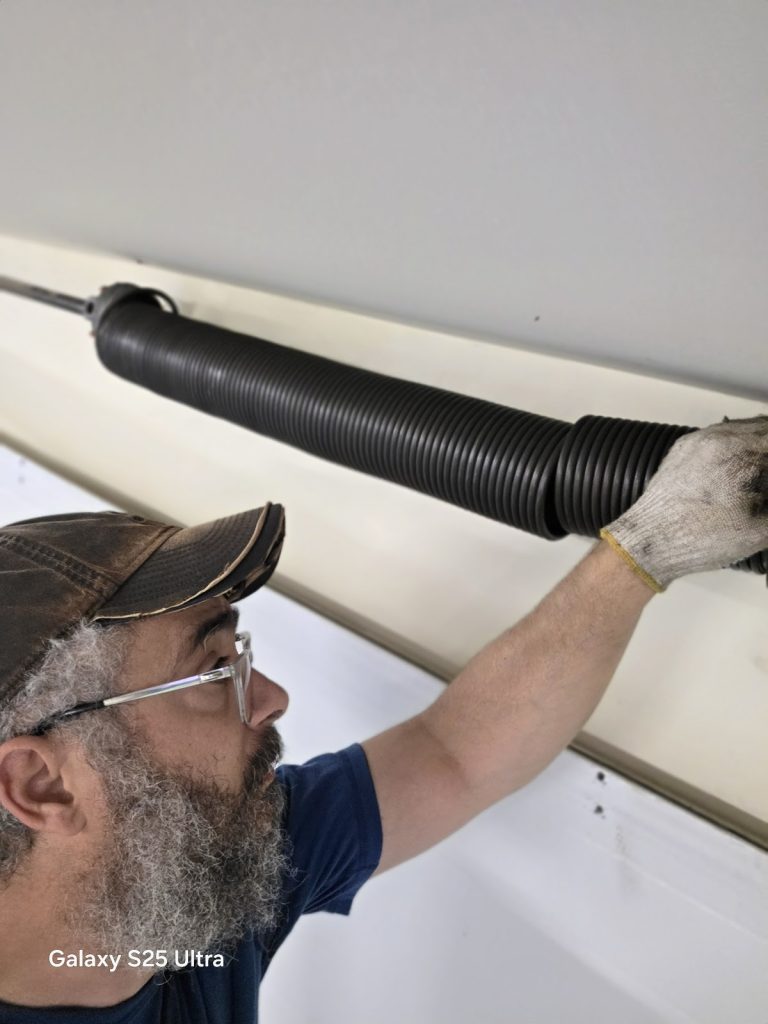
Most residential garage doors are lifted by a torsion spring mounted above the door. The spring does not touch the door directly — it turns a shaft with a drum on each end, and a steel lift cable winds around each drum and runs down to the bottom corner of the door. When the spring unwinds, the drums pull the cables, and the cables lift the door evenly from both bottom corners. Two cables, two drums, one spring: that is the whole lifting system on most doors.
Because the cables carry the full weight of the door (often 150 to 300 pounds on a double door), they are under real tension every time the door moves. A single steel strand fraying is normal wear. A full break is what leaves you stuck.
Why Garage Door Cables Break
- Simple wear. Cables are rated in cycles, just like springs. After ten or fifteen years of daily use, the strands fatigue and the cable finally lets go — usually at the bottom bracket or where it enters the drum.
- Rust and Minnesota winters. The bottom of the cable sits inches from the slab. Road salt, meltwater and freeze-thaw cycles corrode the strands from the inside. A cable that looks fine from a distance can be half rust at the bottom bracket.
- A broken or weak spring. When a torsion spring breaks, the door suddenly weighs far more than the opener can lift. The opener strains, one cable jumps the drum or snaps, and now you have two problems instead of one. This is why David always checks the spring on every cable call.
- The door hit something. Closing on a bike, a shovel or a bumper stops one side of the door short. The cable on that side goes slack, jumps off the drum, and tangles or breaks on the next cycle.
- A frozen door. On sub-zero mornings the bottom seal freezes to the concrete. The opener pulls, the door does not move, and the cable takes the shock. Our guide on what to do when a garage door freezes to the floor covers how to avoid this.
Why the Door Is Crooked — and Why You Should Not Force It
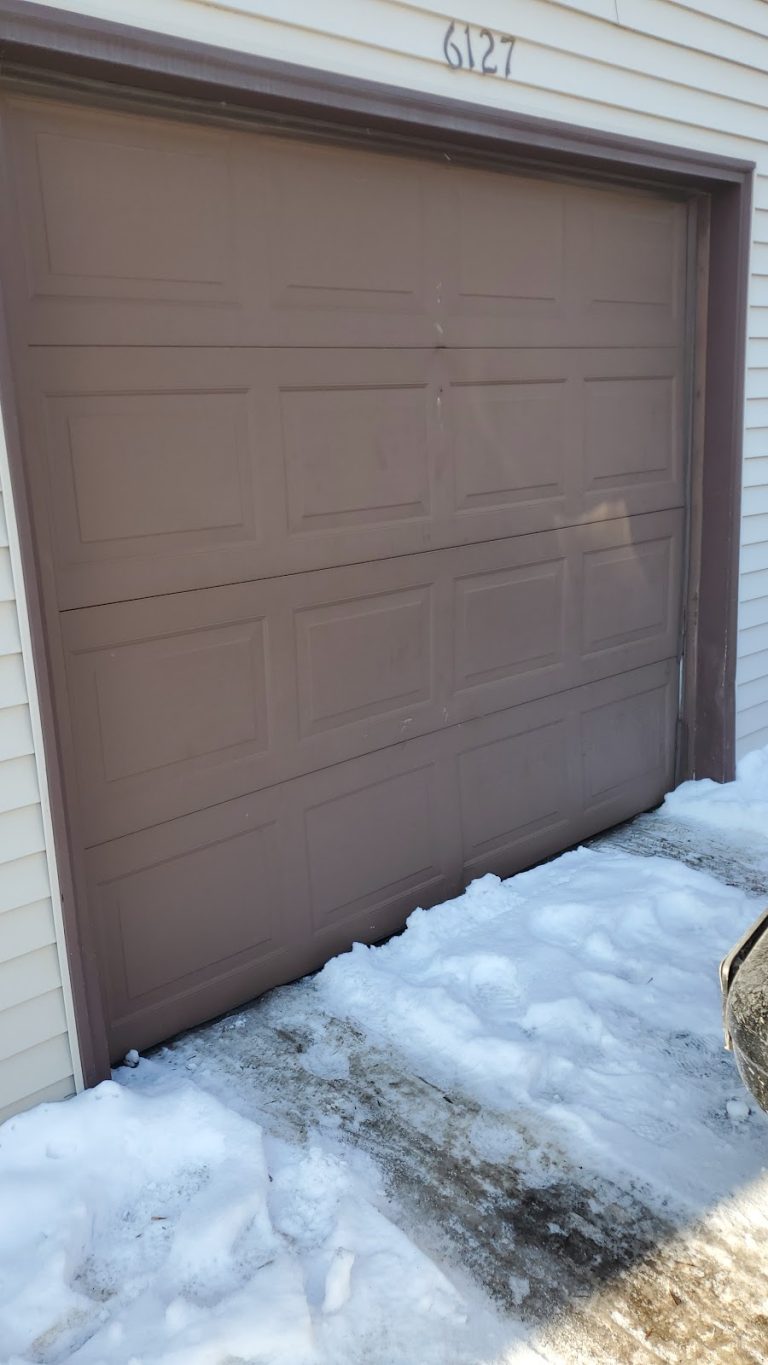
With one cable gone, the spring is still lifting the other side. The door racks in the opening: one corner rises, the other stays down, and the panels twist against the tracks. Every additional inch you force it — with the opener or by hand — grinds the rollers, bends the track, and can crack a panel or pull the top bracket out of the door. A cable replacement is a modest repair; a bent track and a split panel is a much bigger one.
There is also a safety reason. The remaining cable and the spring are still under full tension, and a door hanging crooked in the tracks can drop without warning. Keep kids, pets and cars clear of the door, unplug the opener so nobody presses the button, and leave it exactly where it is.
What the Repair Involves
Cables are always replaced as a pair. If one has worn out, the other is the same age and has been through the same salt and the same cycles — replacing only the broken one just schedules the next breakdown. David winds down the spring tension, frees the door, replaces both cables, inspects the drums, bottom brackets and rollers, re-tensions the spring and balances the door so it sits level and moves smoothly. Most cable jobs are finished in one visit, and the door is usually back in service within the hour.
If the drums are grooved or the spring is at the end of its life, David will tell you before doing anything extra. Worn drums are covered on our cable drum replacement page, and if the spring is the real cause, our spring repair page explains the options, including high-cycle springs.
Real jobs by David (owner-operated) — photos from recent Twin Cities calls

What It Costs
Cable replacement in the Twin Cities typically runs $200 to $300 for the pair, including labor. If a broken spring is found at the same time, spring replacement adds roughly $150 to $350 (single door; double or heavy doors up to $200 more). Full price ranges for every common repair are on our garage door repair cost page.
A snapped cable often takes the door off its rails at the same time — if one side is jammed or crooked, see how we handle off-track garage door repair before anyone tries to force it.
Full details on the repair itself – what gets replaced, why both cables, and why Minnesota cables fail at the bottom – are on our garage door cable replacement page.
A cable that lets go is also why a door slams down or closes too fast.
Garage door hanging crooked with a loose cable? Do not force it. Call David at (763) 265-7671 — available 24/7 across the Minneapolis-St. Paul metro.
If the cable snapped tonight and the car is inside, do not try to lift the door – call our 24/7 emergency garage door repair line; David answers himself and is usually there within about an hour.