
A garage door that has jumped its track is one of the most alarming problems a homeowner can walk into. The door sits crooked, the rollers are out of the rail, and the whole thing looks like it could come down at any moment. Here in the Twin Cities we get these calls year-round, and the single most important thing to know is this: stop using the door. Here’s why doors come off track, why forcing one is dangerous, and how it gets fixed properly.
What “Off Track” Actually Means
Your garage door rides on small rollers that sit inside a pair of steel tracks running up each side of the opening. Those tracks keep the door aligned and carry its weight as it moves. When a roller pops out of the rail — or the rail itself gets bent — the door loses its guide on that side. It leans, binds, and puts all of its weight on the remaining rollers, cables, and springs. What starts as one roller out of place can quickly turn into a bent door section or a snapped cable.
1. Something Hit the Door
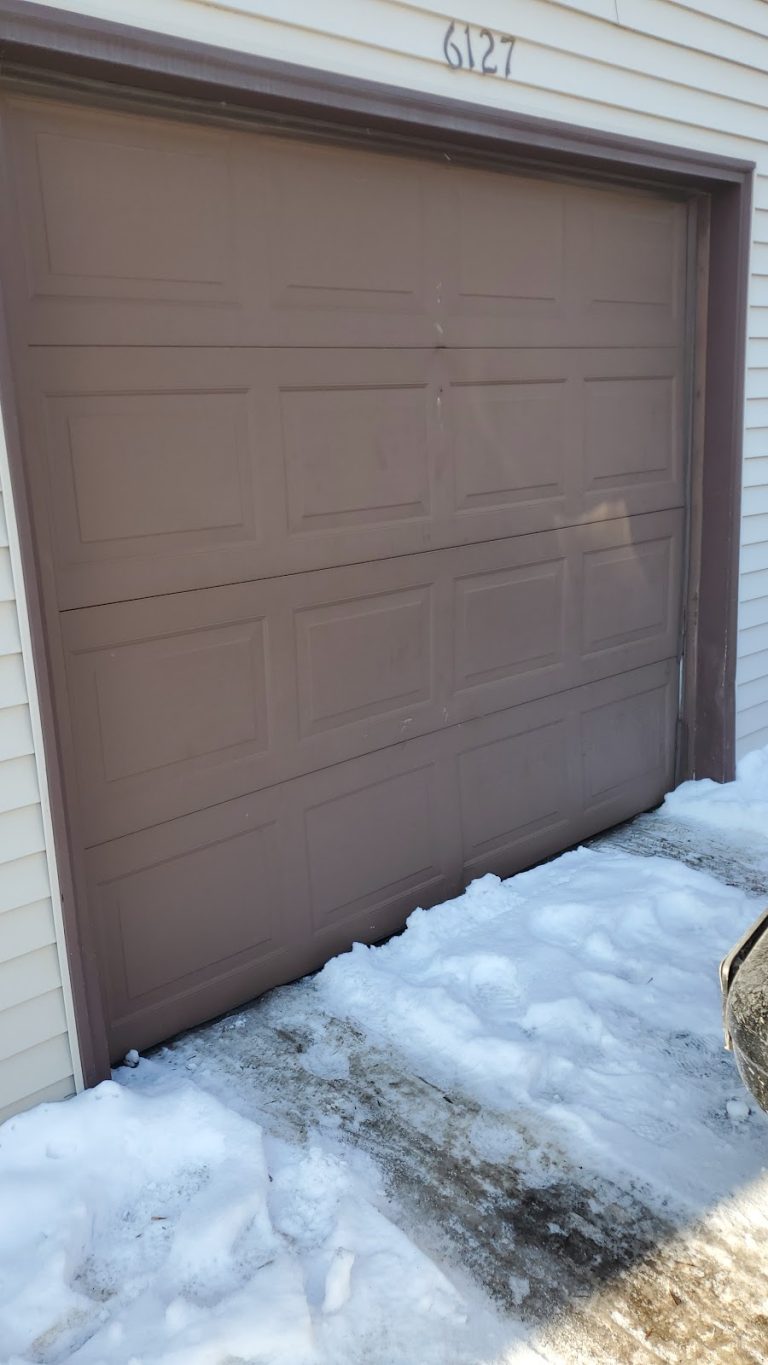
By far the most common cause. A bumper tap while backing out, a snow blower or a ladder leaned against the door, a basketball hoop — it doesn’t take much of an impact to knock a roller out of its track or bend the lower rail. Sometimes the door still opens once or twice afterward, which is exactly what leads to bigger damage.
2. A Broken or Loose Cable
The lift cables on each side have to stay under even tension. If one snaps or slips off its drum, that side of the door drops while the other keeps lifting. The door goes crooked in an instant and the rollers pull straight out of the track. This is a common companion to a broken garage door spring.
3. Worn-Out Rollers
Rollers are wear items. The stems bend, the bearings seize, and the nylon or steel wheels flatten out over the years. A worn roller no longer sits squarely in the rail, and eventually it climbs out — usually at the curve where the track bends from vertical to horizontal.
4. Loose Track Hardware or Misalignment
The brackets holding your tracks to the wall and ceiling loosen over time from ordinary vibration. Once a track shifts even a fraction of an inch out of alignment, the rollers start to bind at that spot — and a door that binds is a door on its way off the track.
5. Minnesota Winters
Cold is hard on garage doors. The bottom seal can freeze to the concrete slab overnight, and when the opener pulls against a door that is stuck fast, something has to give — often a cable or a roller. Ice buildup in the tracks and hardened grease in extreme cold cause the same kind of binding. This is why off-track calls spike during our deep-freeze mornings.
Why You Should Never Force an Off-Track Door
A residential garage door weighs 150 pounds or more, and when it is off track that weight is no longer supported the way it was designed to be. Running the opener again can bend panels, snap the remaining cable, or pull the door down. Trying to muscle the door back into the rail by hand puts your fingers between heavy moving steel — and if a spring or cable is also involved, there is stored tension waiting to release. Unplug the opener, leave the door where it is, and call a technician.
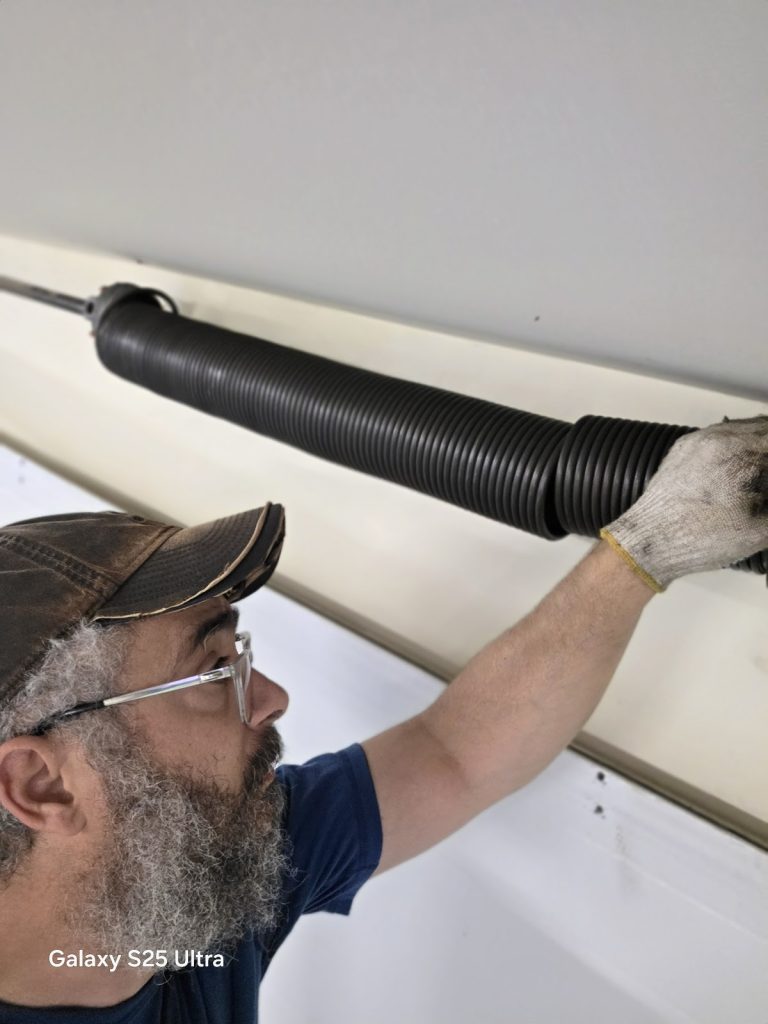
Real jobs by David (owner-operated) — photos from recent Twin Cities calls

How a Professional Fixes It
A proper repair is more than lifting the rollers back in. The door gets secured and the tension released safely, the rollers are reseated, and then the real work begins: straightening or replacing bent track, checking both cables and springs, retightening the hardware, and re-balancing the door so it holds halfway up on its own. Most off-track garage door repairs are back in service the same day — and catching it early is usually the difference between a straightforward repair and replacing a door section.
If a car or a storm knocked the door off its track, check whether homeowners insurance covers garage door damage in Minnesota before paying out of pocket.
A rusted-through cable is the usual trigger; see cable replacement. If the bottom section itself is bent, that may be a panel replacement.
Garage door off its track? Don’t run the opener — call David for same-day service across Minneapolis, St. Paul, and the Twin Cities metro: (763) 265-7671. Available 24/7, registered and insured, 4.9-star rated on Google.
Worn or rust-seized rollers are a top cause: see garage door rollers explained.