
Quick answer: A garage door that slams down or drops faster than it used to has lost its counterbalance: the torsion spring is broken or worn out, a cable has snapped or jumped its drum, or on an older door an extension spring has let go. The opener is not designed to hold a 200-pound door – the spring is – so treat this as urgent and keep people and cars out from under it. Spring replacement in the Twin Cities runs $150-$350 (single door; double or heavy doors up to $200 more), cables $200-$300, done the same day. Call (763) 265-7671, 24/7.
A healthy garage door closes at a steady walking pace and settles onto the floor. When one starts coming down hard – a bang you can hear from the house, the bottom section bouncing, the whole door shaking on the way down – the door has become heavier than the system holding it up. David treats this as one of the few true safety calls in this business, because the same thing that makes a door slam can make it fall. Here is what is going on and what to do tonight.
Why a door slams: the counterbalance has failed
A garage door weighs anywhere from 150 pounds for a light single to 400 pounds for an insulated double. The opener does not lift that weight. The torsion spring above the door (or the pair of extension springs beside the tracks on older doors) is wound to balance the door almost perfectly, so the opener only has to guide it. When the spring breaks, or the cable that transfers the spring’s pull to the door lets go, the opener is suddenly lowering the full weight with a plastic gear and a chain. It cannot control the descent, so the door drops the last few feet and slams. Keep using it and you will strip the gear and bend the top section.
1. A broken torsion spring
Look at the shaft above the door. A broken torsion spring has an obvious gap of an inch or two in the coil, usually with a loud bang when it happened – many customers tell David they thought something fell in the garage. With the spring gone the door slams every time and feels like a piano when you lift it by hand. This is a spring replacement, $150-$350 (single door; double or heavy doors up to $200 more) in the Twin Cities. Our post on broken spring warning signs explains why the winding bars stay in David’s truck and not in your hands.
2. A worn spring that has lost tension
Springs do not always break – they tire out. A standard spring is rated for about 10,000 cycles, which for a family that uses the garage as the front door is seven to ten years. As the steel fatigues, it lifts a little less each year, and the door starts closing faster and landing harder. This one sneaks up on people because nothing snapped. The test is below. The fix is a new spring, and if the door gets used a lot David will suggest a high-cycle spring that lasts two to three times longer for not much more money.
3. A cable off the drum or snapped
The lift cables run from the bottom brackets up to the drums on the spring shaft. In Minnesota the bottom of those cables sits in road-salt slush every winter, and that is exactly where they rust and fray. When one cable lets go, that side loses its lift: the door drops fast on that side, comes down crooked, and often jams in the track. You will see a cable hanging loose or wrapped around the drum. Do not run the opener – it will pull the door further out of the tracks. This is a cable replacement at $200-$300, and our post on a snapped cable and crooked door covers the symptoms in detail.
4. A broken extension spring (older doors)
Doors from the 1980s and 1990s often use two long extension springs that stretch along the horizontal tracks. When one breaks, the door slams and comes down lopsided, and the broken spring can whip across the garage – which is why every extension spring should have a safety cable threaded through it. If your door has extension springs and no safety cables, David will add them on the visit; if the springs are shot, he will usually recommend converting to a torsion spring, which is smoother, safer and lasts longer.
5. The opener force or down-limit is set wrong
Less common: the spring is fine but the opener’s down travel is set past the floor, so the opener keeps pushing after the door lands and the bottom section slaps the slab. The door still feels balanced by hand and there is no bang on the way down, just at the bottom. This is a five-minute adjustment on an opener service visit and is worth checking after a new floor, new weather seal or a new door.
The balance test (do this before you call)
With the door closed, pull the red release cord so the door is free of the opener. Lift the door by hand to about waist height and let go carefully. A balanced door stays where you put it, or drifts an inch or two. If it drops to the floor on its own, the spring is broken or worn – stop using the opener. If it is so heavy you can barely lift it, same answer. If one side is higher than the other, it is a cable. This is the same test David does first on every slamming-door call, and it takes thirty seconds.
Until the tech arrives
- Do not run the opener again – every cycle grinds the gear and risks a bent top section.
- Keep kids, pets and the car out from under the door.
- If the door is open and must come down, have two adults lower it by hand with the release cord pulled – a door with a broken spring is very heavy.
- Leave the springs, cables and drums alone; they are under tension even when broken.
Written from the field by David, owner of David’s Urgent Garage Door – repairing and installing garage doors across the Minneapolis-St. Paul metro since 2019.
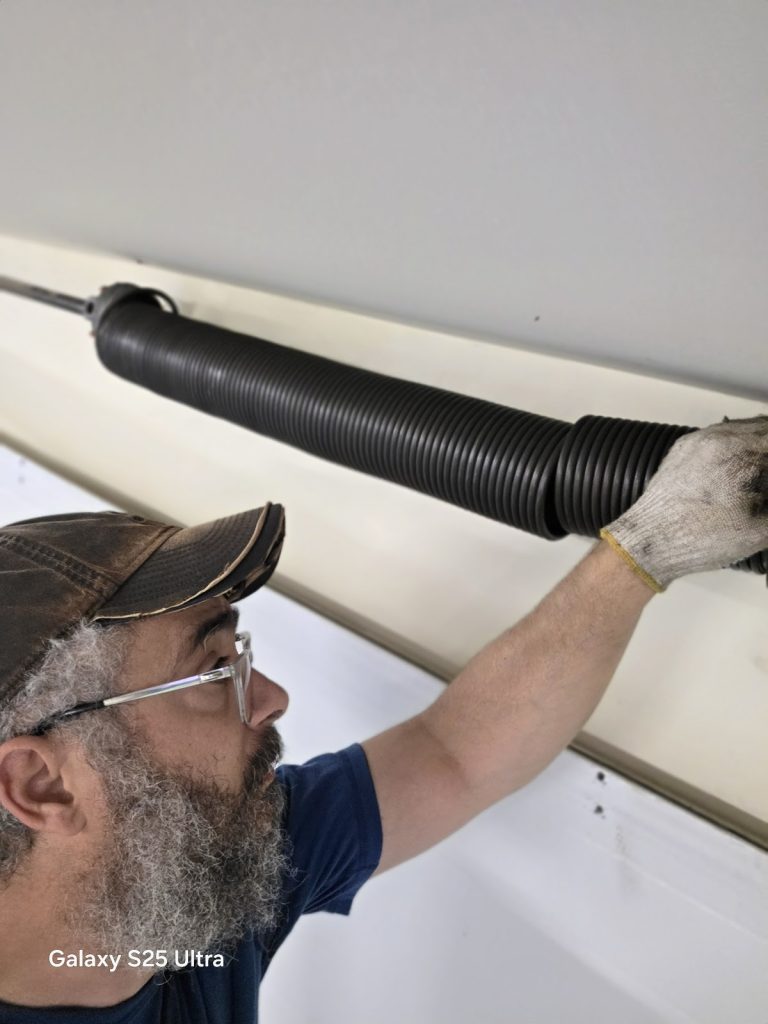
Real jobs by David (owner-operated) — photos from recent Twin Cities calls


Frequently asked
Why does my garage door slam shut?
Because the counterbalance that holds its weight has failed: a broken or worn-out torsion spring, a lift cable that snapped or jumped its drum, or a broken extension spring on an older door. The opener cannot control the full weight, so the door drops and slams. Less often the opener’s down-limit is set past the floor.
Is a garage door that closes too fast dangerous?
Yes. A door that slams has lost the spring or cable holding it up, and the same failure can let it fall while someone is underneath. Stop using the opener, keep people and cars clear, and have the spring or cable replaced the same day.
How do I know if my garage door spring is worn out?
Pull the release cord and lift the door by hand to waist height. A good spring holds the door there; a worn or broken spring lets it drop, or makes the door feel extremely heavy. A visible gap in the torsion spring coil means it has broken.
How much does it cost to fix a garage door that slams?
In the Minneapolis-St. Paul area a torsion spring replacement is typically $150 to $350 (single door; double or heavy doors up to $200 more), a cable replacement $200 to $300, and an opener limit adjustment is a minor service charge. All are usually same-day repairs.
Door slamming or dropping too fast in the Twin Cities? Call David at (763) 265-7671 – same-day spring and cable replacement across Minneapolis, St. Paul and the suburbs, including Woodbury and the east metro, and 24/7 emergency service when the door is stuck open.
Related guide: before touching the opener, read opener force and travel limits explained: why the door reverses, stops short or slams, and how to adjust them safely.