
Key facts in 20 seconds
- The red cord hanging from the opener rail disconnects the door from the motor so you can lift it by hand: power outage, dead opener, car stuck inside.
- Pull it only with the door fully closed. If the door is open and a spring is broken or weak, releasing it can let 150–300 lb drop. That’s the one real danger.
- A properly balanced door lifts with one hand and stays where you leave it. If it’s heavy or slams, stop: the spring is broken, not the opener.
- To reconnect: pull the cord toward the door (or straight down, depending on model) until the lever clicks back, then run the opener; the trolley re-engages on its own.
- In a detached garage with no other door, a lock-out means you can’t reach the cord. A LiftMaster with battery backup or an outside emergency release kit solves that before it happens.
I’m David, owner of David’s Urgent Garage Door in St. Louis Park. During every ice storm I get the same calls: the power’s out, the car is inside, and nobody is sure what the red handle does or whether it’s safe to pull. Here’s how the release works, how to use it without getting hurt, and how to get the opener back after.
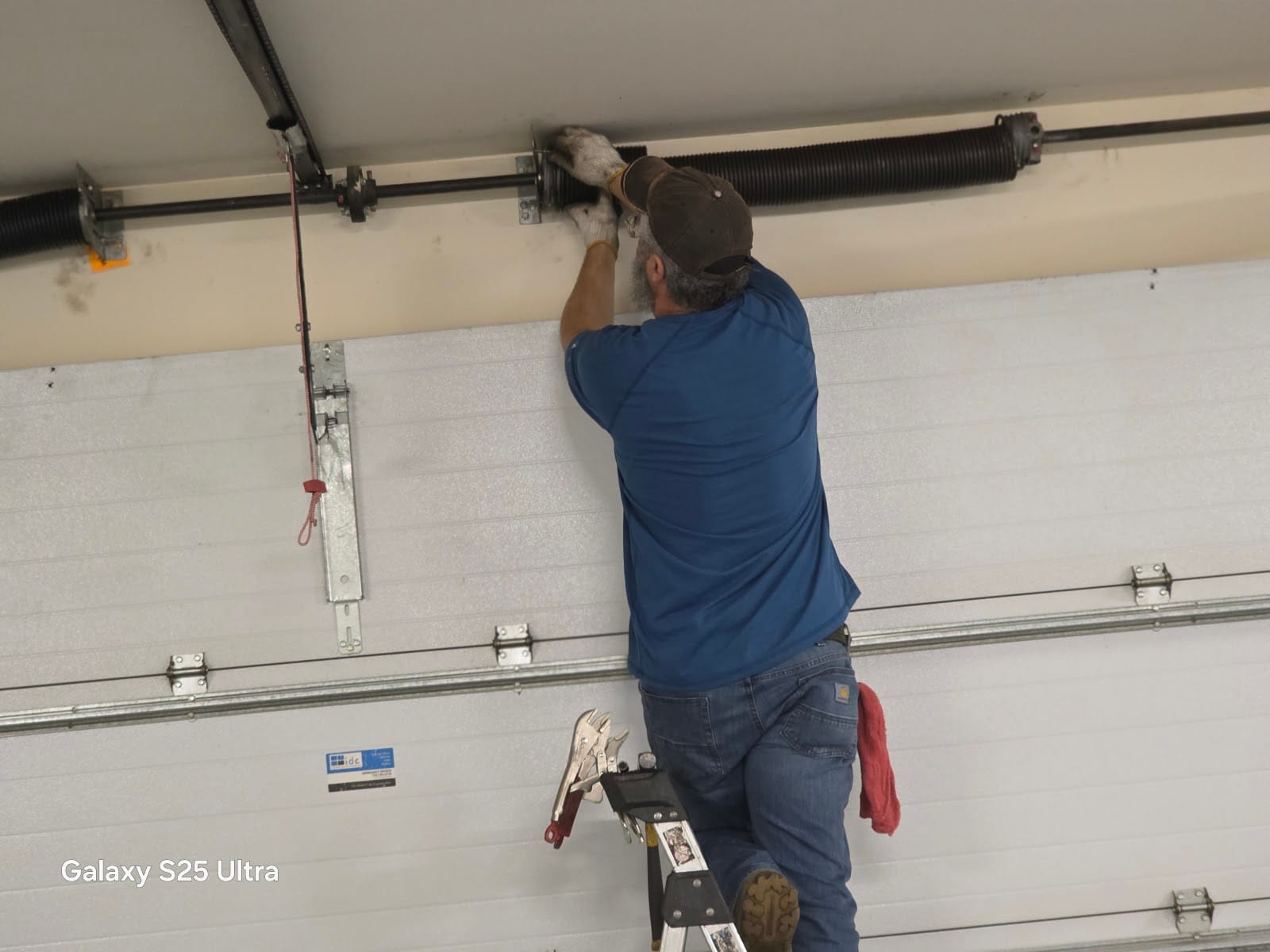
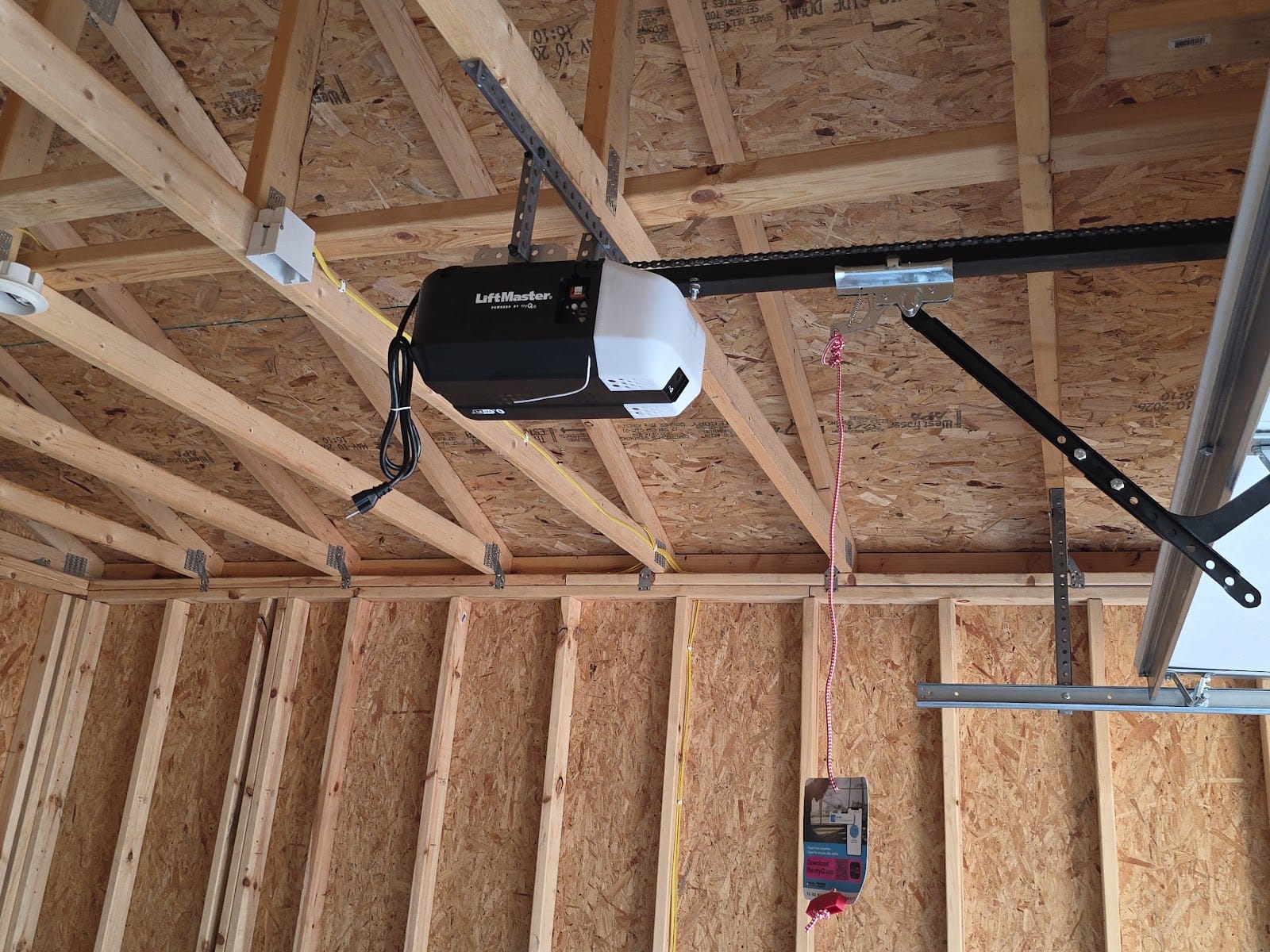
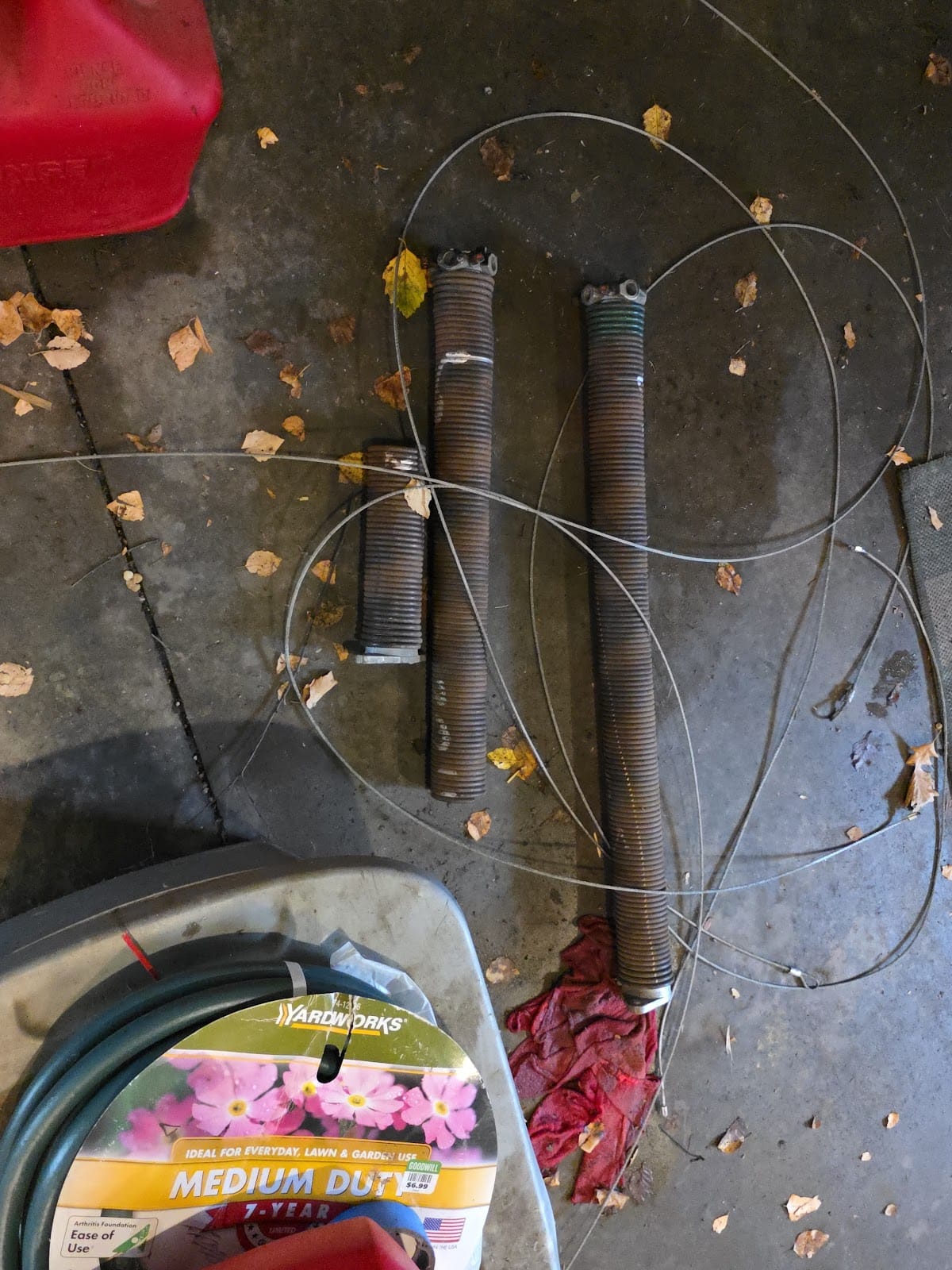
What the release cord actually does
On a chain- or belt-drive opener, the door is pulled by a trolley that slides along the rail. The trolley has a spring-loaded lever; the red cord is tied to that lever. Pulling the cord unhooks the trolley from the chain or belt, so the door is free of the motor. The door’s own springs still carry its weight, which is why a healthy door is easy to lift by hand even though the opener is disconnected.
How to use it safely
- Make sure the door is fully closed. If it’s stuck partway open, don’t pull the cord yet: see the section below.
- Pull the red cord straight down. You’ll hear a click as the trolley lever releases.
- Lift the door by the handle or the bottom edge with both hands. Keep fingers out of the section joints; they pinch hard.
- Lift it all the way up. A balanced door stays up by itself. If it wants to come back down, don’t walk under it; prop it with a stepladder or a 2×4 under the bottom section and keep people clear.
- Back the car out, then lower the door by hand all the way to the floor.
- With the opener disconnected, the door can be lifted from outside by anyone. Use the slide lock on the inside if the garage will sit that way overnight.
When NOT to pull the cord
- Door stuck open and a spring looks broken (a visible gap in the torsion spring above the door, or a hanging extension spring). The opener is the only thing holding it. Pulling the cord drops the door. Call: (763) 265-7671, 24/7.
- Door is crooked or a cable is hanging. Same risk. See why a door goes crooked.
- Door open halfway, no obvious damage: pull the cord only if you can keep everyone clear below it and are ready for it to come down. Better: close it with the wall button first (hold it down) if the opener has power.
Reconnecting the opener
- Close the door by hand all the way.
- Pull the cord toward the door at an angle (LiftMaster/Chamberlain) or straight down again (Genie and some others) until the lever clicks into the “engaged” position.
- Press the wall button. The trolley travels along the rail until it catches the door arm, then takes over. If it rides past without catching, the lever didn’t re-engage; stop and reset it.
- Run the door through a full cycle and do the beam and reverse tests.
- If the opener grinds or the chain jumps, call; something was bent while the door was off the opener.
Locked out of a detached garage
- If the garage has no service door and the power is out, the cord is on the wrong side of the wall. Don’t pry the door; it bends the top section and the track.
- An emergency release kit (a small lock cylinder on the outside connected by cable to the trolley lever) lets you pull the release from outside with a key. I install them on detached garages; it’s a 30-minute job.
- The better fix is a LiftMaster opener with battery backup, which runs the door normally through an outage. See the myQ lineup.
- Already locked out tonight? Call; I carry the tools to open it without damaging the door.
Winter notes
- If the door won’t lift after you pull the cord, it may be frozen to the floor; free the seal before forcing it.
- A door that’s very heavy by hand in January but was fine in September usually has a tired spring, not a cold problem. Do the 30-second balance test once it’s back on the opener.
- Keep the red cord tied up short (knot at chest height) so it can’t catch on a roof rack or an antenna and release the door while you’re driving under it. I see this one every year.
Emergency release – FAQ
How do I open my garage door when the power is out?
With the door closed, pull the red cord straight down to release it from the opener, then lift the door by hand. A balanced door lifts easily and stays up. Lower it by hand when you’re done and use the slide lock.
Is it safe to pull the red cord with the door open?
Only if the springs are intact and the door is balanced. If a spring is broken or the door is crooked, the opener is holding the door up and releasing it can drop it. When in doubt, don’t; call.
How do I reconnect the garage door to the opener after pulling the cord?
Close the door, pull the cord toward the door (or down, by model) until the lever clicks, then press the wall button; the trolley travels and re-catches the door arm automatically.
Why is my garage door so heavy to lift by hand?
Because a spring is broken or has lost tension. The springs, not the opener, carry the door’s weight. A door that needs two people to lift needs a spring job, not a bigger opener.
Door stuck, heavy, or locked out?
24/7 across Minneapolis–St. Paul, typical arrival about an hour. Broken springs, lock-outs, outside release kits and battery-backup openers.