
Key facts in 20 seconds
- Every opener made since 1993 (UL 325) has two photo-eye safety sensors mounted no more than 6" above the floor, one on each side of the opening. One sends an invisible infrared beam, the other receives it.
- If the beam is broken or the sensors can’t see each other, the door will not close with the remote; it reverses and the opener light flashes. That is the system working, not failing.
- LED colors: LiftMaster / Chamberlain: amber = sending (always on), green = receiving (steady when aligned). Genie: red = sending, green = receiving. A dark or flickering receiver LED means misalignment, dirt, sun or a wire problem.
- In Minnesota the usual culprits are a bracket kicked by a snow shovel, frost or snow on the lens, and low winter sun shining straight into the receiver at sunrise or sunset.
- Never bypass the sensors with a jumper. Fix them; a replacement pair is one of the cheapest parts on the door.
I’m David, owner of David’s Urgent Garage Door in St. Louis Park. “The door goes up but won’t go down” is a daily call, and most of the time it’s the two little sensors at the bottom of the track. Here’s how they work, how to read the lights, how to align them yourself, and when it’s actually something else.
How the sensors work
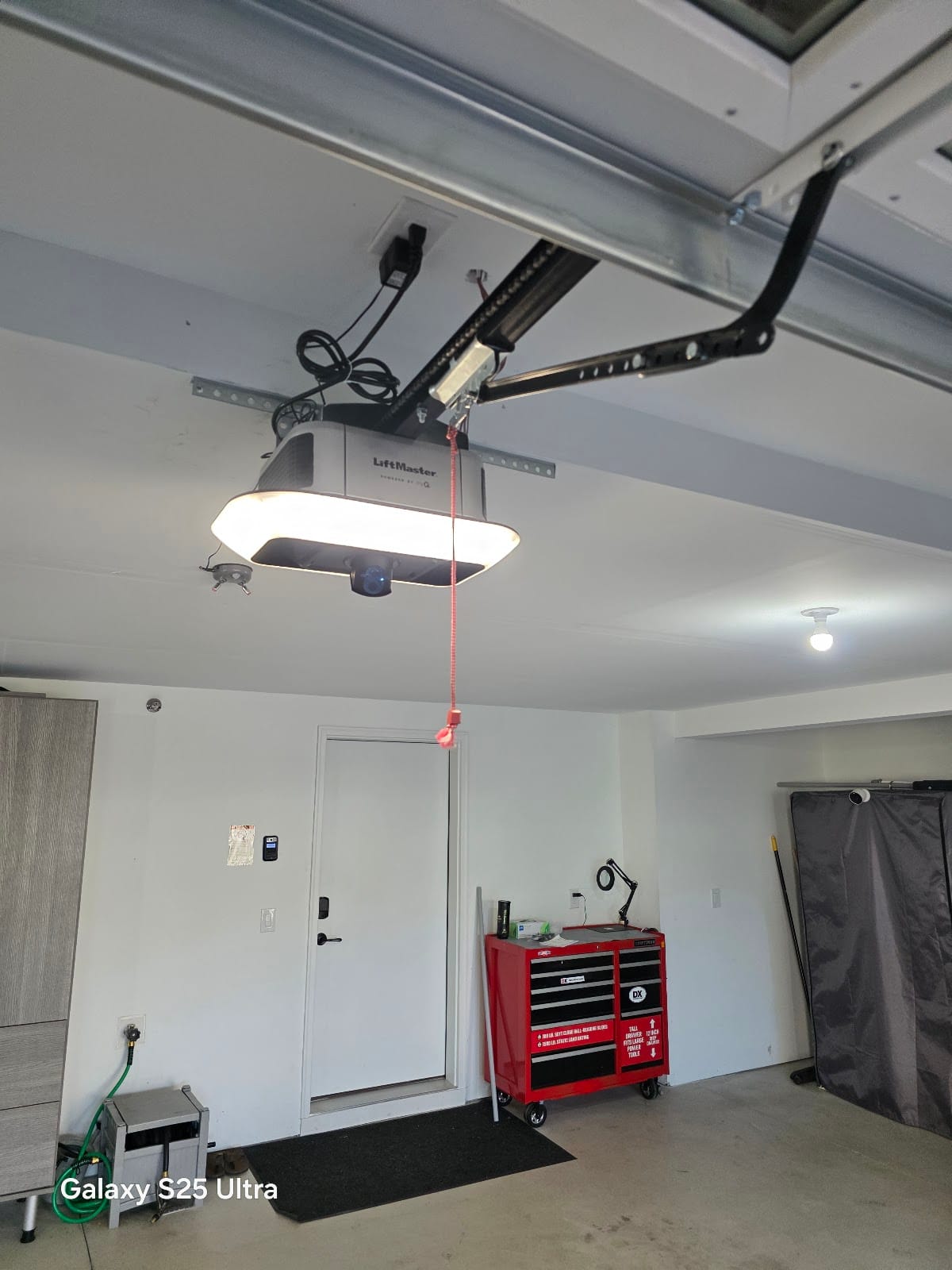
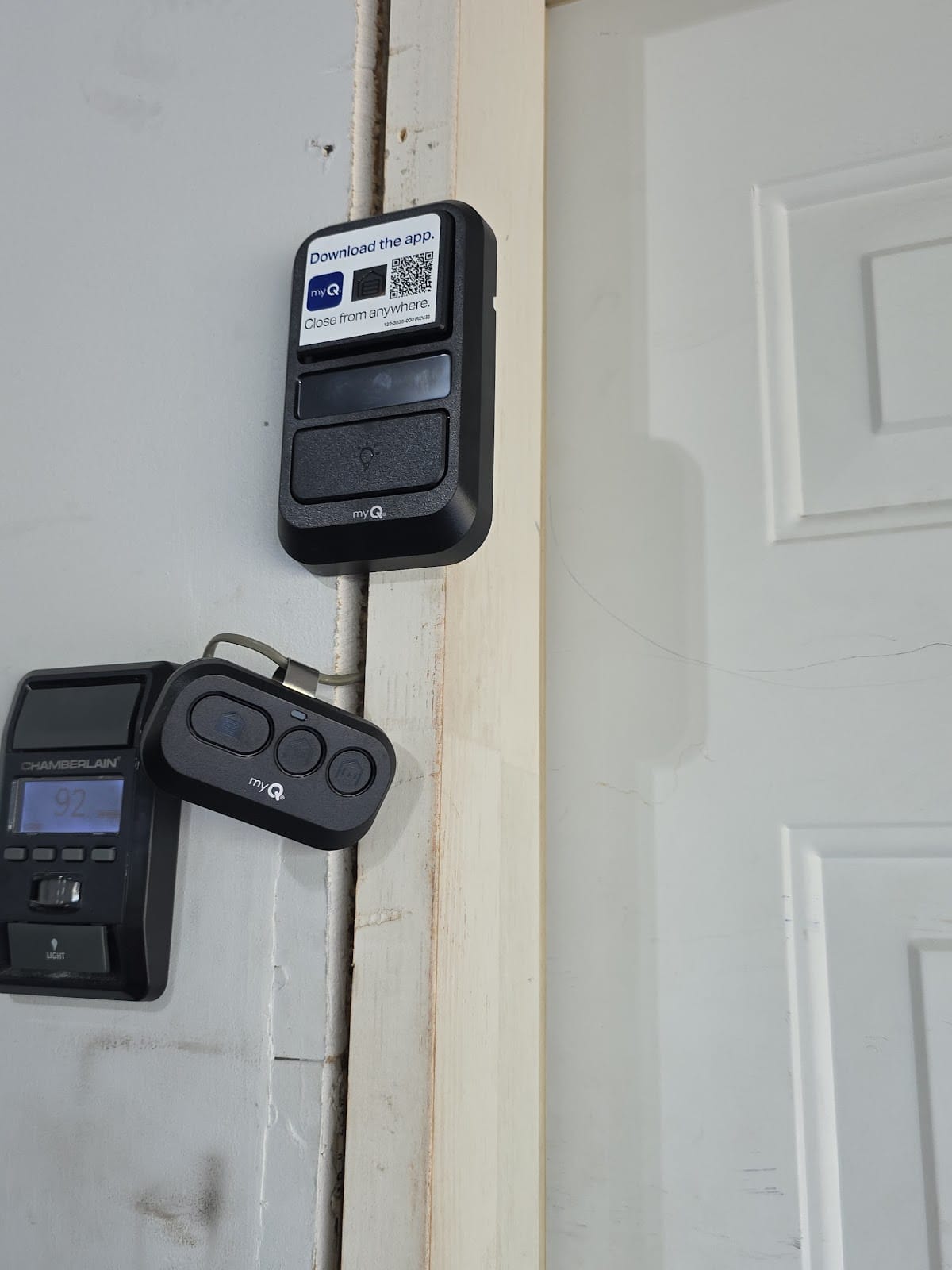
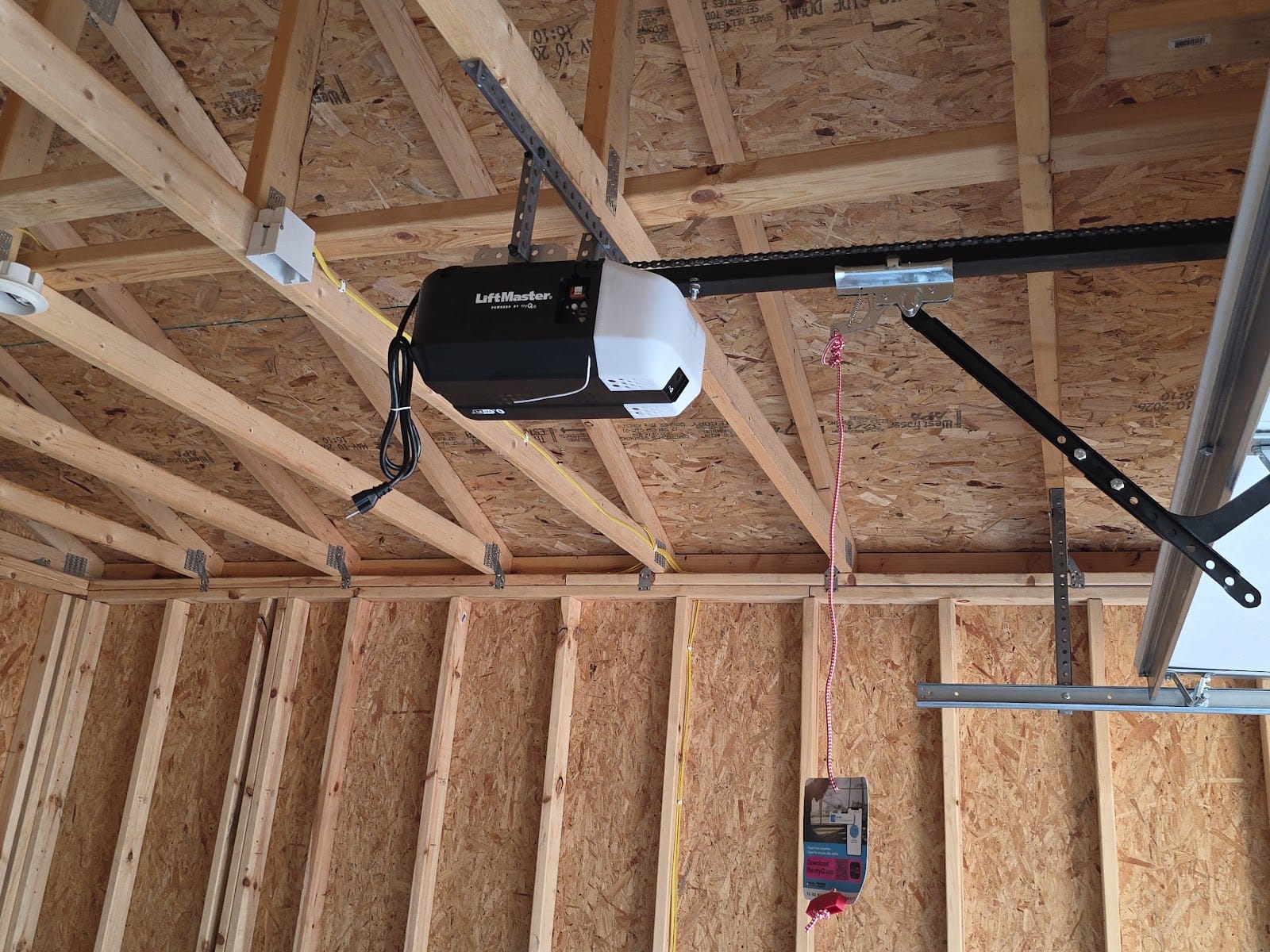
The sending sensor shoots a narrow infrared beam across the opening; the receiving sensor has to catch it. The opener checks that beam the whole time the door is closing. Anything in the beam, a misaimed lens, a dirty lens, bright light overpowering the receiver, or a broken wire, and the opener stops and reverses. With the remote the door won’t close at all; with the wall button held down most openers will still close in “constant pressure” mode, which is the built-in way to get the door shut tonight if a sensor has failed.
Reading the lights
| Brand | Sending sensor | Receiving sensor | What the opener does |
|---|---|---|---|
| LiftMaster / Chamberlain / Craftsman | Amber LED, always steady | Green LED: steady = aligned; off or flickering = problem | Opener light flashes 10 times; door reverses |
| Genie / Overhead Door | Red LED, steady | Green LED, steady when aligned | Red LED on the motor head blinks; door reverses |
| Linear / older brands | Varies (often red) | Varies; steady = aligned | Light blinks or clicks; door reverses |
What knocks them out (Minnesota edition)
- Bumped bracket. Snow shovel, snow blower, a trash bin, a bike tire. The bracket bends a few degrees and the receiver goes dark. Most common by far.
- Frost, snow or salt film on the lens. A wipe with a dry cloth fixes it; a lens cracked by ice doesn’t.
- Low sun. East- and west-facing garages: at sunrise or sunset the sun lines up with the receiver and floods it. The door works at noon and “randomly” refuses at 5 PM. Fix: swap the sensors so the receiver faces away from the sun, or add a sun shield (a short piece of tube or a hood).
- Wire damage. Mice chew the bell wire, a staple cuts it, cold makes old insulation crack. A loose wire nut at the sensor is the other classic.
- Wrong wiring at the opener. On LiftMaster, both white wires go to the white terminal and both white/black-striped wires to the grey terminal. Swap one and the sensors never light.
- Failed sensor. They do die, usually after 10–15 years or a lightning surge. Replace in pairs; sensors are brand-specific and won’t mix.
Align them yourself in 5 minutes
- Clean both lenses with a dry cloth. Clear snow, ice and anything leaning against the brackets.
- Check that both sensors are the same height (4–6" off the floor) and facing each other straight across.
- Find the receiver (green LED). Loosen its wing nut a quarter turn and slowly swivel the sensor until the green light is steady, then tighten without moving it.
- If the sending LED is off, check its wires first; no sending light means no beam to aim at.
- Test: with the door closing, wave a broom through the beam. The door must reverse. Then close it normally.
- Still flashing? Follow the wire from each sensor to the motor head and look for chew marks, staples through the wire, or a loose terminal. Text me a photo of the sensors and the terminal block at (651) 417-2840.
When it’s not the sensors
- Door closes partway and reverses without the light flashing: usually the force or travel limits, a stiff door, or something in the track. See why doors won’t close in cold weather and the balance test.
- Door won’t move at all, opener hums: see opener hums but door won’t move.
- Remote dead but wall button works: the remote or the receiver logic board, see remote and keypad troubleshooting. On an old opener a failing logic board can also mimic a sensor fault; that’s very common on 15-year-old units.
- Door reverses right at the floor: a frozen or too-thick bottom seal.
Monthly safety test (two minutes)
- Beam test: start the door closing, break the beam with a broom. It must reverse.
- Contact reverse test: lay a 2×4 flat on the floor under the door. The door must reverse within two seconds of touching it. If it doesn’t, the force setting is too high; don’t use the door until it’s adjusted.
- More in the garage door safety checklist.
Safety sensors – FAQ
Why does my garage door open but not close?
Nine times out of ten the safety sensors are misaligned, dirty, blinded by sun or have a broken wire. The opener light flashing while the door reverses confirms it. Hold the wall button down to close it tonight, then align or repair the sensors.
What do the lights on garage door sensors mean?
On LiftMaster/Chamberlain, amber = sending (always on) and green = receiving (steady when aligned). On Genie, red = sending and green = receiving. A dark or flickering green light is the problem sensor.
Can I bypass the safety sensors?
No. Jumping them out defeats the only thing stopping a 150–300 lb door from closing on a child, a pet or a car. Holding the wall button is the legitimate emergency workaround; replacing the sensors is the fix.
How high should garage door sensors be?
No more than 6" above the floor, both at the same height, facing each other across the opening. 4–6" is typical.
If you need to close the door by hand: using the emergency release cord safely.
Counting blinks on the motor head? Decode them here: LiftMaster / Chamberlain diagnostic codes explained.
Door won’t close and the light is flashing?
Sensor alignment, rewiring or a new pair, same day across Minneapolis–St. Paul. If it’s the logic board instead, I’ll tell you before any part is ordered.