
Key facts in 20 seconds
- The hinges on the edges of a sectional garage door are numbered – #1, #2, #3, #4, sometimes #5 – and the number is stamped right into the steel. Each higher number holds the roller a little farther out from the door.
- That offset is what makes a garage door lean into the opening and seal at the top as it closes, and swing clear of the jamb as it opens. Put a #1 where a #3 belongs and the door rubs, gaps, or binds in the curve.
- Center hinges (the ones in the middle of the door, with no roller) are all #1. Only the end hinges with rollers go up in number.
- Rule for most residential doors: #1 at the bottom joint, then #2, #3, #4 going up. A 7-foot door with four sections uses #1, #2, #3 on the sides; an 8-foot door with five sections adds a #4. Tall doors and some brands go to #5.
- In Minnesota, hinges fail from road-salt rust at the bottom joints and from bending when a door comes off track. Replace one hinge at a time, match the number, and never touch the bottom brackets – they are under spring tension.
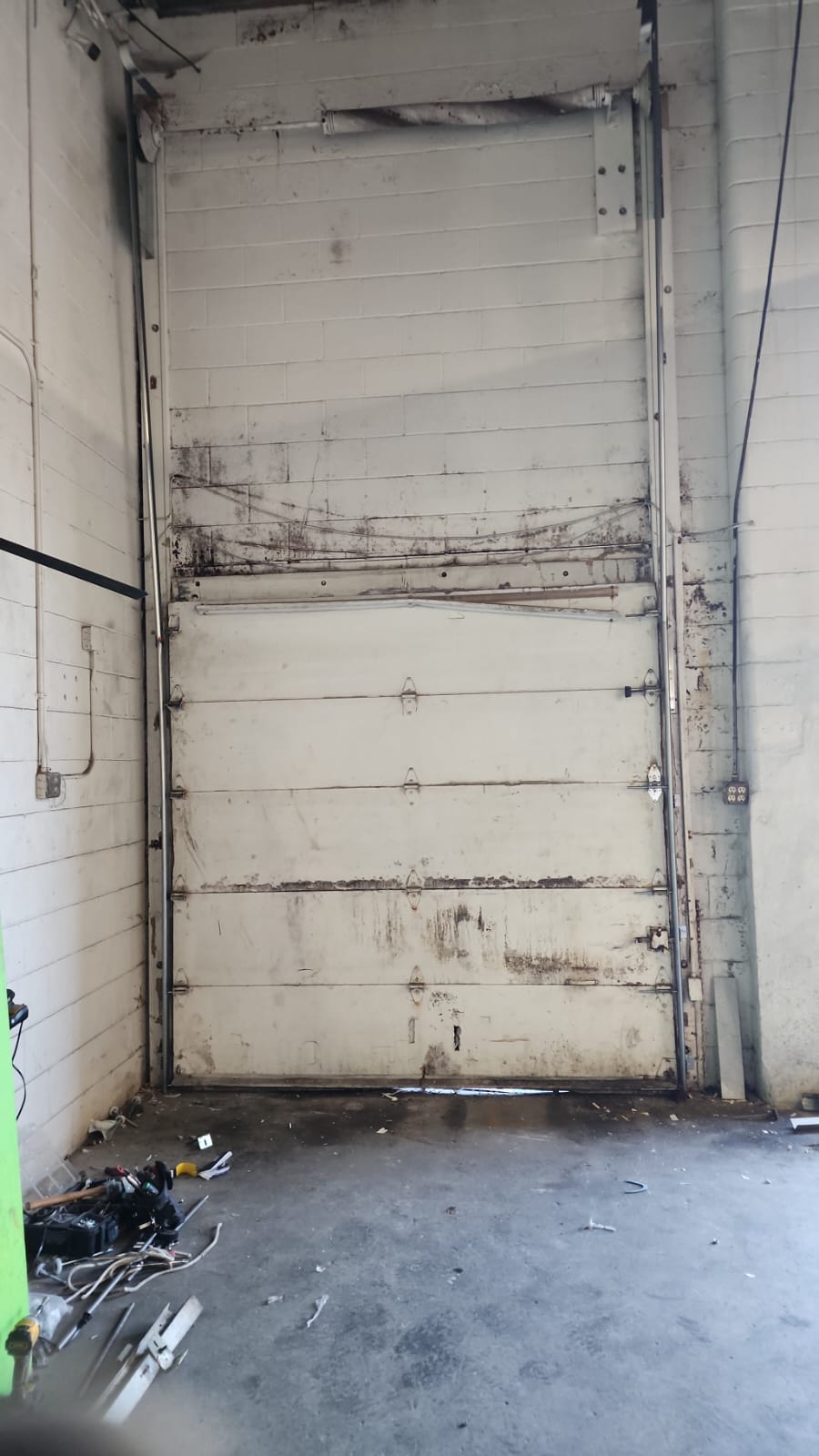
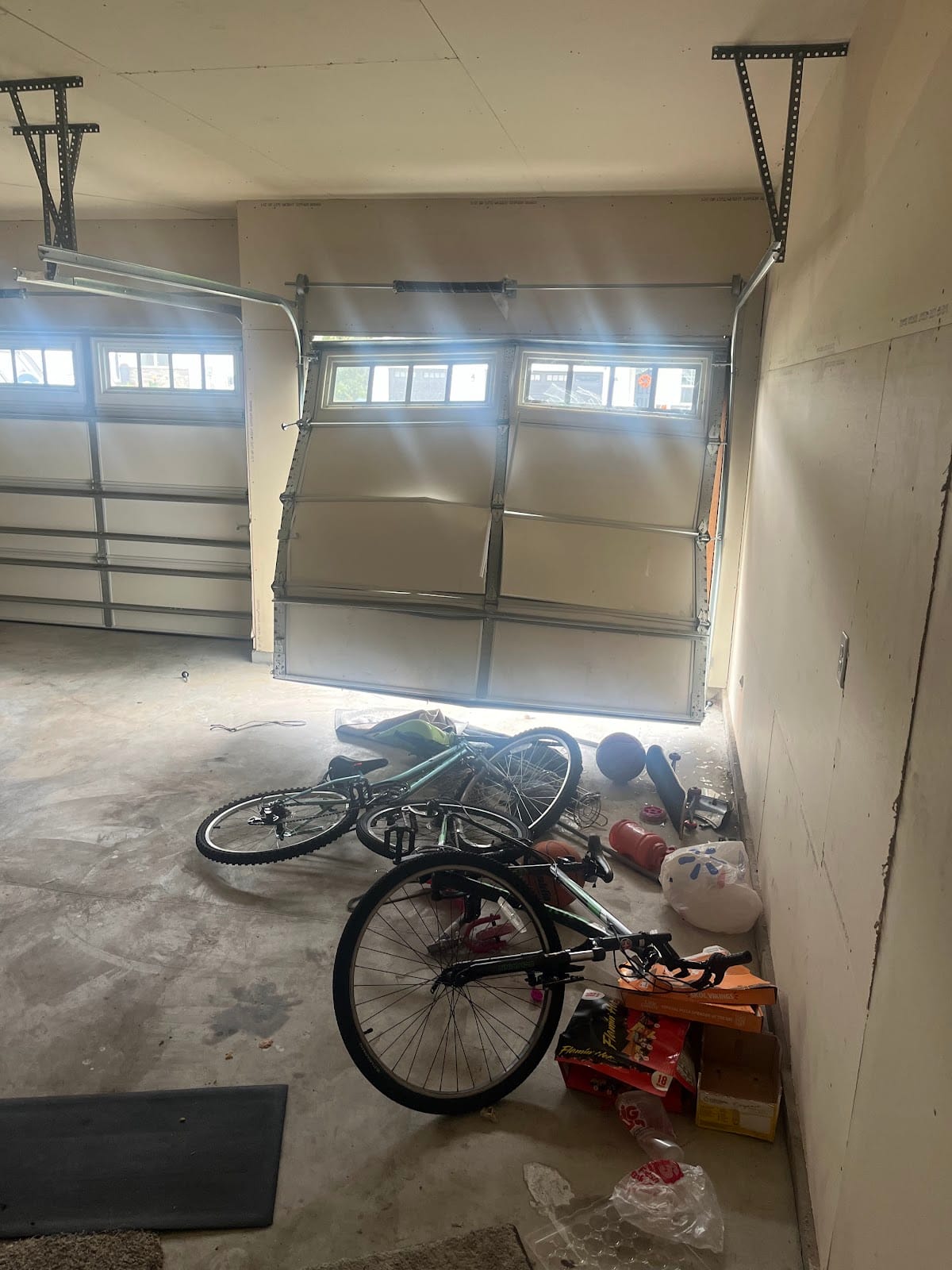
A customer in Hopkins once showed me a bag of brand-new hinges he had bought online to fix a door that was rubbing the frame. They were all #1. He had put them on carefully, one by one, and the door got worse. Nobody had told him the hinges on a garage door are not all the same part. Here is what the numbers mean, where each one goes, how to read a hinge, and what actually goes wrong with them in a Twin Cities winter.
Why garage door hinges are numbered at all
Look at a closed sectional door from inside. The vertical tracks are not perfectly vertical – they lean slightly away from the door toward the top, and the top section has to tuck in against the header to seal. To make the door hang straight while the track leans, the roller on each higher section has to sit a little farther out from the door face. The hinge does that: a #1 hinge holds the roller tube closest to the door, a #2 a little farther out, a #3 farther still, and so on. Stack them in the right order and the door closes tight along its full height and pulls away cleanly as it opens. Mix them up and the geometry is wrong at that joint.
The second job of an end hinge is to carry the roller. The roller stem slides into the hinge’s tube, and the hinge bolts to two sections at once, joining them. So an end hinge is both the joint between sections and the roller carrier. That is why a damaged end hinge shows up as a crooked, binding door and not just a noise.
Which number goes where
| Position on the door (from the bottom) | 7 ft door, 4 sections | 8 ft door, 5 sections | Center hinges |
|---|---|---|---|
| Bottom section – no hinge below it; bottom bracket holds the bottom roller and the cable | Bottom bracket (not a hinge) | Bottom bracket (not a hinge) | – |
| Joint 1 (between section 1 and 2) | #1 | #1 | #1 |
| Joint 2 | #2 | #2 | #1 |
| Joint 3 | #3 | #3 | #1 |
| Joint 4 | – | #4 | #1 |
| Top section – no hinge above it; top bracket / top fixture holds the top roller (adjustable) | Top fixture | Top fixture | – |
A few brands and some older or taller doors number differently – a door with six or seven sections can run to #5, and a handful of manufacturers start their stack with a #2 at the lowest joint. The safe rule is simple: read the old hinge before you order, and if the old hinge is missing or unreadable, read the one on the other side of the same joint. The two sides of a joint always match.
How to read a hinge
- The stamped number. Usually on the flat leaf, sometimes on the roller tube. Rust hides it; wire-brush the spot or compare the offset of the tube against a known hinge.
- Gauge. Residential hinges are commonly 14-gauge (standard) or 18-gauge (light duty on older or lighter doors). Thicker is lower-numbered and stiffer. Heavier insulated doors and double doors want 14-gauge; a thin hinge on a heavy door bends at the roller tube within a few years.
- Standard vs. wide body. Wide-body hinges have a wider leaf with more bolt holes, used on doors whose section edges have the wider bolt pattern and on heavier doors. Measure hole spacing on the old hinge; a hinge that only lines up with one pair of holes will tear the section skin.
- Single-end vs. double-end. Most residential end hinges are single-end: one roller tube on one side. Double-end hinges have a tube on both sides, found on some commercial doors and wide doors. Not interchangeable.
- Roller stem length. The hinge sets the offset; the roller stem length (commonly 4 inches residential, 7 inches on some heavier doors) has to match the hinge tube. The rollers guide covers sizes and stem lengths.
What happens when the wrong number goes on
| Mistake | What you see | Why |
|---|---|---|
| Lower number than it should be (a #1 where a #3 goes) | That section sits too close to the track; the door rubs the jamb or weatherstrip at that joint, the top section does not seal, and the door binds as it enters the curve | The roller is pulled in while the track leans away |
| Higher number than it should be (a #3 at the bottom joint) | A gap opens between the door and the jamb at that height; the door hangs crooked; a roller can pop out of the track on the way up | The roller is pushed out too far for the track position |
| Different numbers on the two sides of one joint | Door looks twisted, one side higher than the other, uneven gap at the bottom | The two sides are being held at different offsets. See the crooked door guide for the other causes |
| Right number, wrong gauge or bolt pattern | Hinge bends at the tube within a season; stripped or torn mounting holes | The hinge cannot carry the section weight or is not fully bolted |
How hinges actually fail in Minnesota
- Rust from road salt. Snow melts off the car, the salty water sits along the bottom of the door, and the #1 hinges, bottom brackets and bottom rollers rust first. In my repair work this is the most common cause of a roller that stops turning and a hinge that cracks at the tube. The cables and bottom brackets guide covers the same rust on the parts next to the hinge.
- Bending when the door comes off track. A door that jumps the track and then gets run by the opener bends the end hinges along with the sections. If a door has been off track, I check every end hinge on that side before I put it back on the rails – a bent hinge will throw it off again.
- Cracked at the tube. Steel fatigue after thousands of cycles, faster on thin 18-gauge hinges under a heavy door. You hear a pop at the same spot every time the door bends over the curve.
- Loose or stripped bolts. Sections flex; bolts work loose; the hinge chews the holes oval. Tightening once a year during a tune-up prevents most of it.
- Broken center hinges. Less dramatic, but a cracked center hinge lets the sections flex in the middle and the door starts to bow – look for a bulge in the middle of the door when it is half open.
What is safe to do yourself
Center hinges and the middle end hinges (#2, #3, #4) can be replaced by a careful homeowner with the door fully closed: one hinge at a time, so the sections stay supported, matching the number and gauge, and tightening the new bolts before moving to the next one. Two things are not DIY:
- The bottom brackets. They carry the lift cables, and the cables are under full spring tension even with the door closed. Loosening a bottom bracket can release that tension through the bracket. This is a known cause of serious injury. Leave them alone.
- The bottom rollers. They sit in the bottom brackets, so the same warning applies. The rollers guide explains which rollers are safe to swap and which are not.
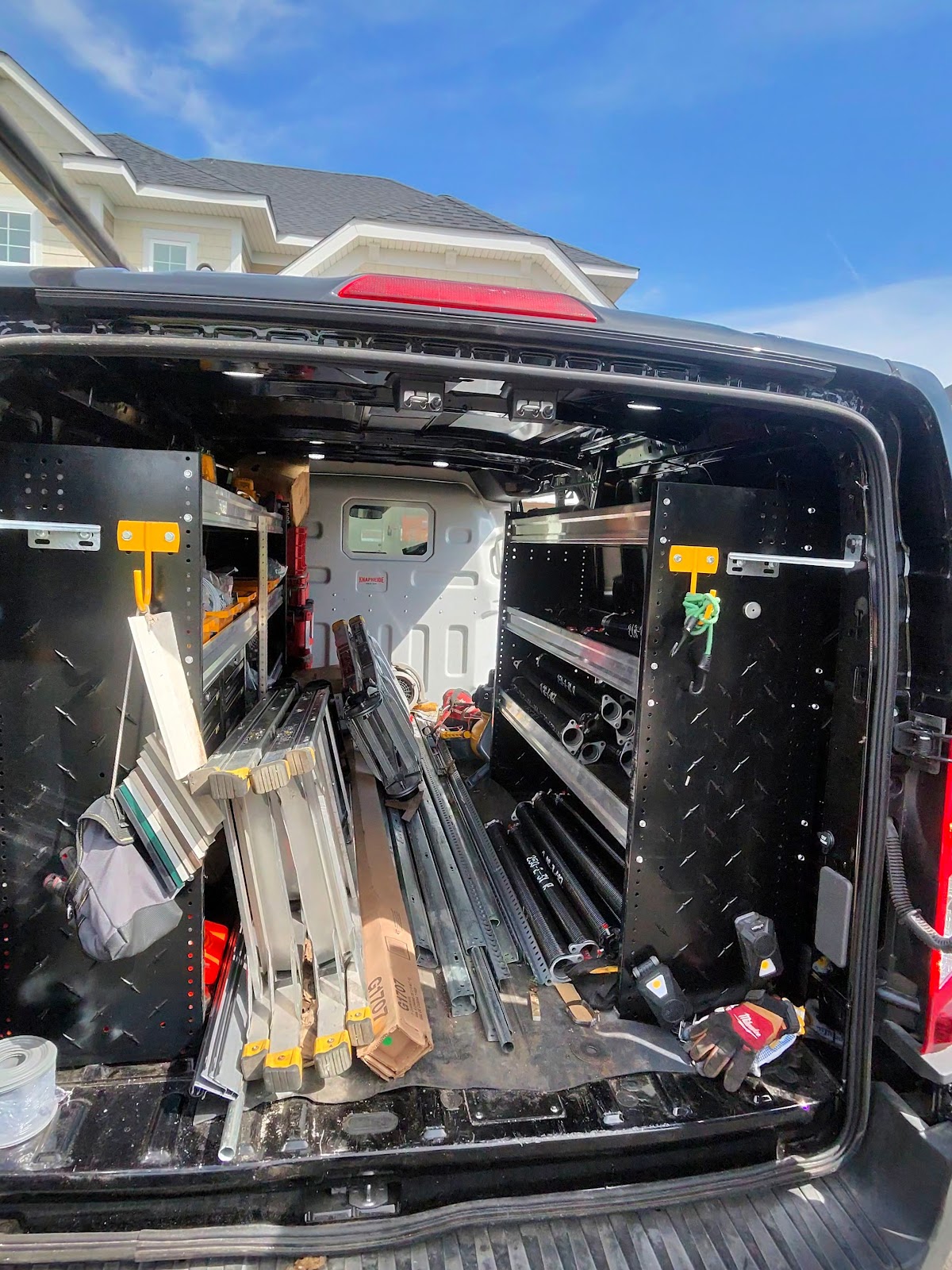
If a hinge is bent rather than cracked, the section edge is often bent with it, and the door may already be slightly off track. That is a job for a visit, not a parts order – see hinge replacement for how I do it and what it costs. I carry the full numbered set, 14-gauge, standard and wide body, in the van, so a hinge job is usually done the same visit as the rollers and a balance check.
Garage door hinge numbers – FAQ
What do the numbers on garage door hinges mean?
The number is the offset of the roller tube from the door. A #1 hinge holds the roller closest to the door, #2 a little farther out, #3 farther still, and so on. The offset increases going up the door so the door hangs straight against a track that leans slightly outward, seals at the top, and swings clear as it opens.
Where does each hinge number go on a garage door?
On most residential doors: #1 at the lowest joint, then #2, #3 and #4 going up, on the end hinges only. All center hinges are #1. A 7-foot door with four sections uses #1, #2, #3 on the sides; an 8-foot five-section door adds a #4. The bottom section uses a bottom bracket, not a hinge, and the top section uses an adjustable top fixture.
Can I use a #1 hinge in place of a #2 or #3?
No. A lower number pulls that section in toward the track, so the door rubs the jamb, fails to seal at the top and binds in the curve. A higher number pushes it out, leaves a gap and can pop a roller out of the track. Always match the stamped number, and match both sides of the same joint.
Are all garage door hinges the same size?
No. Besides the number, hinges differ by gauge (14-gauge standard, 18-gauge light duty), by standard versus wide-body leaf and bolt pattern, and by single-end versus double-end roller tubes. Match all of them to the old hinge, or the new hinge will not bolt up fully or will bend under the section weight.
Is it safe to replace garage door hinges myself?
Center hinges and the middle end hinges can be replaced one at a time with the door closed. Never loosen the bottom brackets or remove the bottom rollers: they hold the lift cables under spring tension and can cause serious injury. Bent hinges usually mean a bent section or an off-track door, which is a job for a technician.
Owner-operated from St. Louis Park, about one hour away for most calls in Edina, St. Louis Park, Plymouth, Minnetonka, Golden Valley, Hopkins, Bloomington and the rest of the west metro. Call or text (763) 265-7671.