
Key facts in 20 seconds
- The number one reason a garage door keypad stops working in a Minnesota winter is the battery. Cold drops the voltage of a tired 9-volt or coin cell below what the radio needs, so a keypad that “worked yesterday” dies on the first below-zero morning.
- Most wireless keypads take a 9-volt (LiftMaster and Chamberlain 877MAX / 877LM, Genie GK-R) or a CR2032 coin cell on some newer slim models. The battery lives behind the flip-up cover or in a slide-out tray on the bottom. Replace it every fall, not when it dies.
- If the keypad lights up but the door does not move, the problem is usually range or the opener, not the keypad: a bulb or LED on the opener causing interference, a logic board antenna tucked away, or the keypad was erased when the opener’s memory was cleared.
- If the keypad is dark with a fresh battery, check the contacts for corrosion and the cover gasket for water. A keypad mounted on the sunny side with a cracked cover fills with meltwater, then freezes.
- Reprogramming takes about a minute: the “Learn” button on the opener, then your PIN and Enter on the keypad. The full steps are in the programming guide.
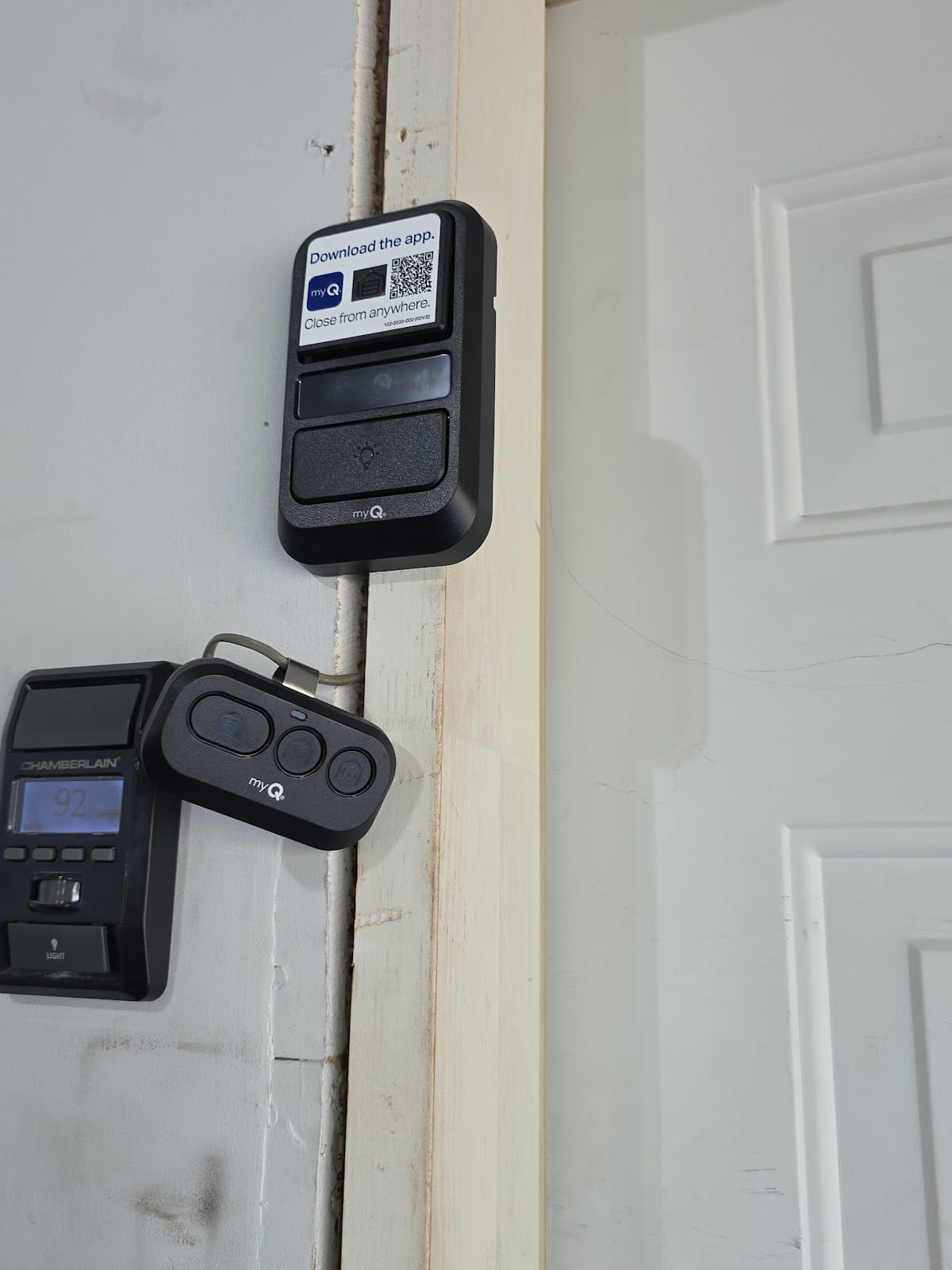
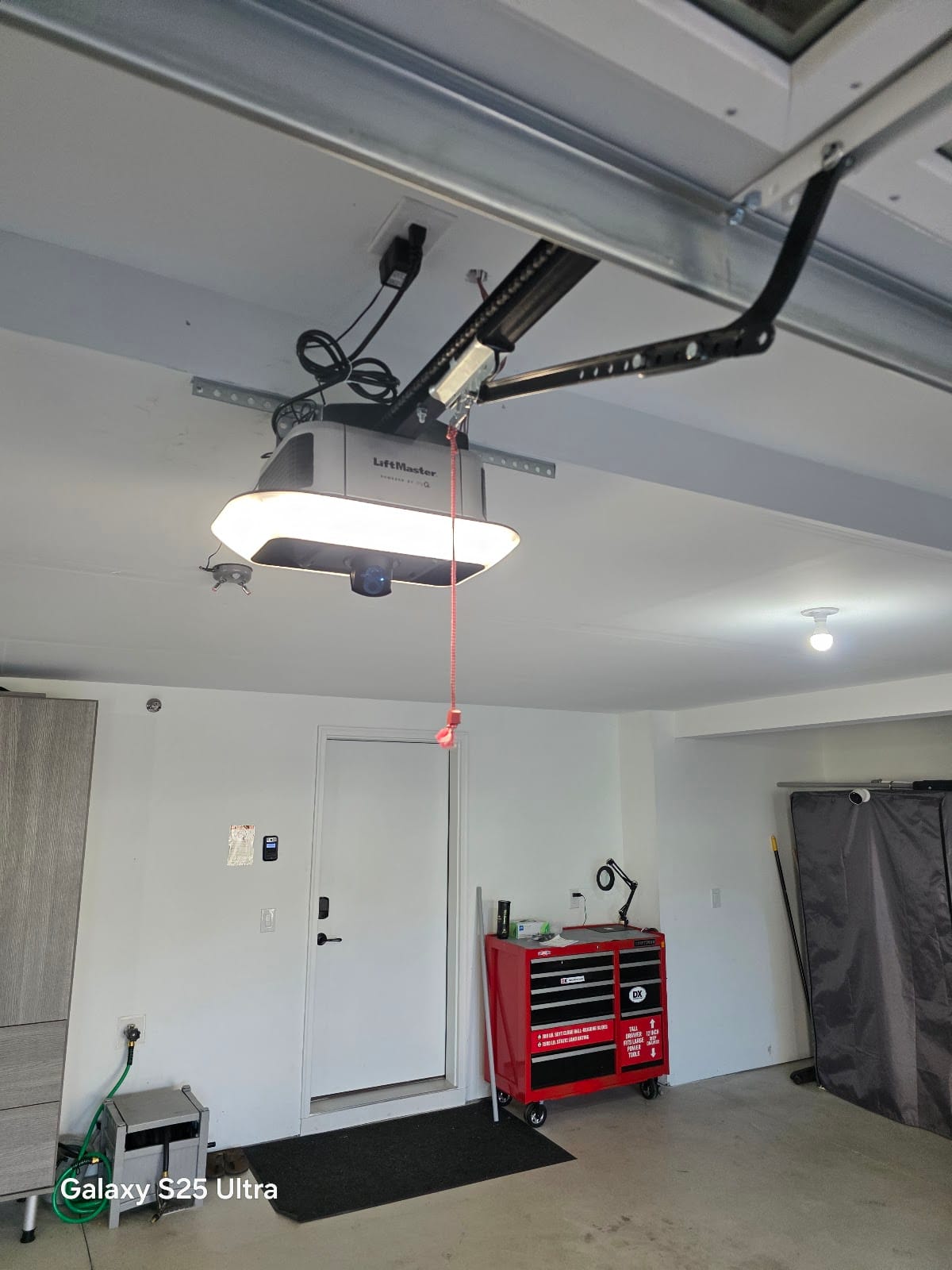

The first real cold snap every year brings the same call: “My keypad worked all fall and this morning it’s dead.” The customer is standing in the driveway at 7 a.m. at minus five with a car full of kids. Nine times out of ten it is the battery, and the tenth time it is water that got into the keypad in November and froze. This guide is what I tell people on the phone so they can fix it before I get there, and what to look at if a new battery does not do it.
Why keypads die when it gets cold
A wireless keypad is a small radio transmitter that sleeps until you press a key. It needs a certain voltage to wake up, light the keys, and send the code. A 9-volt alkaline that reads 7.5 volts in September is fine at 60 degrees. At zero degrees the chemistry slows down and that same battery delivers less, and the keypad either does nothing or lights up and sends a signal too weak to reach the opener. Then the sun hits it in the afternoon and it works again, which is why people think the keypad is “flaky.” It is not flaky. The battery is at the end of its life and the cold is the straw.
Coin-cell keypads (CR2032) are worse in the cold than 9-volt ones because there is so little capacity to begin with. If your keypad takes a coin cell, plan on changing it every fall and keep a spare in the car.
Which battery your keypad takes
| Keypad | Battery | Where it is | Notes |
|---|---|---|---|
| LiftMaster / Chamberlain 877MAX, 877LM, 977LM, KPW5 (most 2011 and newer) | 9-volt alkaline | Flip the cover up, battery is behind the keys; some models have a slide-out tray on the bottom | Yellow Learn button openers. Works with myQ openers 2220L / 6580L / 6690L |
| LiftMaster / Chamberlain 66LM, 976LM, 940D (older, purple or orange Learn button) | 9-volt alkaline | Behind the flip-up cover | Discontinued; the 877MAX replaces them and works with every Learn-button color back to 1993 |
| Genie GK-R, GWKP, Intellicode keypads | 9-volt alkaline (older GWKP) or two AAA (some newer) | Slide the keypad up off its mounting plate or open the back | Check the model label on the back |
| Slim “keyless entry” pads from some brands, Overhead Door OKP-BX | CR2032 coin cell or 9-volt depending on model | Back of the unit | Change coin cells every fall in Minnesota |
| Wired keypads (rare, usually commercial) | None, powered from the opener | – | If dead, the wire or the opener terminal is the problem |
Use a name-brand alkaline, not a rechargeable 9-volt. Rechargeables sit at a lower voltage and keypads hate them in the cold. Lithium 9-volts cost more but hold voltage better below zero; if your keypad is on a north-facing wall that never sees sun, the lithium is worth it.
New battery, still dead: the checklist
| What you see | Likely cause | What to do |
|---|---|---|
| Keys do not light at all with a fresh battery | Corroded battery contacts, or water inside the keypad | Take the battery out, look at the two contacts. Green or white crust: scrape with a small screwdriver, wipe with a dry cloth, dab of dielectric grease. Wet inside: leave it open indoors overnight, then try again. If the board is corroded, replace the keypad (an 877MAX is inexpensive) |
| Keys light, you enter the PIN, nothing happens, from close range | Keypad was erased from the opener (someone held Learn too long, or the opener was replaced or had its memory cleared), or wrong PIN | Reprogram: press Learn on the opener once, enter the PIN on the keypad, press Enter. Steps per brand in the programming guide |
| Works when you stand under the opener, not from the driveway | Range problem: interference from an LED bulb in the opener or nearby, antenna wire on the opener coiled up or broken, or a weak battery | Swap the opener bulb for a rough-service incandescent or a garage-door-rated LED, make sure the opener’s antenna wire hangs straight down, try a lithium battery. More in the opener light guide |
| Keypad works, remote works, wall button works, door starts then reverses | Not a keypad problem: safety sensors or force limits in the cold | See garage door won’t close in cold weather |
| Nothing works: keypad, remote, wall button all dead | Opener has no power or the logic board failed | Check the outlet with a lamp, check the breaker, look for a blinking light on the opener (see the blink code guide). Old opener with a dead board is usually replaced |
| Keypad works fine in the afternoon, dead every morning | Battery at end of life; cold finishes it | Replace the battery. If a fresh battery does the same thing within weeks, the keypad is drawing power (stuck key, water); replace the keypad |
Where the keypad is mounted matters more than people think
- Out of the direct weather. Under the overhang, on the jamb beside the door, not on the face of the garage where rain hits it. The flip cover is a splash guard, not a seal.
- Not on the sunny south or west wall if you can help it. Sun warms the keypad, snow on top melts and runs in, then it freezes at night. The keypads I replace for water damage are nearly all on the sunny side.
- About 4 to 5 feet up, where you can see the keys with your gloves off, and where a snowbank from the plow will not bury it.
- Close the cover every time. An open cover collects snow. If the cover’s hinge is broken, replace the keypad; a new one is cheaper than a logic board problem from water running into the wiring.
- Within 30 feet or so of the opener with a clear path. A keypad on a detached garage’s far wall with a steel door in between may never get good range.
Keeping it working all winter
- Change the battery every October, with the furnace filter. Write the date inside the cover with a marker.
- Keep a spare 9-volt in the car. A keypad with a dead battery and a car full of groceries is a bad combination at minus ten.
- If the house has a myQ opener (6690L, 6580L, 2220L), set up the phone app as a backup. The keypad battery dying does not matter much when the phone opens the door.
- Have a second way in: the service door with a key, or on a detached garage with no service door, an outside emergency release. The emergency release guide explains how that works and why it matters when the power is out.
- Keypads are replaced, not repaired. If yours is more than about ten years old and acting up, a new 877MAX programs in a minute and works with any LiftMaster or Chamberlain opener since 1993.
Garage door keypad – FAQ
Why does my garage door keypad stop working in cold weather?
Cold lowers the voltage a tired battery can deliver. A 9-volt or coin cell that is near the end of its life works at 60 degrees and fails at zero, then recovers in the afternoon sun. Replace the battery with a fresh alkaline or lithium 9-volt. If it still fails, check the contacts for corrosion and the inside for water.
What battery does a LiftMaster or Chamberlain garage door keypad use?
Nearly all of them use a single 9-volt alkaline battery, including the 877MAX, 877LM, 977LM, 66LM and 976LM. It sits behind the flip-up cover or in a slide-out tray at the bottom of the keypad.
My keypad lights up but the door does not open. What is wrong?
If it lights, the battery is usually fine. Either the keypad is no longer programmed to the opener (press Learn on the opener, enter the PIN, press Enter), the PIN is wrong, or the signal is not reaching the opener because of range or interference from an LED bulb. Try it from directly under the opener first.
Do I need to reprogram the keypad after changing the battery?
No. The PIN and the pairing with the opener are stored in memory and survive a battery change. If the keypad will not open the door after a new battery, something else is wrong, usually corrosion, water, or the opener’s memory was cleared.
Can water damage a garage door keypad?
Yes, and in Minnesota it is the second most common failure after the battery. Snow melts on a sun-warmed keypad, runs in past the cover, and freezes at night. A keypad with a corroded circuit board is replaced; mounting the new one under the overhang and keeping the cover closed prevents it.
How long does a garage door keypad battery last?
Typically one to two years in mild climates. In Minnesota plan on changing it every fall. A battery that is half used in October will often not make it through January.
Owner-operated from St. Louis Park, about one hour away for most calls in Edina, St. Louis Park, Plymouth, Minnetonka, Golden Valley, Hopkins, Bloomington and the rest of the west metro. I carry 877MAX keypads on the van and install LiftMaster myQ openers. Call or text (763) 265-7671.