
Key facts in 20 seconds
- A closed garage door with a working opener is already locked: the trolley holds the door and the motor’s gear train cannot be back-driven by hand. The weak points are the emergency release cord, a weak or open-top door, and remotes left in cars.
- Lock options, cheapest to best: inside slide lock (the L-shaped bar on the track), T-handle keyed lock (outside key, inside slide), opener LOCK button / vacation mode (disables remotes), myQ auto-lock deadbolt (LiftMaster 841LM: motorized bolt that locks every time the door closes), and a padlock through the track for long absences.
- Never use a manual slide lock, padlock or deadbolt while the opener is connected. The opener will try to lift a locked door, strip the gear or snap the cables. Pull the release cord first or use the 841LM, which talks to the opener.
- The “coat-hanger through the top of the door” trick that pops the release cord works on many doors. The fix costs a few dollars: a release-cord shield or a zip-tie through the trolley lever, plus a solid top section.
- Lock the door between the garage and the house like an exterior door. It is the real security line.
- Keypads are not a weakness if the PIN is unique; the LOCK button on the wall console turns off every remote and keypad while you are away and leaves the wall button working.
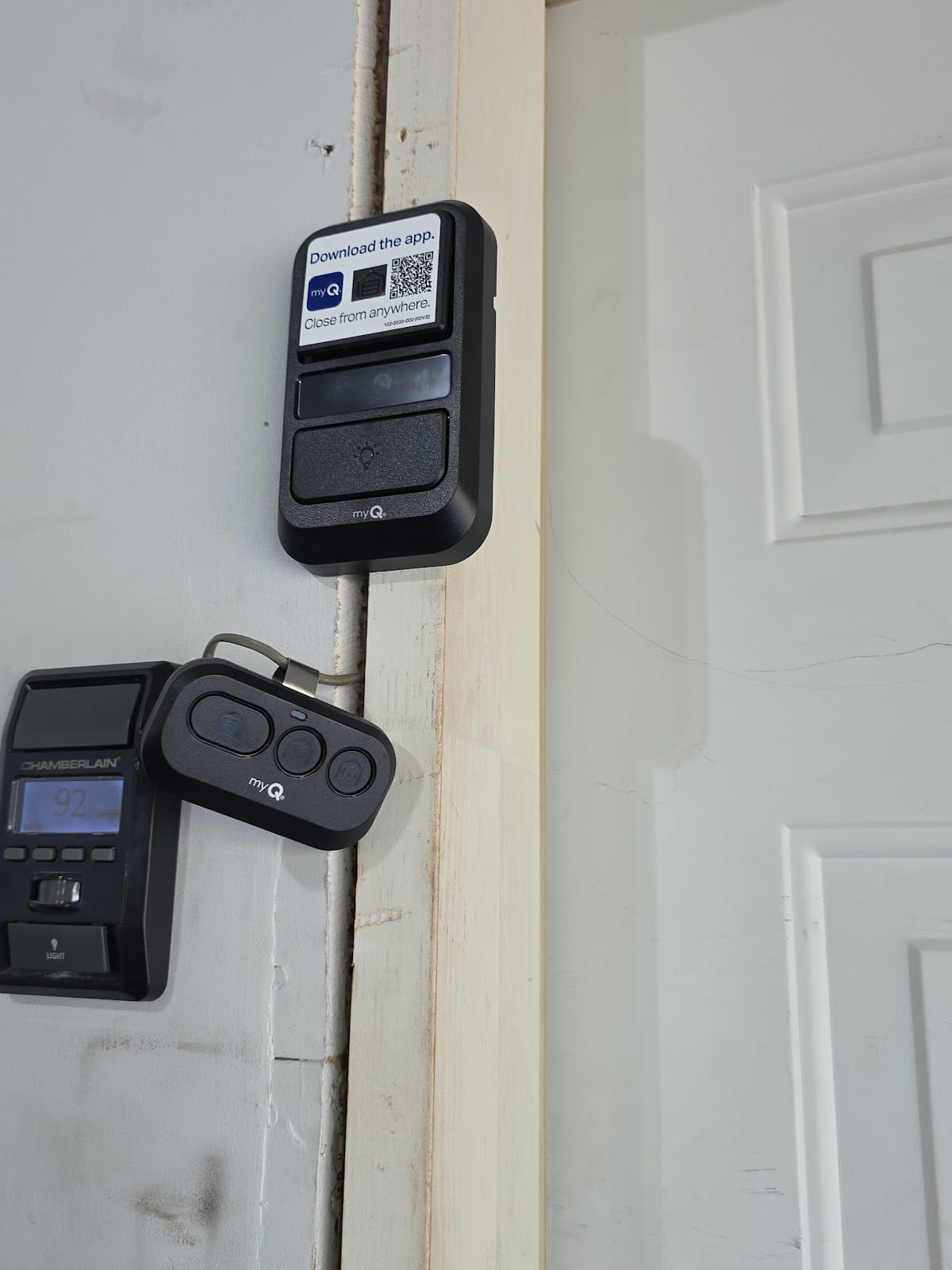
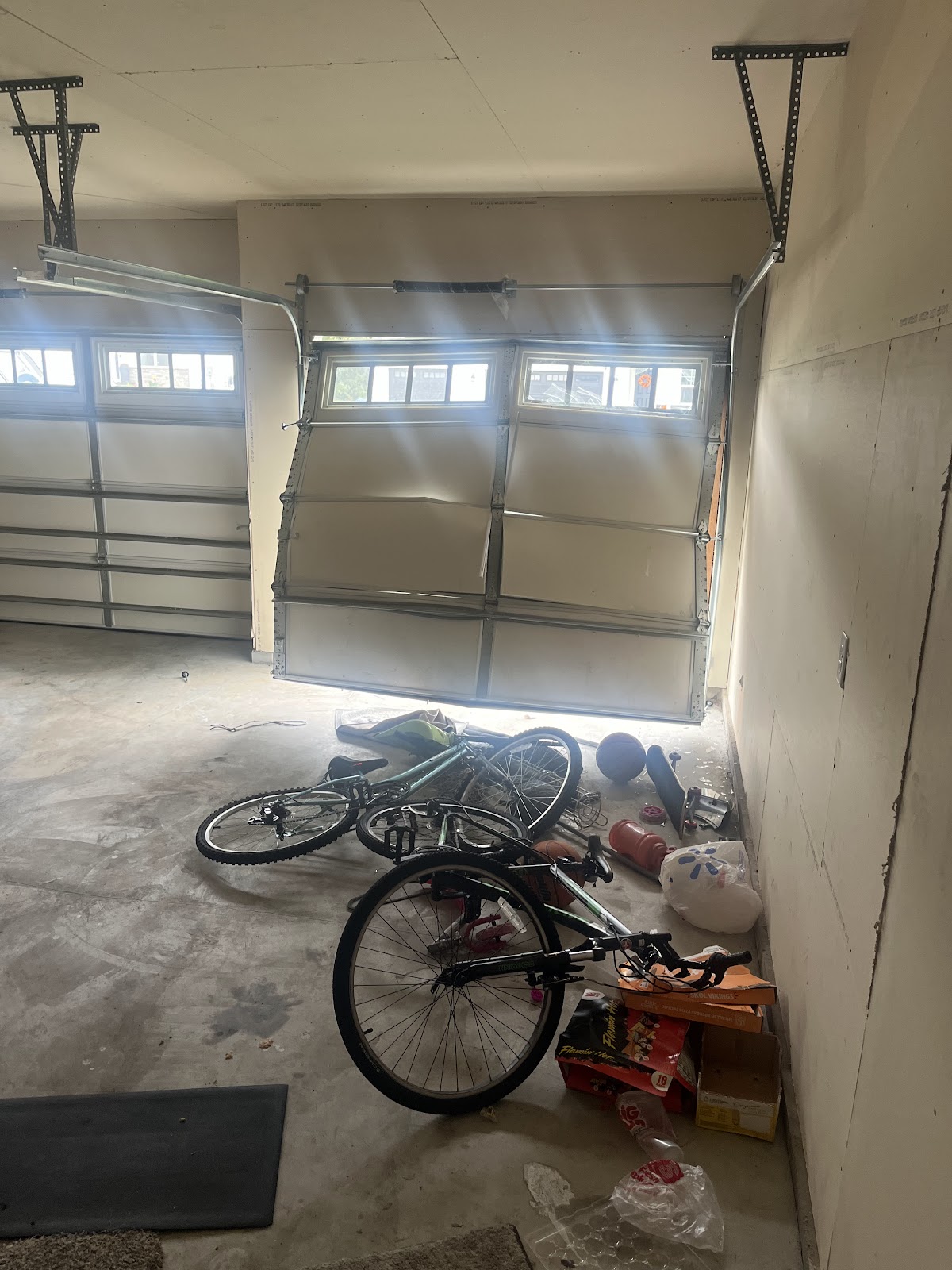
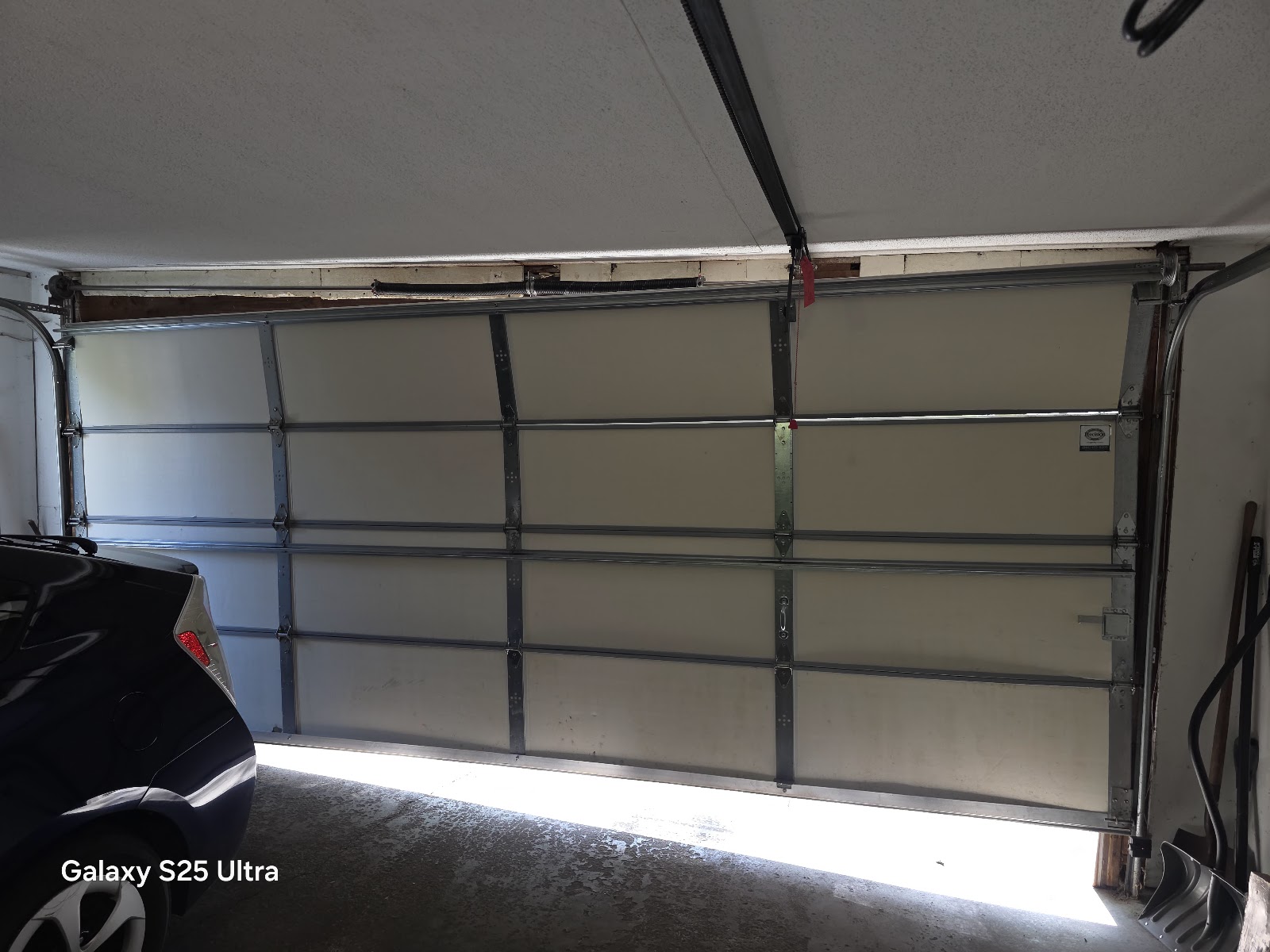
Homeowners ask me about garage door locks in two situations: after a break-in on their street, and when they are about to leave town for a month. The answer depends on whether the door has an opener and which one, because the wrong lock with the opener still connected is the most common way to wreck an opener. Here are the options, honestly ranked, and what I actually install on doors in the west metro.
How a garage door actually gets opened from outside
- The release-cord fish. Push the top of the door in an inch, slide a coat hanger over the top section, hook the red release cord, pull. The trolley disconnects and the door lifts by hand. It takes seconds on a flexible, uninsulated door. Countermeasures: a release-cord shield, a zip tie through the trolley lever hole (it still breaks from inside with a hard pull), and a stiff top section. See how the emergency release works.
- A remote left in a car parked on the driveway or at the mall. Keep the remote on a keychain, or use a keypad and HomeLink and leave no remote in the vehicle.
- Code grabbing on pre-1993 fixed-code openers. Any opener with DIP switches should be replaced.
- Brute force: prying the bottom panel up on a door with no lock and no opener (or a released opener).
Garage door lock options compared
| Lock | How it works | Security | Works with an opener? | Cost / install |
|---|---|---|---|---|
| Inside slide lock (spring latch on the track) | L-shaped bar on the inside of the door slides into a slot in the vertical track | Good against pulling the door up from outside | Only with the opener released; LiftMaster openers do not know it is locked | Lowest; 15 minutes |
| T-handle / L-handle keyed lock | Outside key turns a cam that pulls two spring latches into the tracks; inside has a slide or thumb-turn | Good; standard on doors without openers (cabins, outbuildings) | Same rule: release the opener first | Low; 30-45 minutes, needs a hole in the door |
| Opener LOCK button / vacation mode | Wall console button disables all remotes and keypads; wall button still works | Stops a stolen or cloned remote; does nothing against physical attack | Yes – that is the point | Free; already on most LiftMaster / Chamberlain consoles since ~2005 |
| myQ automatic garage door lock (LiftMaster 841LM) | Motorized steel deadbolt mounted on the track; the opener throws the bolt every time the door closes and pulls it before it opens | Best for a daily-use door; audible and visible deadbolt | Yes – Security+ 2.0 openers only (yellow Learn button), incl. the 6690L / 6580L / 98022 | Moderate; 1 hour, I install them with new openers |
| Padlock or C-clamp through the track | Through the track hole just above a roller so the door cannot rise | Good for a vacant property or a cabin | Only with the opener unplugged | Lowest; 1 minute; easy to forget and strip the opener |
| Release-cord shield / zip tie | Blocks the “fish the cord” trick through the top of the door | Closes the most common break-in method on a closed door | Yes; release still works from inside by hand | A few dollars; 5 minutes |
The one rule: locks and openers do not mix (unless the lock is made for it)
An opener pulls the door up with a few hundred pounds of force at the trolley. If a slide lock or padlock is holding the door down, the opener will either strip its drive gear, rip the operator arm bracket out of the top section, or on a chain unit snap the chain. The door itself often gets bent at the top panel. I see this several times a winter, usually after a family member “locked up” a garage that someone else then opened with a remote. If you use a manual lock, pull the release cord first or unplug the opener, and put a note on the wall button. The LiftMaster 841LM is the exception: the opener controls the bolt, so the door can never be driven against it.
The myQ automatic lock (841LM) in practice
The 841LM is a motorized deadbolt that mounts on the vertical track beside the door, wired to the opener. Every time the door closes, the bolt extends through the track; every time you press a remote, the opener retracts the bolt before it lifts. It is loud enough that you hear it lock, and it is visible from inside. It works with the 6690L, 6580L and the 98022 wall-mount opener (which ships with its own version), all of which I install. It does not work with Genie, Chamberlain pre-2011 or any opener without the yellow Learn button. In a power outage the bolt stays wherever it was; from inside you can retract it by hand with the manual lever, then pull the release cord.
The LOCK button and vacation mode
On LiftMaster and Chamberlain wall consoles the LOCK button, held for two seconds, disables every remote, keypad and HomeLink button; the wall button and the myQ app keep working. The light on the console blinks to show it is active. Use it when you travel and any night the car is parked on the street. It is free and nobody uses it. If your remote stops working after a trip, this is the first thing to check, before reading the remote programming guide.
What I recommend by situation
| Situation | What I recommend |
|---|---|
| Daily-use attached garage with a modern LiftMaster opener | 841LM auto-lock + release-cord shield + a real deadbolt on the house door. Use the LOCK button when you travel. |
| Older opener (purple / red / green button) | LOCK button if the console has one, release-cord shield, and plan the opener replacement: a pre-2011 opener has weaker rolling-code security and no auto-lock option. |
| Detached garage with tools, bikes, snowmobile | Slide lock used in manual mode, or the 841LM if there is an opener; add a keypad so you are not carrying a remote; motion light. |
| Cabin, outbuilding, door without an opener | Keyed T-handle plus inside slide lock; a padlock through the track for the off-season. |
| Rental or house for sale, vacant for weeks | Unplug the opener, slide lock or padlock through the track, lock the service door. |
| Door with glass in the top section | Frosted or high windows; shield the release cord; auto-lock. Glass makes the fish trick easier. |
Minnesota notes
- Frozen locks. Outside T-handle cylinders freeze; a shot of lock de-icer or graphite in November. The 841LM bolt lives inside and does not care.
- Cabins up north. Padlock through the track plus a keyed T-handle is the right combination for a door that sits closed from October to May; unplug the opener and remove the remotes from the trucks.
- Snowmobile and bike theft runs through detached garages in the suburbs every winter. A keypad, an auto-lock and a motion light on the alley side are the three things I suggest when I am out there for a repair.
- Insurance. Some policies ask whether the garage is locked separately from the house; an auto-lock answers that cleanly.
Garage door locks – FAQ
Can you put a lock on a garage door that has an opener?
Yes, but the only lock the opener can work with is an automatic lock such as the LiftMaster myQ 841LM, which the opener releases before it opens the door. A manual slide lock, T-handle or padlock may only be used with the opener released or unplugged, or the opener will strip its gear or bend the door.
Is a garage door with an opener already locked?
Effectively yes: the trolley and gear train hold a closed door and it cannot be lifted by hand from outside. The weaknesses are the emergency release cord, which can be hooked through the top of a flexible door, and remotes left in vehicles. A release-cord shield and a unique keypad PIN close most of that gap.
What is the LOCK button on a garage door opener?
On LiftMaster and Chamberlain wall consoles, holding LOCK for about two seconds disables all remotes, keypads and HomeLink buttons; the wall button and myQ app still work. It is a vacation mode. If your remote suddenly stops working, check whether the console light is blinking.
What is the most secure way to lock a garage door?
For a daily-use door with a modern LiftMaster opener: the 841LM automatic deadbolt, a release-cord shield, the LOCK button when away, and a proper deadbolt on the door into the house. For a door without an opener: a keyed T-handle plus an inside slide lock, and a padlock through the track for long absences.
Will a padlock through the garage door track damage the opener?
If the opener is still connected and someone presses a remote, yes: the opener tries to lift a door that cannot move and typically strips its drive gear or tears the top-section bracket. Unplug or release the opener first.
Owner-operated from St. Louis Park, about one hour away for most calls in Edina, St. Louis Park, Plymouth, Minnetonka, Golden Valley, Hopkins, Bloomington and the rest of the west metro. Call or text (763) 265-7671.