
A garage door should hum, not shake the house. If yours has started grinding, squealing or slamming, the noise is usually the door telling you exactly which part is wearing out. After years of repairing doors across Minneapolis, St. Paul and the suburbs, David can usually name the problem from the sound alone. Here are the six noises he hears most, what each one means, and which ones need attention today.
1. Squealing or Screeching
A high-pitched squeal on the way up or down almost always comes from dry metal on metal — steel rollers running in the track without lubrication, or hinges that have never been oiled. It is the least urgent noise on this list, but it is also the one that wears parts fastest. A proper silicone or garage-door lubricant on the rollers, hinges and spring (never WD-40, which strips grease) usually quiets it. If the rollers are steel and more than ten years old, swapping them for sealed nylon rollers makes the door dramatically quieter; see our roller replacement page.
2. Grinding
A grinding, growling sound from the opener itself — often with the door moving slowly or not at all — usually means the plastic drive gear inside the opener is stripping. This is the classic failure on older chain-drive units, and it often follows a heavy door or a worn spring that made the motor work too hard. The fix is a gear-and-sprocket kit rather than a whole new opener, which is what our gears and sprockets repair service covers. If the grinding is coming from the track instead, look for a roller that has broken or popped out of the track.
3. Rattling and Vibrating
A rattle that shakes the whole door is loose hardware: hinge bolts, track brackets and roller stems all work loose over thousands of cycles. On a cold morning the vibration is worse because the metal has contracted. A tune-up that tightens every fastener and checks the track alignment usually solves it. Rattling that only happens on windy days can also mean the door panels are flexing — a sign of a lightweight door that could use a strut across the top section.
4. Popping or Clicking
Rhythmic popping as the door moves is often the rollers or the torsion spring coils snapping past a dry spot. It can also be a section of the door that has lost its rigidity, so the panels pop as they bend through the curve of the track. If the popping is new and getting louder, have it looked at — a cracked panel or a spring that is binding on the shaft both get worse quickly.
5. Banging or Slamming
A door that slams the last foot to the floor, or bangs when it starts up, is out of balance. Either the spring has lost tension with age or it is the wrong size for the door, so the opener is doing the lifting the spring should be doing. This is the noise to take most seriously: an unbalanced door strains the opener, chews through cables and is the setup for a spring failure. The test is simple — with the opener disconnected, a balanced door will stay put when lifted halfway. If yours slides down or shoots up, it needs a spring adjustment or replacement. Our spring repair page explains the options.
6. A Loud Bang and Then Silence
One sharp bang from the garage — like a firecracker — followed by a door that will not open is a snapped torsion spring. Stop using the opener immediately. The door now weighs its full 150 to 300 pounds, and running the motor against it strips gears and breaks cables. This is an emergency call; David replaces springs the same day, usually within the hour. Our guide on broken garage door spring warning signs covers what to look for.
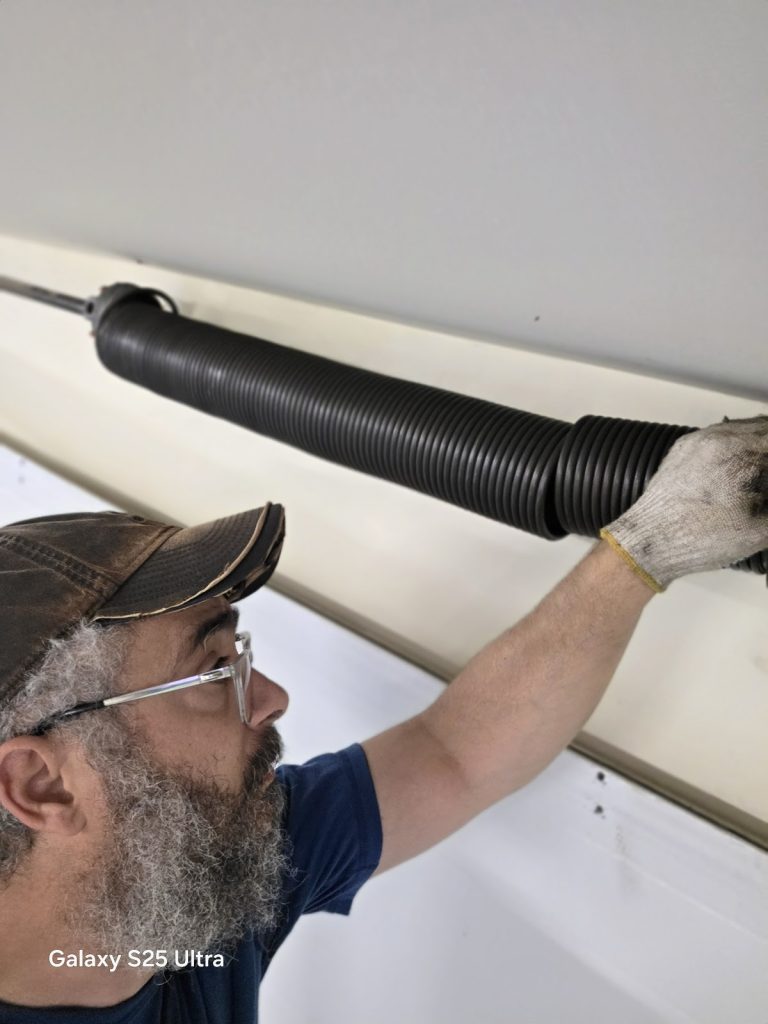
Real jobs by David (owner-operated) — photos from recent Twin Cities calls


Quieting the Door for Good
Most noisy doors need three things: nylon rollers, a full tighten-and-lubricate tune-up, and a properly balanced spring. Done together, that turns a door you can hear from the bedroom into one you barely notice. David offers this as a package on our noise reduction service, and a seasonal maintenance tune-up keeps it that way. If you would rather check a few things yourself first, our fall tune-up checklist is a good place to start.
Garage door grinding, banging or squealing? Call David at (763) 265-7671 — available 24/7 across the Minneapolis-St. Paul metro.
If the noise is the opener itself, a belt-drive DC unit is the fix: see belt vs chain openers.
Most of that noise is the rollers: see nylon vs steel rollers and sealed bearings.