
Key facts in 20 seconds
- Four drive types move a garage door: chain, belt, screw and direct-drive, plus the wall-mount (jackshaft) that skips the rail entirely.
- Belt drive is the quiet choice for an attached garage with bedrooms above. Chain drive is the budget workhorse and the loudest. Screw drive hates Minnesota winters. Direct-drive is quiet but rare here.
- Horsepower is mostly marketing: the springs lift the door, the opener only moves a balanced door. ½ HP (or its DC equivalent) handles almost any single door; ¾ HP is for heavy insulated or wood doubles.
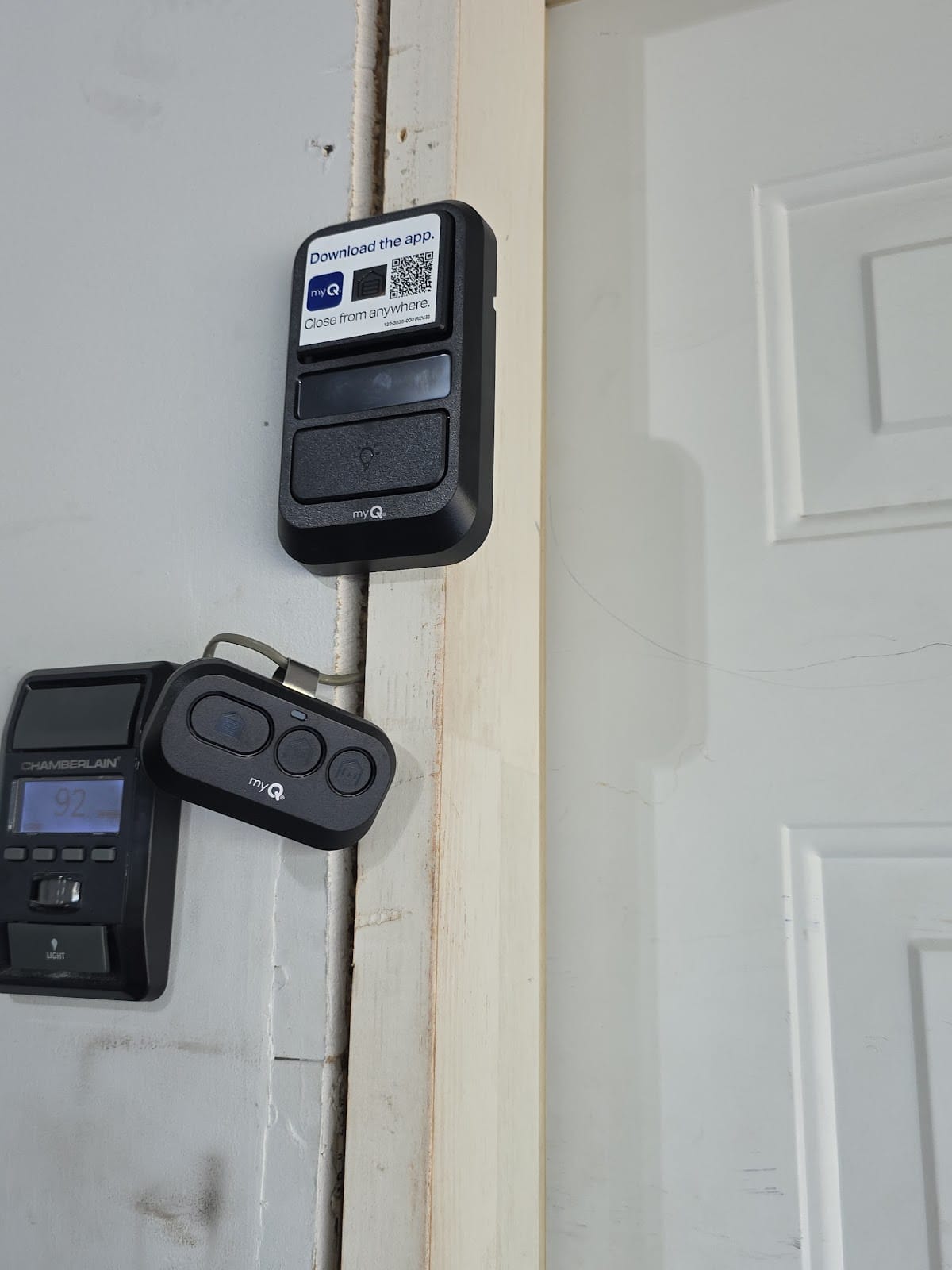
- What actually matters in a Minnesota garage: a DC motor with soft start/stop, battery backup, Wi-Fi/myQ, LED lighting, and a drive that doesn’t stiffen at −20 °F.
- No opener fixes a heavy door. If the door won’t stay halfway by hand, fix the balance first.
I’m David, owner of David’s Urgent Garage Door in St. Louis Park. I install LiftMaster openers across the Twin Cities, and the question I hear most is “belt or chain?” followed by “how much horsepower do I need?” Here’s the honest, technical answer, including which types I don’t recommend for our winters.
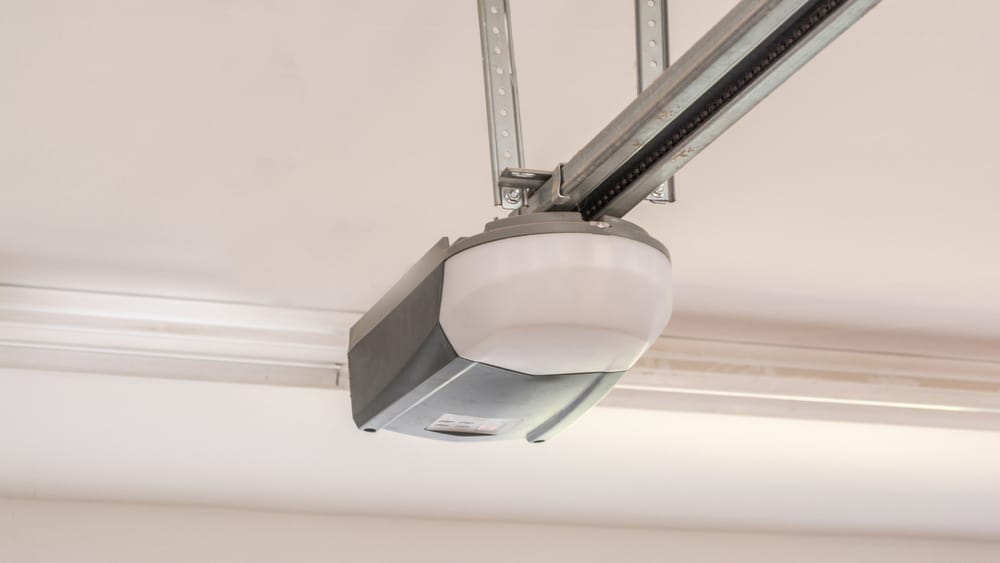
The drive types, compared
| Drive | How it works | Noise | Minnesota cold | Best for |
|---|---|---|---|---|
| Chain drive | A bicycle-style metal chain pulls the trolley along the rail. | Loudest (metal on metal, rattles as it ages). | Fine. Chain stretches slightly over years; needs the right lube, not grease. | Detached garages, budget replacements, heavy doors. |
| Belt drive | A steel-reinforced rubber belt replaces the chain. | Quiet; with a DC motor you mostly hear the door, not the opener. | Very good. No lube needed; belt stays flexible in the cold. | Attached garages, rooms above or beside the garage. My default recommendation. |
| Screw drive | A threaded steel rod turns and moves the trolley. | Medium; a vibrating hum. | Poor. The grease on the screw thickens in deep cold and the opener slows or stalls. I don’t install them here. | Mild climates. |
| Direct-drive | The motor itself travels along a stationary chain inside the rail. | Very quiet; one moving part. | Good. | Quiet garages; fewer dealers and parts locally, so I rarely install it. |
| Wall-mount (jackshaft) | Mounts beside the door and turns the torsion shaft directly; no rail on the ceiling. | Quiet. | Good. | Low headroom, car lifts, storage lofts, high-end garages. See the LiftMaster 98022 guide. |
Horsepower: what the number really means
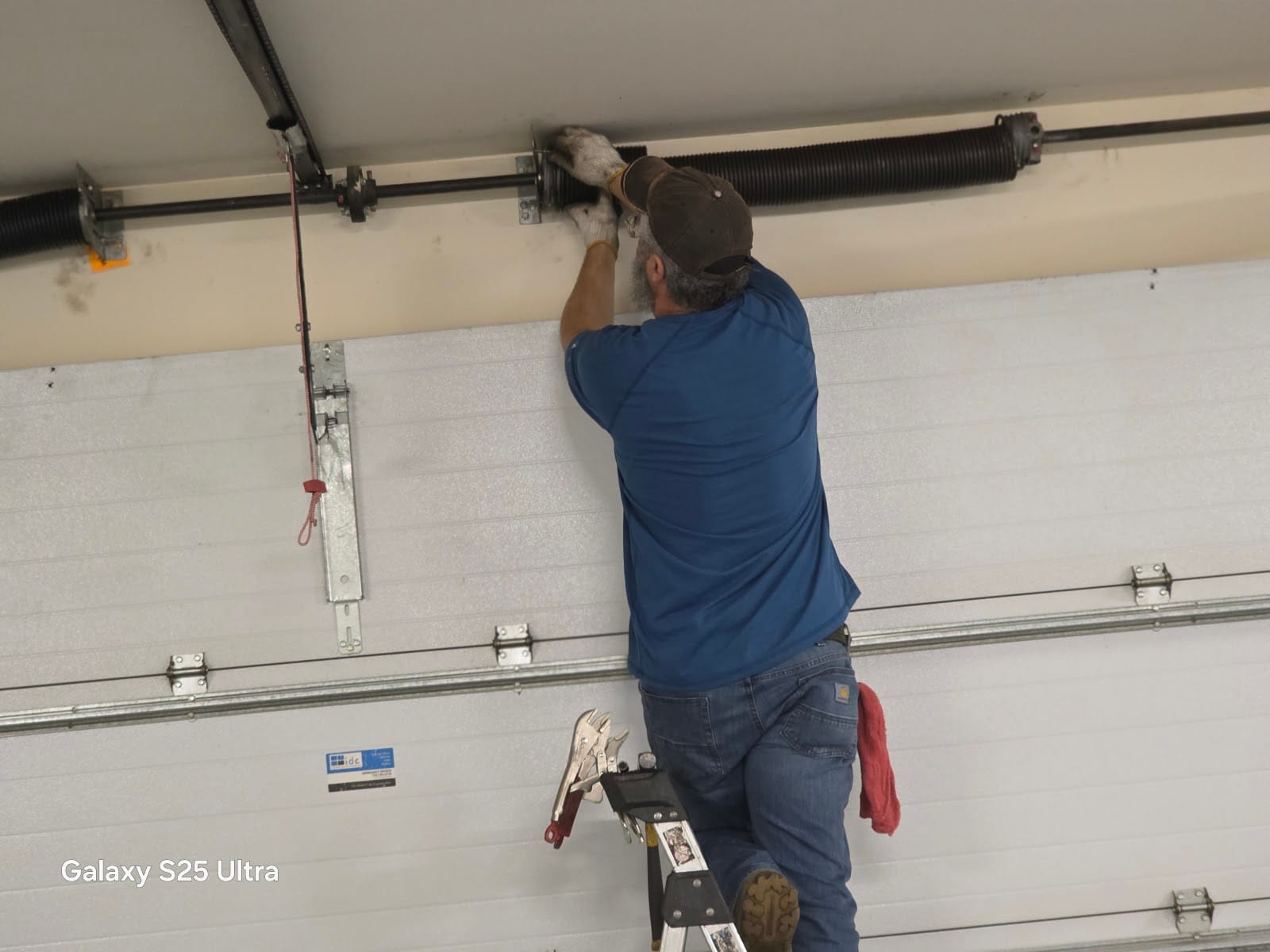
A properly sprung garage door weighs a few pounds in your hand at the halfway point. The opener’s job is to move that balanced door and hold it, not to lift 200 lb. That’s why horsepower matters far less than people think, and why a “bigger” opener is the wrong fix for a door that got heavy: the real problem is a tired or broken spring.
| Rating | Typical use | Notes |
|---|---|---|
| ½ HP (or DC equivalent) | Single doors 8–10 ft, most 16-ft non-insulated steel doubles | The standard. Perfectly adequate when the door is balanced. |
| ¾ HP | 16–18 ft insulated doubles, wood or carriage-house doors, 8-ft-tall doors | Extra margin and a longer motor life on heavy, high-use doors. |
| 1 HP and up | Oversize or commercial-style doors | Rare on a house. Usually a sign someone is trying to out-muscle bad springs. |
| “HPc” / “HPS” / “Power equivalent” | DC motors | Marketing terms for a DC motor’s equivalent output. Compare lifting capacity and warranty, not the label. |
AC vs DC motors (this matters more than horsepower)
- DC motors (all current LiftMaster myQ models) start and stop softly, run quieter, allow variable speed, and are what make battery backup possible. In a Twin Cities ice storm with the power out, battery backup is the difference between opening the door and crawling under it with the release cord.
- AC motors (older and bargain units) slam to full speed instantly, which shakes the door and the hardware. Fine in a detached garage; not what I’d put under a bedroom.
What I actually recommend in the Twin Cities
- Attached garage, living space nearby: belt drive, DC motor, battery backup, Wi-Fi/myQ. This is the LiftMaster myQ lineup I install (Premium 6690L, Plus 6580L, Basic 2220L).
- Detached garage, budget matters: a chain-drive DC unit is fine; you won’t hear it from the house.
- Low ceiling, car lift or loft: the wall-mount 98022. It needs a torsion-spring door and a few inches beside the shaft; see how to measure headroom and sideroom.
- Skip: screw drives (cold-weather stalls) and any opener without a DC motor and battery backup. Installed opener prices start at $650 and go up to $1,500 depending on the model; a door and opener installed together is cheaper than separately.
Cold-weather notes from the field
- Lube the chain (not the belt) once a year with garage-door lubricant; grease collects dirt and stiffens.
- If the opener hums but the door won’t move on a −15 °F morning, it’s usually the door frozen to the floor or a broken spring, not the motor. Pull the release cord and check by hand.
- Force settings drift as the door gets heavier in winter (cold lube, stiff weather seal). Don’t crank the force up; fix the cause. See why doors won’t close in cold weather.
- Openers last 10–20 years. When to repair vs replace: opener lifespan guide.
Drive types and horsepower – FAQ
Is a belt drive really quieter than a chain drive?
Yes, noticeably. Paired with a DC motor it’s the quietest rail-type opener you can buy. Most of the remaining noise comes from the door’s rollers and hinges, which is a separate fix.
Do I need a ¾ HP opener for a double garage door?
For a 16-ft insulated or wood double door, ¾ HP gives useful margin. For a balanced non-insulated steel double, ½ HP works. Either way the springs do the lifting.
Can I replace just the chain with a belt?
Not on most units; the rail, trolley and sprocket are different. A new belt-drive opener is the practical route, and the install usually takes 1.5–2 hours.
Are screw-drive openers bad in Minnesota?
They’re a poor fit. The screw’s grease thickens in deep cold, the opener slows and the force sensors trip. Belt or chain DC units don’t have that problem.
How much your door weighs (and why the opener doesn’t care): garage door weight guide.
Need a new opener, or not sure yours is worth fixing?
LiftMaster myQ belt-drive and wall-mount openers installed same day across Minneapolis–St. Paul, old unit removed, remotes and keypad programmed, 1-year labor warranty.