
Key facts in 20 seconds
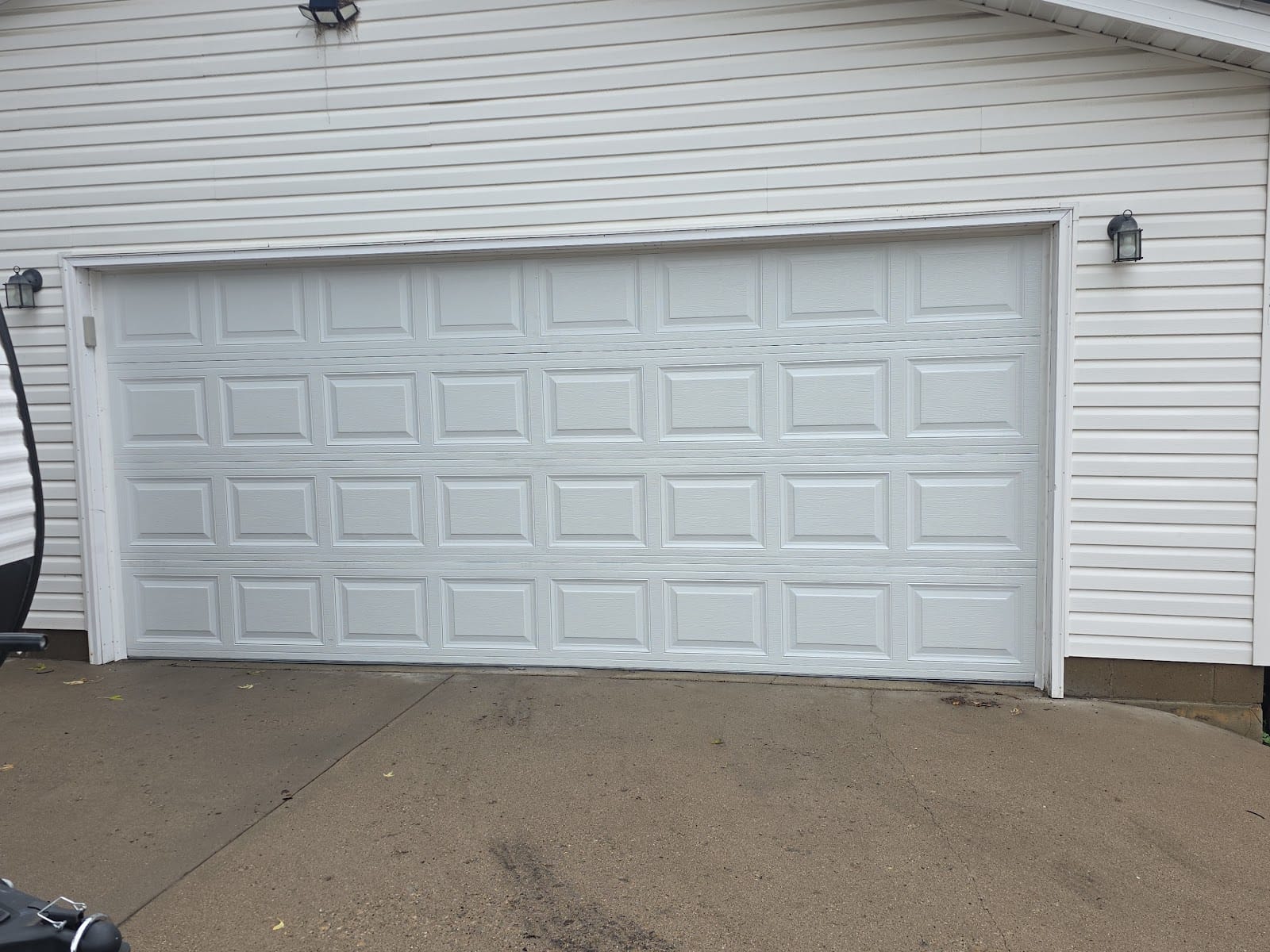
- A typical 9×7 single steel door weighs 90–180 lb and a 16×7 double weighs 150–320 lb, depending on insulation. Wood and carriage-house doors can pass 400 lb.
- Insulation is the big variable: a 2" polyurethane sandwich door can weigh nearly double a bare single-layer steel door of the same size.
- Weight is what the springs are sized for, not the opener. Change the weight (new door, insulation kit, new panels, windows) and the springs must change with it.
- Weighing a door means releasing the springs and setting it on a scale: a technician job. For planning, the tables below are close enough.
- In Minnesota, ice and snow stuck to the outside of a door can add 10–30 lb for a morning. That’s why a tired spring “fails” on the coldest day.
I’m David, owner of David’s Urgent Garage Door in St. Louis Park. People ask how much their door weighs for two reasons: they want to know if they can lift it by hand in an outage, or a spring broke and they want to understand the quote. Here are real-world weights by size and build, how I measure a door when it matters, and why the number drives everything from spring size to opener choice.
Typical weights by size and construction
| Door size | Single-layer steel (no insulation) | Steel + polystyrene (vinyl-backed) | 2" polyurethane sandwich | Wood / carriage-house |
|---|---|---|---|---|
| 8×7 | 75–95 lb | 95–125 lb | 125–160 lb | 150–250 lb |
| 9×7 | 85–110 lb | 110–145 lb | 145–180 lb | 175–280 lb |
| 10×7 | 95–120 lb | 120–160 lb | 160–200 lb | 200–300 lb |
| 16×7 | 150–185 lb | 190–250 lb | 250–320 lb | 300–450 lb |
| 18×7 | 170–210 lb | 215–280 lb | 280–360 lb | 340–500 lb |
Ranges are typical for 24–27-gauge residential steel doors sold in the Twin Cities (DoorLink, Haas, Clopay, Amarr). An 8-ft-tall door adds roughly 12–15%. A row of windows adds 10–25 lb. Thicker 24-gauge skins sit at the top of each range; see the steel gauge guide.
What adds weight, and how much
| Change | Added weight (16-ft door) | What it means |
|---|---|---|
| Polystyrene insulation + vinyl backer | +40–60 lb | Usually within the same spring size family, but the springs are re-checked. |
| Upgrade to 2" polyurethane sandwich | +100–140 lb vs bare steel | New, larger springs. Never reuse the old ones on a heavier door. |
| Aftermarket insulation kit (foam board panels) | +15–30 lb | Enough to throw a marginal door out of balance; a tune-up afterward is not optional. |
| Window section | +10–25 lb | Top-heavy; check balance at the top of travel. |
| Reinforcement strut (per strut) | +5–10 lb | Minor, but on wide doors with 2–3 struts it adds up. |
| Ice and wet snow on the outside | +10–30 lb (temporary) | The reason a weak spring breaks on the coldest morning; see cold-weather problems. |
Why the weight matters
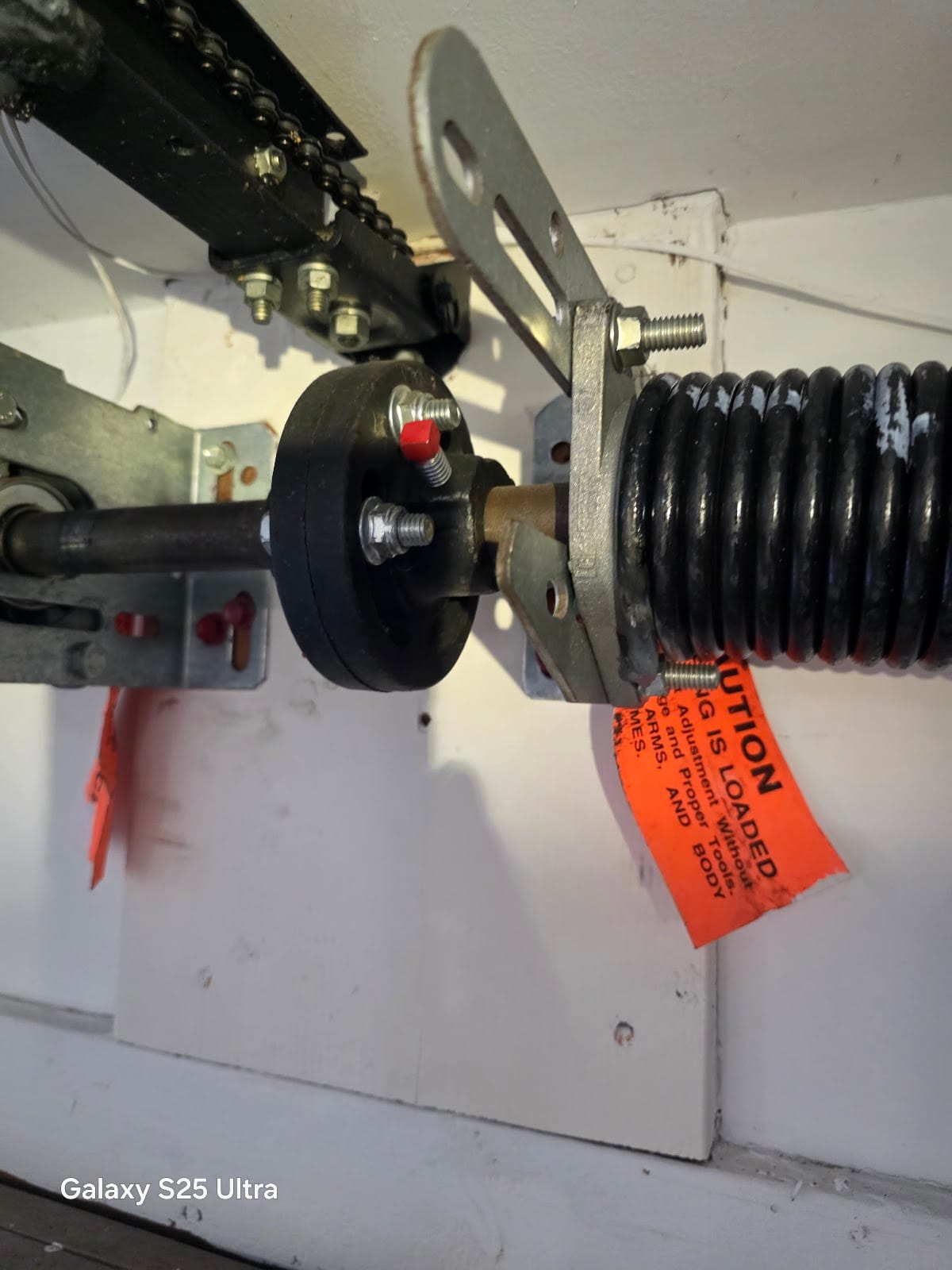
- Springs are sized by weight. A torsion spring is chosen by door weight, height, drum size and the cycle life you want. Get the weight wrong by 30 lb and the door is either heavy at the bottom or slams at the top. See spring sizing: wire size, IPPT and cycle life.
- The opener only moves a balanced door. A ½ HP opener handles a 300-lb door if the springs carry the weight. If the springs don’t, no opener will. See horsepower explained.
- Cables and bottom brackets are rated for the door’s weight too. A heavier door on old, rusted cables is how doors end up crooked. See why doors go crooked.
- Safety: whatever the number, it’s the weight that lands on you if a spring or cable lets go while you’re under it. That’s the whole reason for the safety sensors and the 2×4 reverse test.
How I actually weigh a door
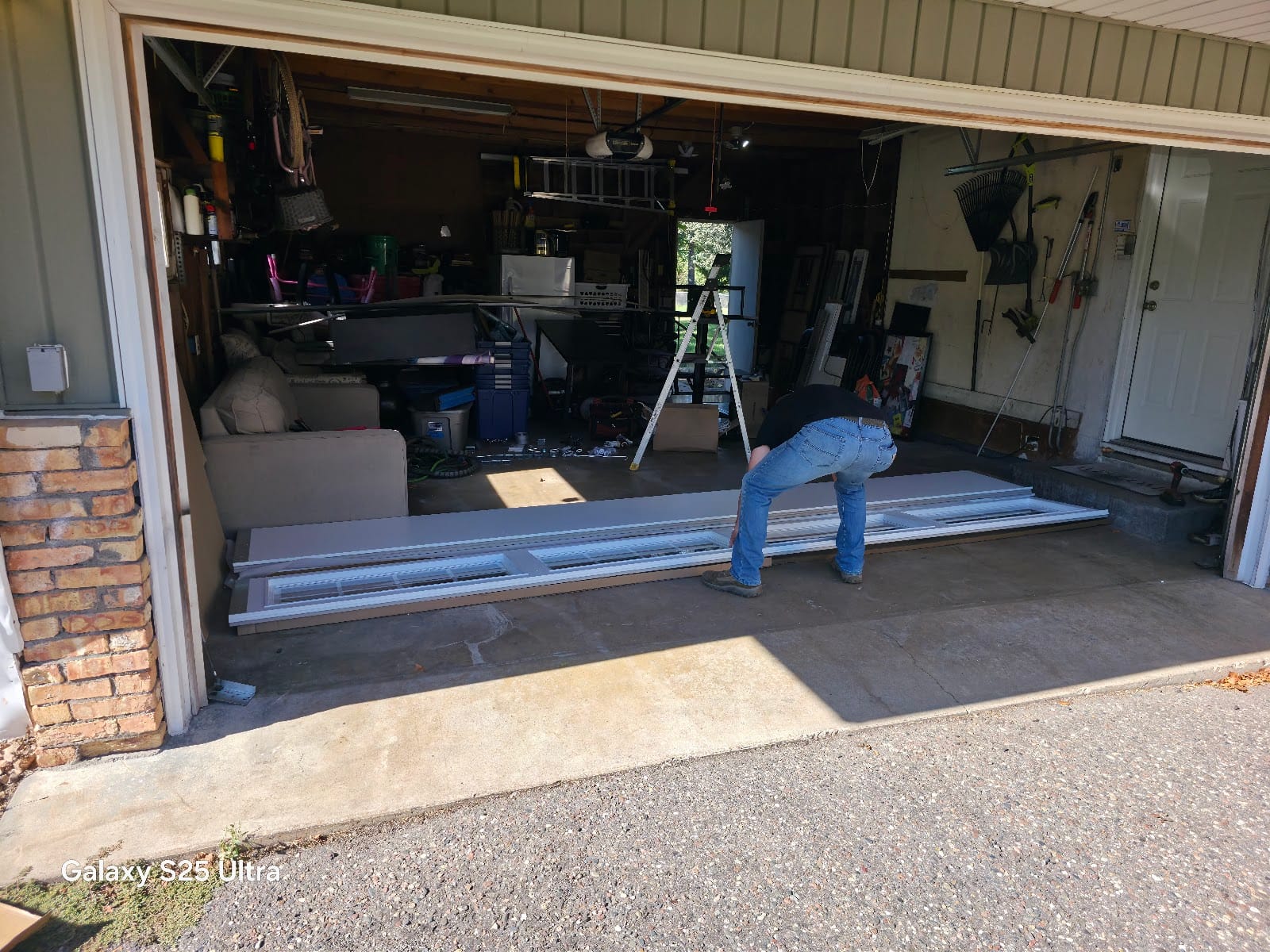
- Disconnect the opener, close the door, clamp the track above the bottom roller.
- Unwind the torsion springs completely (or unhook extension springs) so nothing is carrying the door.
- Slide a bathroom scale (two on a wide door, one per side, added together) under the bottom section and lift the door onto it with a pry bar.
- Read the weight, then size the springs from the chart for that weight, door height and drum.
- Re-tension, balance test, reconnect the opener, set the force.
This is a spring-job step, not a homeowner test: with the springs unwound the door is dead weight, and with them wound the brackets are under full tension. If you need the number for a quote, the table above plus your door’s label is close enough, and I confirm it on site. See how to measure for a new door for the other numbers I ask for.
“Can I lift it by hand?”
If the springs are good, yes: a balanced door feels like 10–20 lb at the handle no matter what it weighs, and it stays where you leave it. If it takes two people, the springs are broken or tired; the door’s true weight is what you’re feeling. How to do it safely in an outage: the emergency release cord.
Garage door weight – FAQ
How much does a 16×7 garage door weigh?
About 150–185 lb for single-layer steel, 190–250 lb with polystyrene insulation, 250–320 lb for a 2" polyurethane sandwich door, and 300–450 lb or more for wood.
How much does a single 9×7 garage door weigh?
Roughly 85–110 lb bare steel, 110–145 lb insulated, 145–180 lb for a sandwich door. Windows add 10–25 lb.
Does an insulated garage door need different springs?
Yes. Insulation adds 40–140 lb depending on type, and springs are sized by weight. A new insulated door always gets new springs; an insulation kit on an existing door needs a balance check and often a spring adjustment.
Can I find my door’s weight on a label?
Some manufacturers print it on the end-stile label or spec sheet; DoorLink and Haas publish weights by model and size. Most older doors have no label, which is why I weigh them during a spring job.
Door feels heavy, or a spring just broke?
Springs sized to the real weight of your door, both cables replaced, balance tested, 1-year labor warranty. 24/7 across Minneapolis–St. Paul.