
Key facts in 20 seconds
- A garage door insulation kit is foam board, foil-faced bubble wrap or vinyl-faced fiberglass cut to fit the back of each door section. Kits are cheap and a weekend job, and they help a little: a single-layer steel door goes from roughly R-0 to a real-world R-3 to R-8 depending on the kit.
- The air leaks around the door (bottom seal, side and top weatherstrip, the gaps between sections) usually lose more heat than the panel itself. Fix the seals first. It costs less and does more.
- A kit adds weight to a door whose springs were sized for the bare door. On most residential doors it is enough to throw the balance off: the opener strains, the door drifts down, or the safety reverse starts tripping. Have the balance checked after you install one.
- Worth it: an attached garage you heat or work in, with a sound single-layer door you plan to keep a few more years. Not worth it: a detached, unheated garage, or a door that is already rusted, bent or past 20 years.
- The real fix is an insulated door. In the Twin Cities a vinyl-backed insulated door starts around $2,000 installed and a 2-inch steel sandwich door around $2,800, old door hauled away.
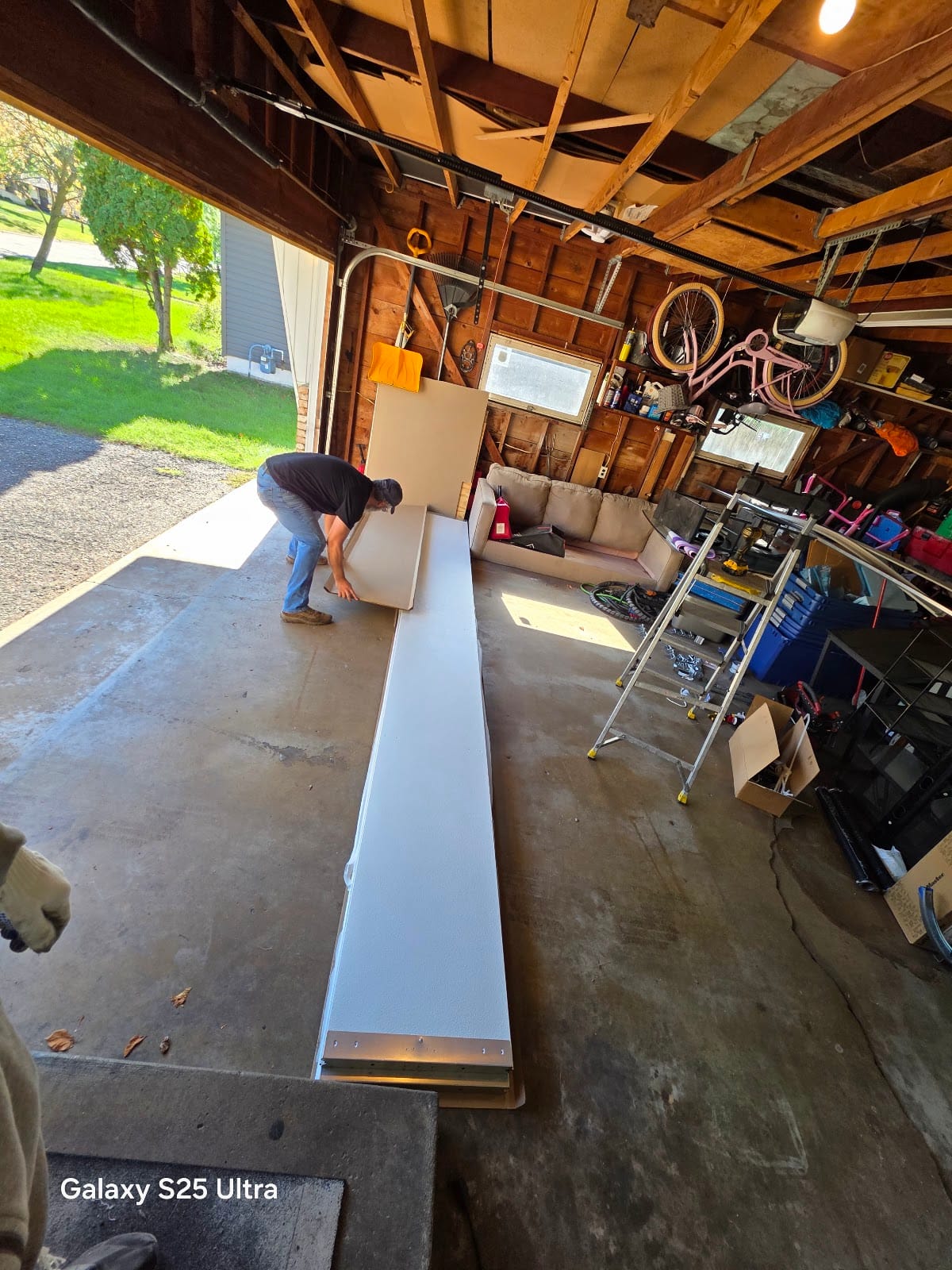
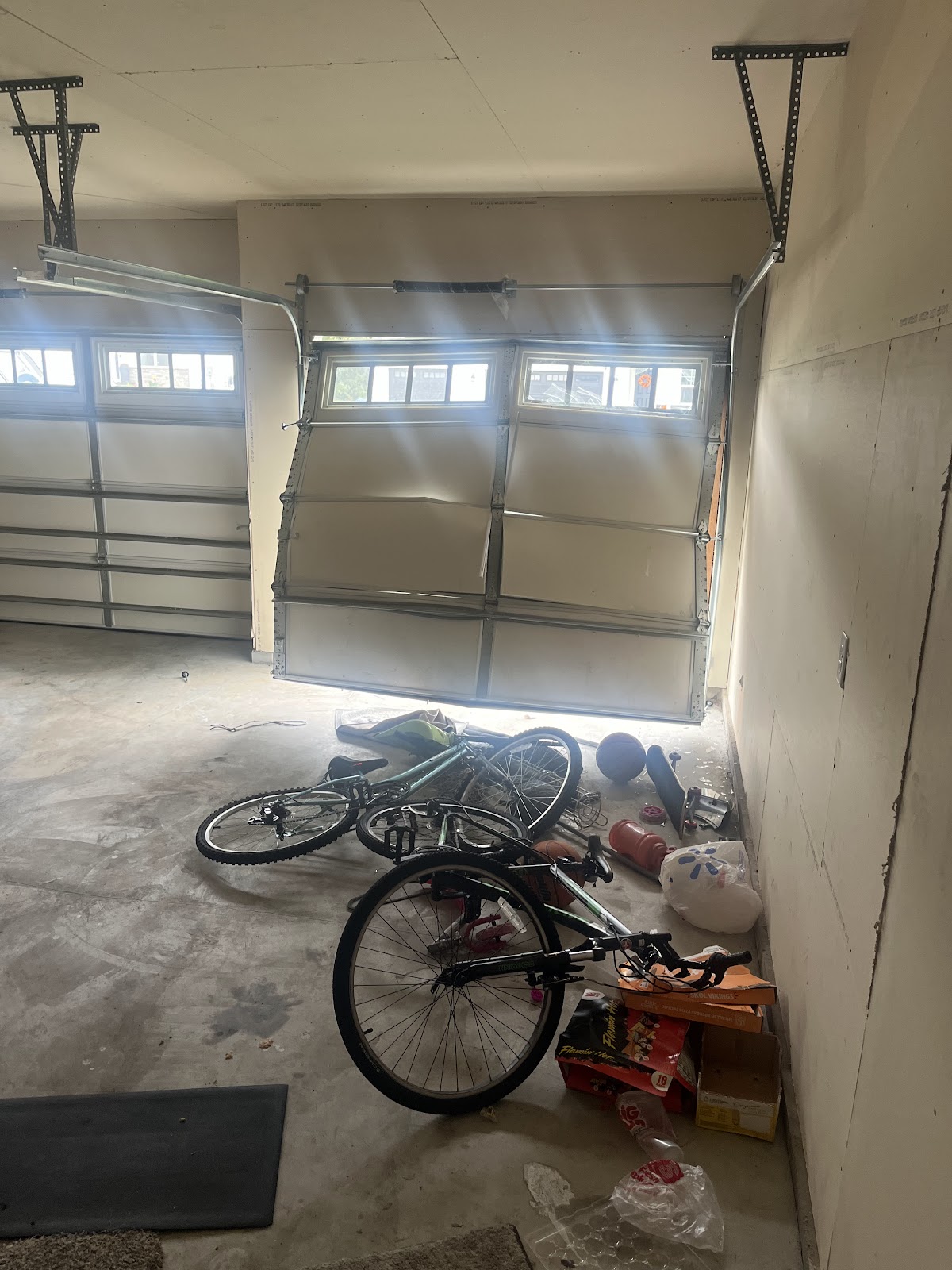
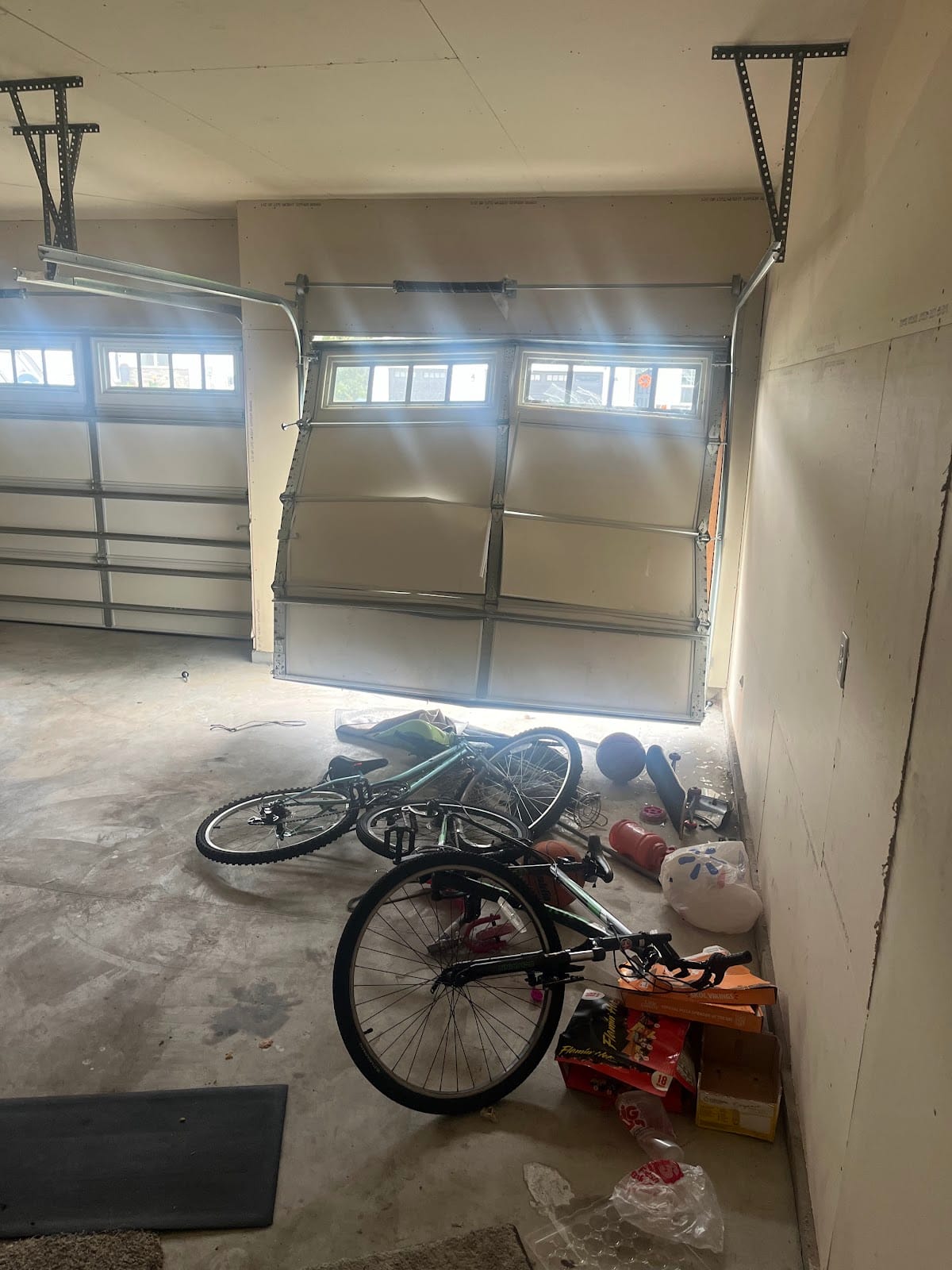
Every fall I get the same question from homeowners in St. Louis Park, Edina and Plymouth: “Can I just insulate the door I have?” The hardware stores sell kits for under a hundred dollars, and the box says R-8. So here is the honest answer from someone who installs insulated doors for a living and has seen plenty of kits, good and bad, on the back of old doors. Yes, a kit can help. It also changes how your door behaves, and it is not the first thing I would spend money on.
What is actually in a garage door insulation kit
Three kinds of kits are sold for existing doors. They differ a lot in what they really do.
| Kit type | What it is | Realistic R-value | Weight added (16 ft door) | Notes |
|---|---|---|---|---|
| Foam board (polystyrene / polyiso panels) | Rigid boards cut to fit inside each section, held by the section lips or plastic retainer clips | R-4 to R-8 for the panel area | Light – usually 10 to 20 lb | Best value. Needs a clean, flat section. Boards can rattle if cut loose |
| Vinyl-faced fiberglass | Fiberglass batts with a white vinyl face, pinned to the door with adhesive retainer pins | R-6 to R-8 for the panel area | Heaviest – often 20 to 30 lb | Looks finished. Absorbs moisture if the door sweats; pins pull loose in the cold |
| Reflective foil bubble | Thin foil-faced bubble wrap taped or glued to the back of the door | R-1 to R-3 in practice (the box claims more) | Lightest – a few pounds | Mostly a radiant barrier – helps against summer sun, does little in a Minnesota January |
Two things the box never explains. First, those R-values are for the middle of the panel. The steel ribs between sections, the edges, and the whole perimeter of the door are not insulated by any kit, so the whole-door number is lower. Second, a single-layer “pan” door is a thin steel skin with nothing behind it. It flexes. A kit stiffens it a little and quiets it a little, which is a real benefit, but it is still a one-skin door. A factory-insulated door is two steel skins with foam bonded between them, and that is a different product. My R-value guide explains why the brochure number is not the whole story.
Where the heat really goes: the panel or the gaps?
Stand in your garage on a windy January night with the lights off and look at the door. You will see light, and feel air, at the bottom seal, along the sides where the door meets the jamb, and often across the top. Those gaps move air, and moving air carries far more heat out of a garage than a thin steel panel does by conduction. That is why, when a customer asks me about a kit, I look at the seals first:
- Bottom seal – if it is flattened, cracked or frozen stiff, cold air pours in under the door. New seal is cheap. See the bottom seal guide for the types that survive a Minnesota winter.
- Side and top weatherstrip – the vinyl flap on the jambs. Old flaps shrink and curl and stop touching the door. The jamb seal guide covers sizes and installation.
- Section joints – older single-layer doors have flat section edges with no tongue-and-groove, so wind blows straight through the joints. No kit fixes that; insulated doors are built with interlocking joints.
- The threshold – a cracked or sloped slab leaves a gap at one corner no seal can close. A rubber threshold strip glued to the floor solves it.
Do the seals, then decide if you still want the kit. On a lot of doors the seals alone make the garage noticeably less drafty, and the kit becomes an easier decision either way.
The part nobody warns you about: added weight and door balance
Your torsion springs were chosen for the weight of your door, bare. Twenty extra pounds of insulation does not sound like much, but springs are sized tightly, and that extra weight shows up right away:
- The door no longer stays put when you lift it halfway by hand with the opener disconnected – it drifts down. That is the definition of an out-of-balance door.
- The opener works harder on every cycle. It still lifts the door, so people think it is fine, but the motor, gear and belt wear out years early.
- On an opener with the force set correctly, the heavier door starts tripping the safety reverse on the way down, or stopping short on the way up. The tempting “fix” is to crank the force up, and that is exactly the mistake I explain in the force and travel limits guide: it hides the problem and disables the safety feature.
- Cables and bottom brackets carry the extra load too. In Minnesota they are already the parts road salt attacks first.
The right way: install the kit, disconnect the opener, lift the door halfway and let go. If it drifts, call for a balance adjustment or, on a door that was already borderline, a spring upgrade. I do a balance check and adjustment on most tune-up visits. Springs are sized by door weight, which is why door weight matters more than homeowners expect. Never adjust the springs yourself.
Other things a kit changes
- Struts, hinges and the opener bracket. Many 16-foot doors have a horizontal strut across the top section and sometimes the others. The kit has to be cut around struts, hinges, the lock, and the opener arm bracket. Poorly cut boards fall out within a winter.
- Windows. Sections with glass get no insulation, so the gain is smaller on a door with a row of windows.
- Condensation. A warm, humid garage (running car, snowmelt off the hood) against a cold steel skin makes water. Fiberglass kits soak it up; foam boards can trap it against the steel. Keep the garage ventilated, and do not insulate a door that already shows rust on the inside skin.
- Noise. This is the benefit customers notice most. A single-layer door drums and rattles; a kit deadens it. If a quieter door is really what you want, also read about nylon rollers, which do more for noise than insulation does.
- Wood doors. Old wood doors are already heavy and usually have an open back frame. Foam board fits well there, but the weight question is even more serious and the springs are often original.
Kit vs. new insulated door: an honest comparison
| Insulation kit on your existing door | New insulated door (installed) | |
|---|---|---|
| Cost (Twin Cities) | Roughly $60-$200 for the kit, plus new seals, plus a balance check if needed | From about $2,000 (vinyl-backed) to about $2,800 and up (2-inch steel sandwich), old door hauled away |
| Whole-door R-value | Low single digits in practice; edges and joints stay uninsulated | R-9 to R-18 class doors with insulated joints and factory seals |
| Air sealing | Only as good as the seals you add | Tongue-and-groove sections, new bottom seal and jamb seal included |
| Springs and opener | Existing springs may now be undersized | Springs sized for the new door; opener can be installed at the same time for less than two separate visits |
| Strength and dents | Slightly stiffer; still one thin skin | Two skins bonded to foam resist dents from bikes, balls and bumpers |
| Lifespan | Depends on the door underneath | 20-30 years with normal care |
If you are already deciding between door brands, DoorLink vs Haas is how I explain the everyday insulated door versus the high-insulation door. For a detached garage you only park in, you usually do not need the high R-value at all, and a new door is mostly about appearance and strength.
So, is a kit worth it? My rule of thumb
- Yes, if the garage is attached to the house, you heat it or work in it, the door is a sound single-layer steel door with no rust or bent sections, and you plan to keep it 3-5 more years. Do the seals, install foam board, then have the balance checked.
- Yes, barely, if there is living space above the garage. The kit helps a little; air sealing the door and the ceiling helps more.
- No, if the garage is detached and unheated. You are insulating a space you do not heat. Spend the money on seals and nylon rollers for a quieter, tighter door.
- No, if the door is rusted at the bottom, bent, or has original springs from 15-20 years ago. A kit adds weight to a door that is already near the end, and the money is better saved toward a new insulated door.
If you are not sure which bucket your door is in, I will tell you honestly during a tune-up. Insulated doors are most of what I install, but a kit on the right door is a fair answer, and I would rather you spend $100 well than $2,000 you did not need to.
Garage door insulation kits – FAQ
Does a garage door insulation kit really work?
It helps modestly. Foam board or fiberglass kits raise the panel from about R-0 to R-4 to R-8, make the door quieter and stiffer, and take an afternoon. They do nothing for the gaps around the door, which usually lose more heat, so replace the bottom seal and jamb weatherstrip first.
Will insulating my garage door affect the springs?
Yes. A kit adds roughly 10 to 30 pounds, and torsion springs are sized for the bare door. After installing a kit, disconnect the opener and lift the door halfway; if it drifts down, the door needs a balance adjustment or a spring upgrade. Do not raise the opener force to compensate.
Which insulation kit is best for a Minnesota winter?
Rigid foam board gives the best R-value per pound and does not absorb moisture. Vinyl-faced fiberglass looks finished but is heavier and can get damp from condensation. Reflective foil bubble is mainly a summer radiant barrier and adds little in January.
Is it cheaper to insulate my old door or replace it?
A kit is far cheaper, under $200 plus seals, but a new insulated door is a different product: two steel skins, foam core, interlocking joints and new seals, from about $2,000 installed in the Twin Cities. If the old door is rusted, bent or has original springs, put the money toward replacement.
Do I need to insulate a detached garage door?
Usually not. If the garage is not heated, insulation on the door saves almost nothing. Good seals and quiet nylon rollers give a tighter, quieter door for less money.
Owner-operated from St. Louis Park, about one hour away for most calls in Edina, St. Louis Park, Plymouth, Minnetonka, Golden Valley, Hopkins, Bloomington and the rest of the west metro. Call or text (763) 265-7671.