
Key facts in 20 seconds
- A garage door strut is a U-shaped steel bar bolted horizontally across the inside of a door section. It stops the section from bowing when the opener pulls on the top, when wind pushes on the outside, or when the door is simply wide and thin.
- Almost every 16-foot (double) door needs at least one strut on the top section. Many need one on the second section too. 8- and 9-foot single doors usually need none unless they are non-insulated and very light.
- Signs you are missing one: the top section sags or curves in the middle when the door is open, the top edge flexes when the opener starts, or there is a crease across the panel face.
- A strut adds weight, so adding one or two can throw the spring balance off a little. On a double door it is usually small, but it is checked on every strut job.
- Struts are cheap steel. What you are paying for is the visit, the right length and gauge, and getting the holes in the right place without cracking the panel.
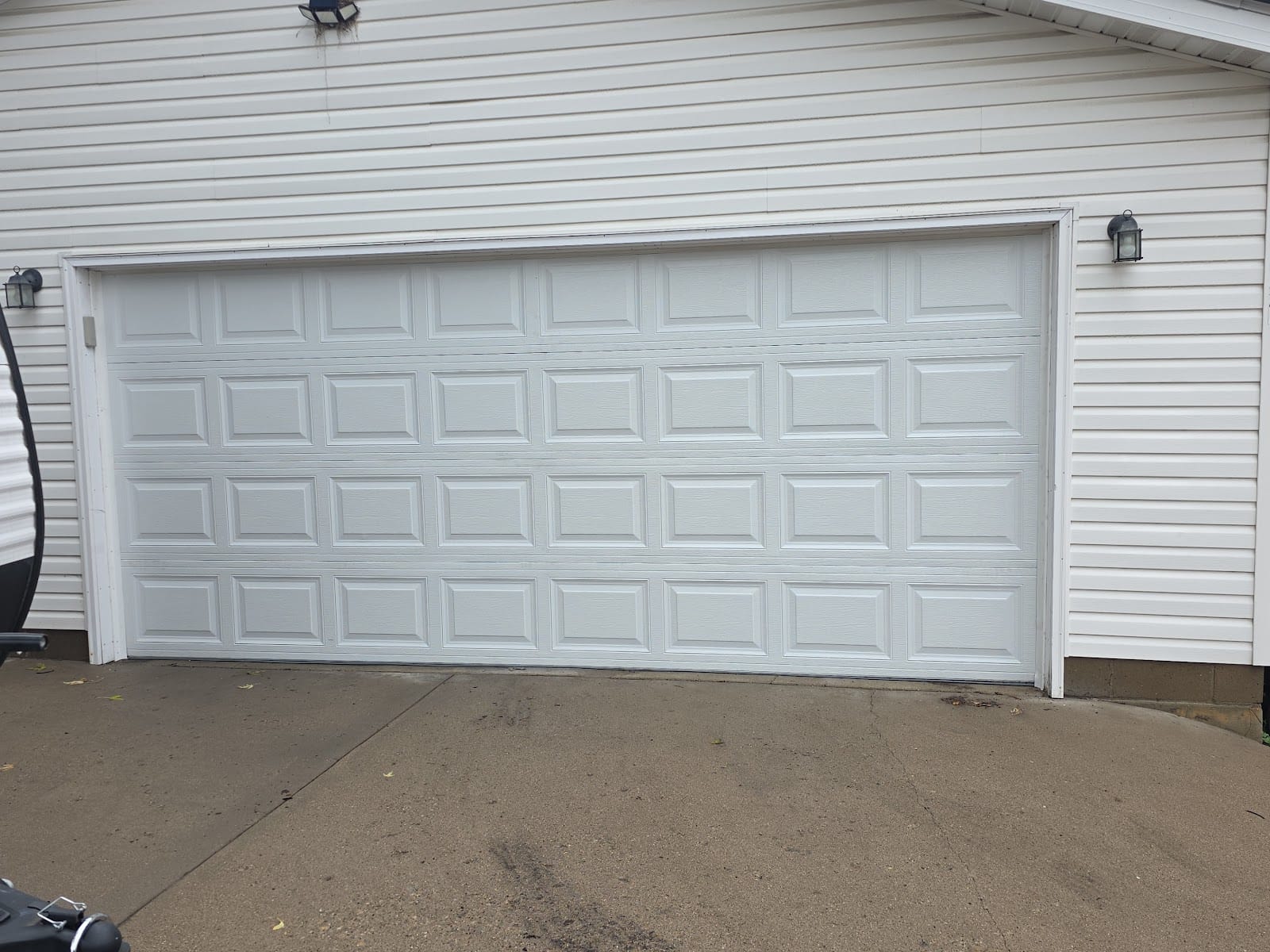
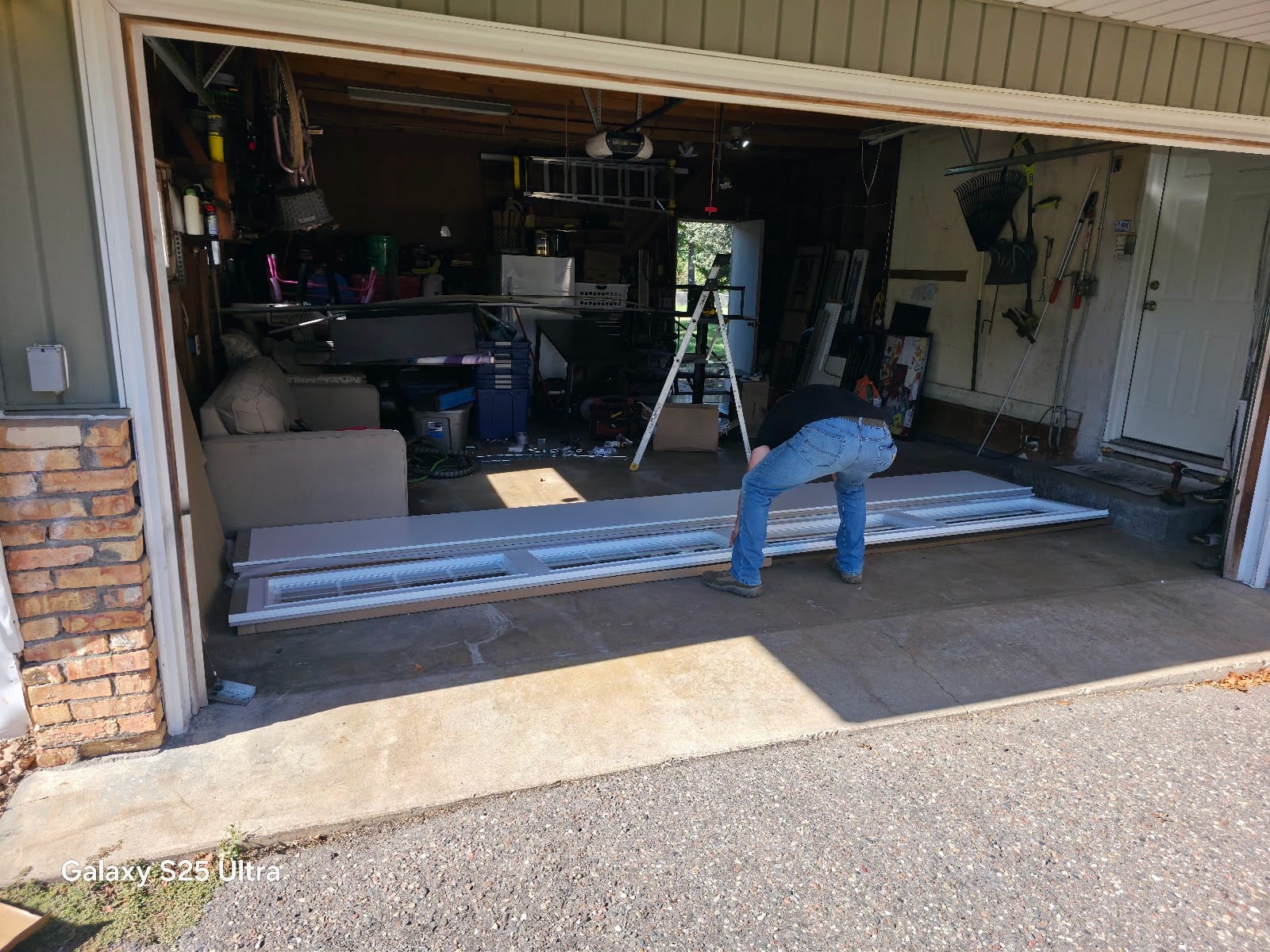
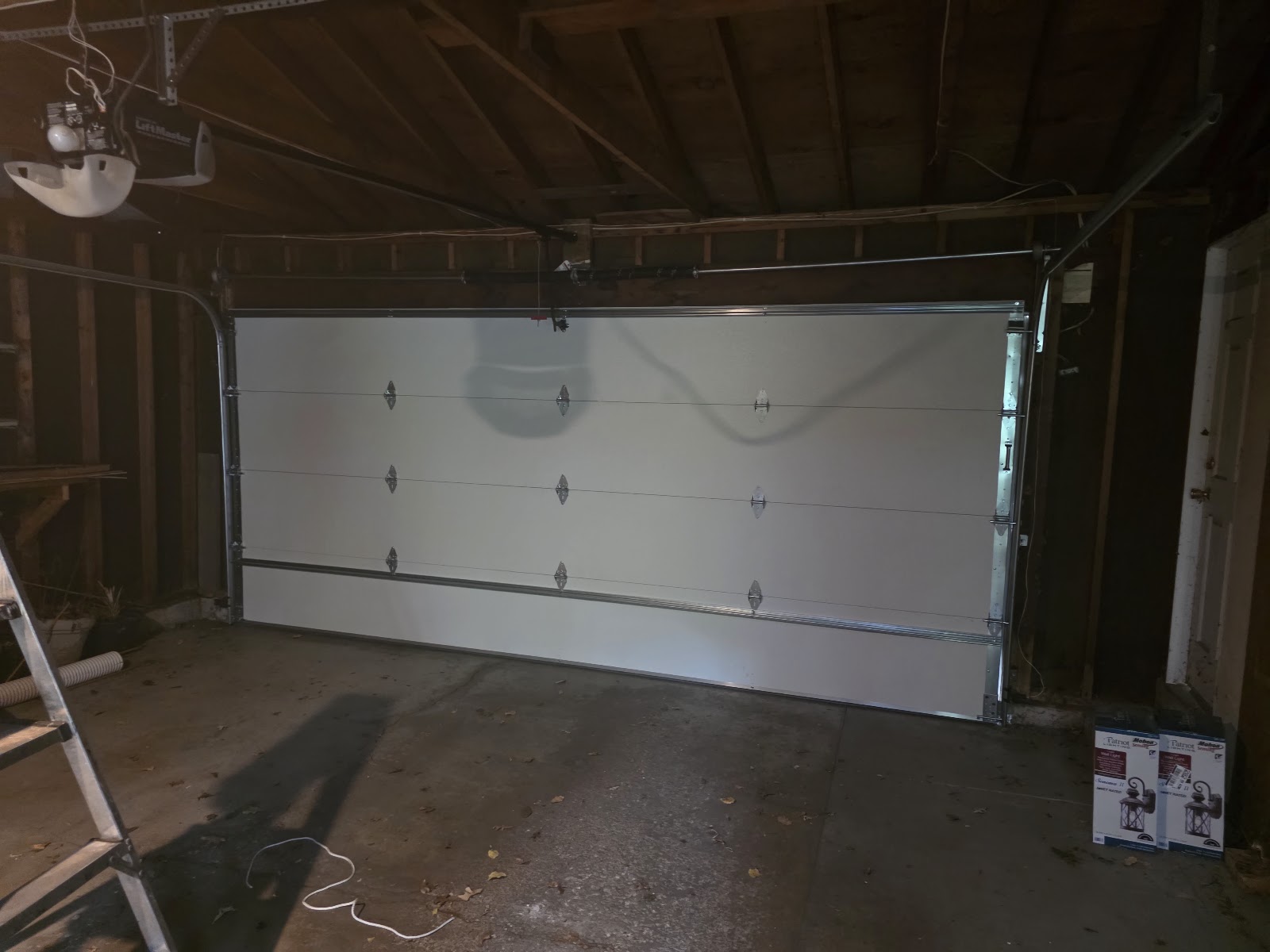
A homeowner in Plymouth called me because her double door “looked bent in the middle” every time it was open. Nothing was broken. The door was a light, non-insulated 16-footer with no strut on top, and the opener had been pulling on the center of that top section for twelve years. Every cycle it flexed a little more. We bolted a strut across it, checked the balance, and the door went up flat again. Twenty minutes. If we had waited another winter, that top section would have creased, and a creased section is a replacement, not a repair.
What a garage door strut actually does
Think of a 16-foot door section as a long, thin shelf lying on its edge. Steel skin, maybe some foam, 21 inches tall and 16 feet wide. On its own it has very little stiffness across that width. Three things try to bend it:
- The opener. The trolley arm attaches to the top section near the center. Every time the opener starts, it yanks on that one spot while the ends of the section are held by the rollers in the tracks. The middle wants to bow in.
- Wind. A storm out of the west pushes on the whole outside face. The ends are held, the middle is not.
- The door’s own geometry. When the door is open, the top section is lying horizontal in the tracks and the only support is at the two ends. The middle sags with gravity.
A strut is a piece of galvanized steel formed into a U or a hat shape, usually about 2 to 3 inches tall, cut to the width of the door, and bolted through the end stiles and the center stiles of the section. It turns that floppy shelf into a beam. The opener pulls on the strut, not on the skin, and the load spreads to the ends where the rollers are.
Which doors need a strut, and how many
| Door | Typical struts | Why |
|---|---|---|
| 8 or 9 ft single, insulated steel | None (sometimes one on top if there is an opener and the panel is light) | Short span, stiff sandwich panel |
| 8 or 9 ft single, non-insulated single-layer steel | One on the top section is a good idea with an opener | Thin skin flexes where the opener arm pulls |
| 16 ft double, insulated (polystyrene or polyurethane) | One on the top section, often one on the second section too | Long span; opener and wind load |
| 16 ft double, non-insulated single layer | Top plus second section at minimum; some installers do every section | Very little stiffness of its own |
| 18 ft double, any type | Top plus at least one more; wind-rated doors may come with several | Longest residential span |
| Any door with windows in the top section | Usually a strut on the top section | Window cut-outs weaken the panel; the strut carries the opener load instead |
Door manufacturers ship struts with most 16-foot doors and specify where they go. The two brands I install most, DoorLink and Haas, both include the top strut on their double doors. What I see in the field is older doors where the strut was never installed, was removed when an opener was changed, or doors that were sold cheap with nothing on them at all. If you are choosing between brands, the DoorLink vs Haas guide explains why the thicker sandwich panel on a Haas door needs less help in the first place.
How to tell your door is missing one
- Open the door and look at the top section from inside. Sight along it like a board. If the middle dips below the ends, it is bowing. Any visible curve on a 16-footer means it wants a strut.
- Watch the opener start. Have someone press the button while you stand inside and watch the top section. If the center lifts first and the ends follow a half-second later, the opener is bending the panel before it moves the door. That flex is fatigue, and fatigue is how panels crease.
- Look for a horizontal crease or a wrinkle on the outside face of the top section, usually right above the opener bracket. That is a section that already bowed too far. A strut will stop it getting worse, but the crease is permanent.
- The door is noisy and rattles at the top when it opens or when wind hits it. A section that flexes also shakes.
- There is a strut, but it is on the wrong section. I see doors with a strut on the bottom and none on top. The top section is the one the opener pulls on, so it gets the first strut.
What goes wrong without it
| What happens | What it costs you |
|---|---|
| Top section creases above the opener bracket | New top section (if the model is still made) or, on an older door, a new door |
| Opener bracket tears out of the thin skin | Reinforcement bracket plus often a strut anyway; sometimes a new section |
| Door bows in wind and pops a roller out of the track | Off-track repair, bent hinges, sometimes bent track. See the off-track guide |
| Opener works harder every cycle because it is bending steel before lifting | Shorter opener life, early gear or logic board failure |
| Door never seals right at the top | Cold garage, drafts, ice under the door in January |
Struts and spring balance
A 16-foot strut weighs roughly 8 to 12 pounds depending on gauge and height. One strut on a 150-pound double door is a small change. Two or three struts on a light non-insulated door can be 25 to 30 pounds, and that is enough to make a door that was balanced feel heavy, stop short, or make the opener reverse. On every strut job the door gets a balance check: disconnect the opener, lift the door halfway by hand, let go. It should stay put. If it drifts down, the springs need a turn or two, or on an older door the springs are already tired and the strut just exposed it. The balance adjustment page explains what that check looks like, and the door weight guide shows why a few pounds matter more on a light door than on a heavy one.
Same reason the opener’s force and travel limits get re-checked after a strut goes on: the door is slightly heavier and stiffer, and an opener set on the edge will start reversing. The force and travel limits guide covers that adjustment.
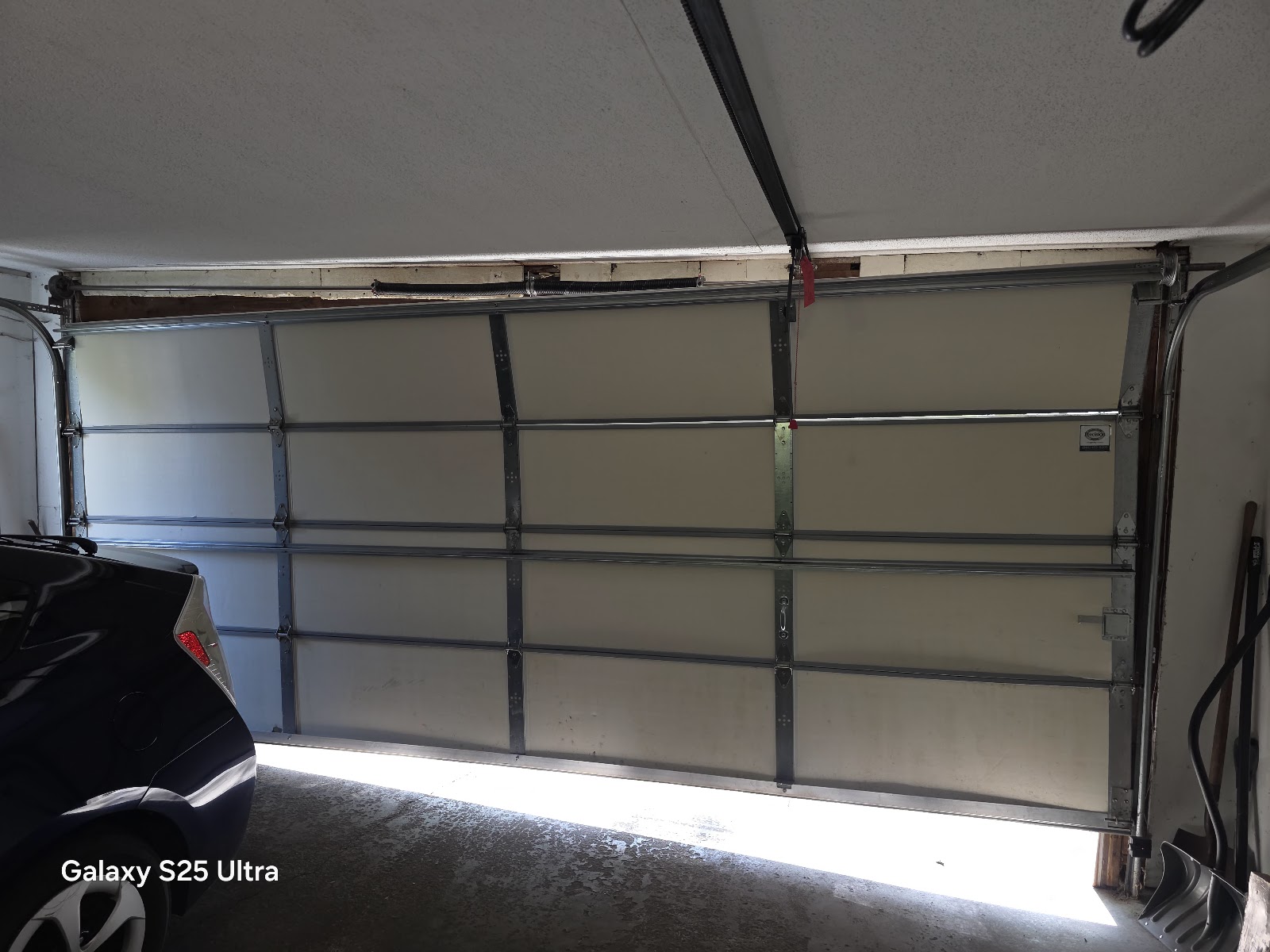
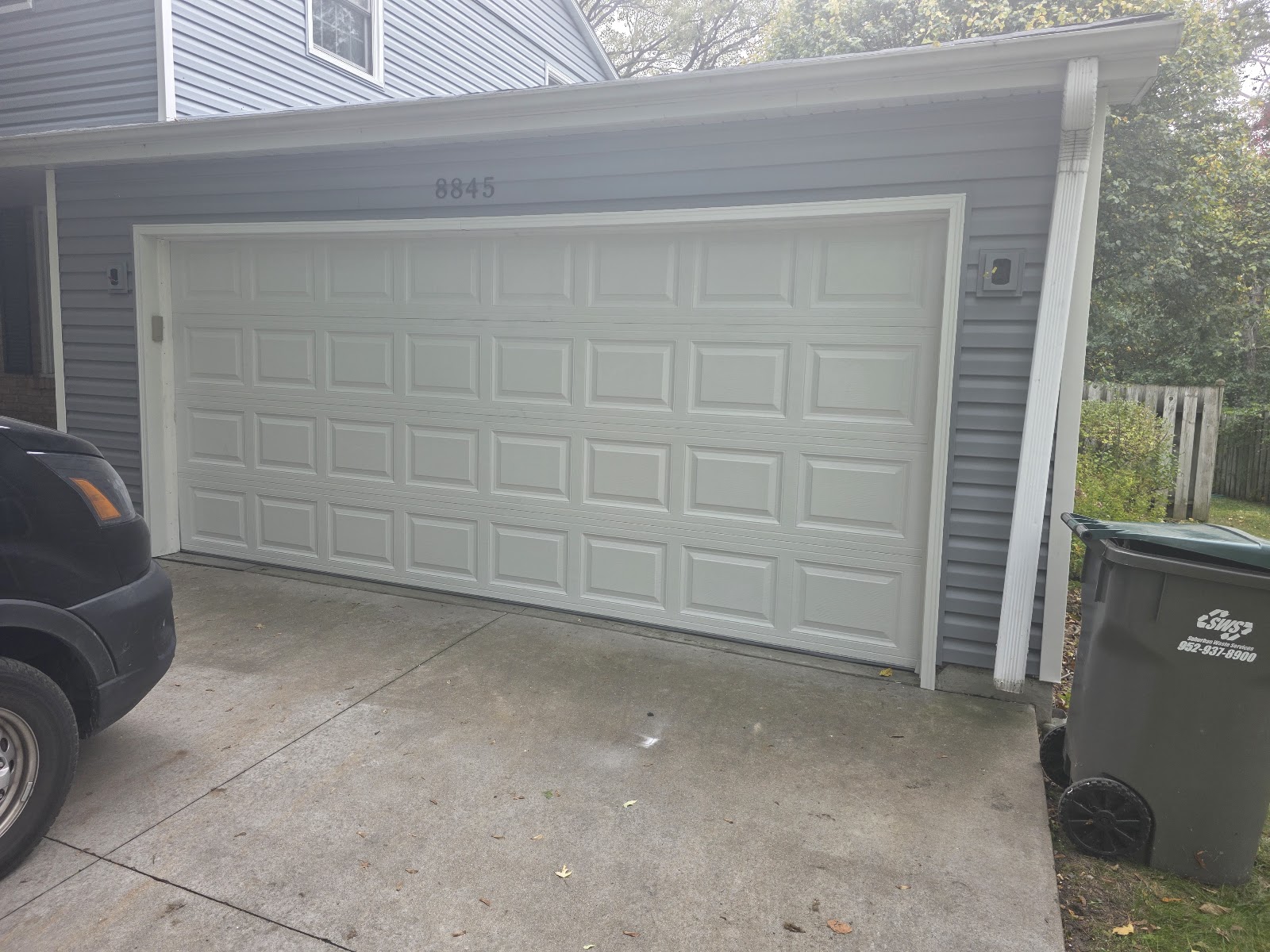
Installing one the right way
This is a job a careful homeowner can do on a single door. On a 16-foot door I would rather do it myself, mostly because a 16-foot steel bar in a garage is awkward for one person and it is easy to crack a panel or drill through the outer skin.
- Length and gauge. The strut should run the full width of the section, end stile to end stile. Light 24-gauge struts are fine on insulated doors; wide, light, or wind-exposed doors get a heavier 20-gauge strut, sometimes a 3-inch one.
- Position. Top section first, bolted just below the top edge, above the opener bracket so the bracket and strut share the load. A second strut goes on the second section from the top if the door still flexes.
- Fasteners. Bolt through the stiles with carriage bolts or heavy self-tapping screws into the steel stile, never only into the foam or the thin face. Pre-drill. Do not go through the outer skin.
- Opener bracket. If the door has a thin top section, add a reinforcement bracket that ties the opener arm to the strut. This is standard on new doors and missing on a lot of old ones.
- Then the balance and limits check described above. Skipping it is how a 20-minute job becomes a “door reverses” call a week later.
What is safe to do yourself
Measuring, looking for bow, and adding a strut to the top section of a door that is closed and balanced are reasonable DIY tasks if you are comfortable on a ladder with a drill. Do not loosen anything connected to the springs, the cables, or the bottom brackets, and do not try to straighten a creased section by hand; the steel does not come back. If the door is already crooked, hanging on one cable, or has a bent track, that is a different job. The crooked door guide walks through those symptoms. And if you are already at the point of replacing the top section, compare that cost against a new insulated door; on a 15-year-old single-layer door the answer is usually the new door, and the new one comes with its struts.
Garage door struts – FAQ
What is a garage door strut?
A strut is a horizontal steel reinforcement bar, U- or hat-shaped, bolted across the inside of a garage door section. It keeps the section from bowing under the opener’s pull, wind load, and its own weight when the door is open.
Does a 16-foot garage door need a strut?
Almost always at least one, on the top section where the opener attaches. Light or non-insulated 16-foot doors usually need a second strut on the next section down. Most manufacturers include the top strut with a new double door.
Does a single-car garage door need a strut?
Usually not if it is an insulated sandwich door. A non-insulated single-layer 8- or 9-foot door with an opener benefits from one strut on the top section, because the thin skin flexes where the opener arm pulls.
Can I add a strut myself?
On a single door, yes, with the door closed, pre-drilled holes, and bolts through the steel stiles rather than the thin face. On a 16-foot door the bar is awkward for one person, and the door’s spring balance and opener limits need checking afterward, so most people have it done during a tune-up.
Will a strut fix a bent or creased garage door panel?
No. A strut prevents bowing; it does not straighten steel that has already creased. It will stop a slightly bowed section from getting worse. A creased section is replaced, or on an older door the whole door is replaced.
Does adding a strut affect the springs?
A little. Each 16-foot strut adds roughly 8 to 12 pounds. One strut on an insulated double door is minor; two or three on a light door can make it feel heavy and cause the opener to reverse, so the balance and opener limits are checked after installation.
Owner-operated from St. Louis Park, about one hour away for most calls in Edina, St. Louis Park, Plymouth, Minnetonka, Golden Valley, Hopkins, Bloomington and the rest of the west metro. A strut check is part of every tune-up. Call or text (763) 265-7671.